


By: Julius Konton
President Joseph Nyuma Boakai Sr. has called for a united national response to the growing cancer burden in Liberia, describing the disease as not only a health crisis but also a major development challenge threatening the country’s productivity, social stability, and economic resilience.
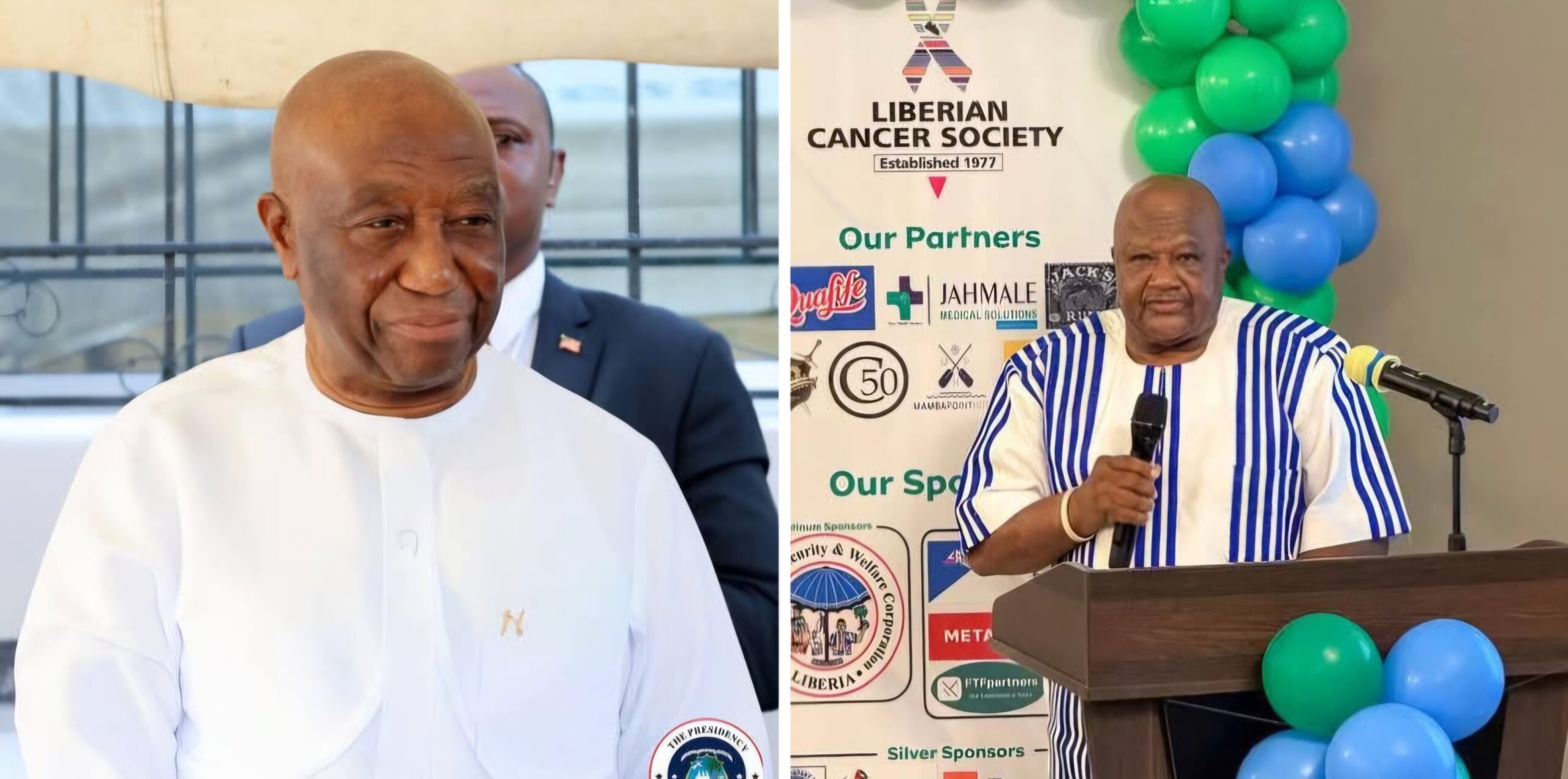
Speaking through Senior Presidential Advisor Dr. Augustine Konneh during the Liberia Cancer Society Benefit Gala Dinner held at the Mamba Point Hotel on Thursday evening, President Boakai urged government institutions, civil society organizations, international partners, and ordinary citizens to intensify collective efforts aimed at prevention, early detection, treatment, and support for cancer patients across the country.
The gala, organized by the Liberia Cancer Society under the theme “Men Leading the Fight, Early Detection Saves Lives, Together We Can Make a Difference,” brought together senior government officials, health professionals, development partners, private sector representatives, and humanitarian advocates seeking to raise awareness and mobilize resources for cancer prevention and treatment.
Cancer Cases Rising Across Africa
President Boakai’s remarks come amid increasing concern over the growing burden of non-communicable diseases across Africa.
According to estimates from the World Health Organization, cancer deaths on the continent are projected to rise sharply over the next two decades due to population growth, limited diagnostic infrastructure, and delayed treatment access.
Liberia, a nation still rebuilding its healthcare system following years of civil conflict and the devastating 2014–2016 Ebola epidemic, faces severe limitations in specialized oncology services, pathology laboratories, radiotherapy facilities, and nationwide screening programs.
Health experts say prostate cancer remains one of the leading cancers affecting Liberian men, while liver cancer continues to impact both men and women, often linked to hepatitis infections, late diagnoses, and inadequate access to treatment.
Addressing the gathering, Dr. Konneh quoted President Boakai as warning that too many Liberians seek medical attention only when cancers have reached advanced stages.
“The pressure that prostate and liver cancer are placing on Liberia’s health system, communities, and economy is enormous,” the President noted.
“Too many of our citizens seek care only when the disease has progressed significantly because of low awareness, fear, stigma, financial hardship, and limited screening opportunities.”
Cancer Beyond a Health Problem
President Boakai emphasized that cancer must no longer be viewed solely as a medical issue but as a national development concern affecting household incomes, workforce productivity, educational opportunities, and long-term national growth.
Public health analysts estimate that non-communicable diseases, including cancers, diabetes, hypertension, and cardiovascular illnesses, are becoming increasingly responsible for deaths and disabilities across developing nations, placing enormous strain on already fragile healthcare systems.
The Liberian leader reaffirmed his administration’s commitment to strengthening cancer prevention and treatment through the Ministry of Health’s National Cancer Policy and the broader Non-Communicable Disease Strategic Framework.
The initiatives are being implemented in partnership with several international and local institutions, including the World Health Organization, Clinton Health Access Initiative, Partners In Health, Mount Sinai Hospital, and civil society organizations working to improve cancer care accessibility in Liberia.
Call for Accountability and Transparency
While applauding the fundraising efforts of the Liberia Cancer Society, President Boakai stressed that public confidence in national health campaigns depends heavily on transparency, accountability, and measurable impact.
He called on organizers to publicly disclose detailed operational plans for the proposed cancer screening initiative, including:
Estimated cost per prostate and liver cancer screening;
Specific diagnostic tests to be administered;
Number of intended beneficiaries;
Counties targeted for outreach;
Post-screening referral systems for patients requiring additional care;
Long-term follow-up mechanisms.
“Providing these details will strengthen public confidence, accountability, and support for this worthy initiative,” Dr. Konneh quoted the President as saying.
Analysts note that transparency in public health fundraising has become increasingly important across Africa, where donor agencies and citizens alike are demanding stronger accountability systems to ensure aid and donations directly benefit intended populations.
A National Appeal for Compassion
In an emotional conclusion to the address, President Boakai appealed for compassion and solidarity toward cancer patients and their families, emphasizing that no Liberian should face illness in isolation.
“No family should suffer alone, no patient should feel abandoned, and no citizen should die simply because help came too late,” the President declared.
He further stressed that building a healthier Liberia under the government’s ARREST Agenda for Inclusive Development would require sustained investment in preventive healthcare, public awareness campaigns, affordable diagnostics, quality treatment systems, and respect for human dignity.
Healthcare advocates attending the event described the President’s remarks as one of the strongest national calls yet for a coordinated response to Liberia’s emerging cancer crisis.
Medical professionals at the gala also urged increased budgetary allocation for non-communicable diseases, noting that Liberia continues to spend a significant portion of its health resources responding to infectious diseases while cancers and chronic illnesses steadily rise.
As Liberia seeks to modernize its healthcare system, observers say the success of future cancer interventions will depend largely on political commitment, international partnerships, public education, and equitable access to lifesaving medical services throughout the country.


