
By: Julius Konton
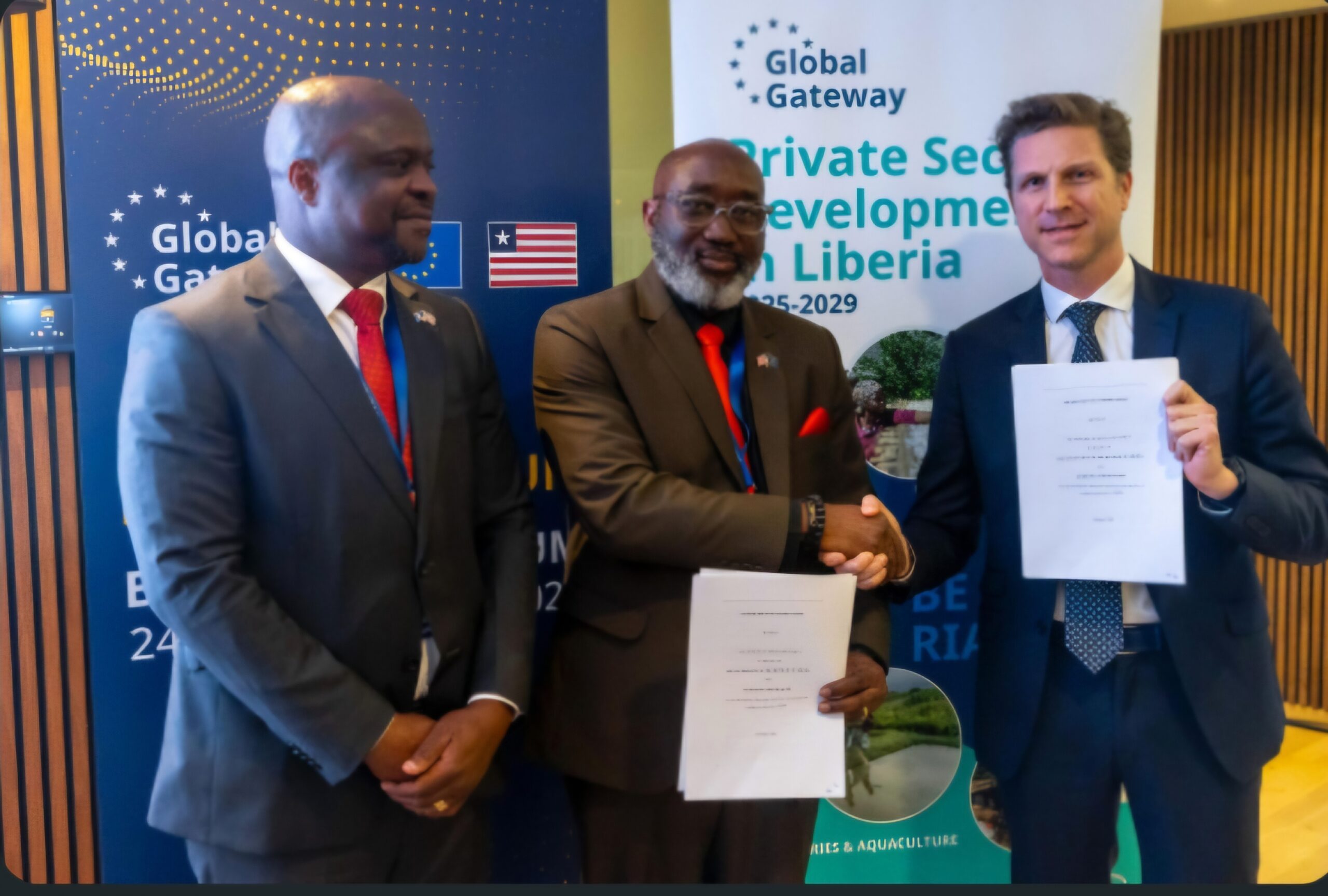
In a major step toward addressing chronic energy shortages and accelerating sustainable development, the Government of the Republic of Liberia has signed a landmark Memorandum of Understanding (MoU) with HYDRONEO, a France-based independent power producer specializing in small- to medium-scale hydropower across West and Central Africa.
The agreement was signed on the margins of the Liberia–EU Business Forum in Brussels, marking one of Liberia’s most significant clean energy partnerships in recent years.
The signing was witnessed by Teeko Tozay Yorlay Sr., Liberia’s Ambassador Extraordinary and Plenipotentiary to France, underscoring strong diplomatic backing for the initiative.
$60 Million Investment to Strengthen Liberia’s Power Grid
Under the MoU, HYDRONEO will support the development, financing, construction, and operation of a 20-megawatt hydroelectric power plant in Nimba County, with an estimated investment value ranging between US$55.8 million and US$60 million.
Once completed, the project is expected to make a meaningful contribution to Liberia’s national electricity supply, where installed capacity remains limited and demand continues to outpace generation particularly outside the capital, Monrovia.
The hydropower initiative is projected to:
Increase national energy generation capacity
Expand access to affordable and reliable electricity in southeastern Liberia
Create over 1,000 jobs during the construction phase
Stimulate industrial, mining, and agricultural productivity
Strengthen long-term energy security using renewable resources
A HYDRONEO technical delegation is expected to arrive in Liberia within six weeks to initiate detailed feasibility studies and on-site assessments.
Strategic Talks in Paris Laid the Foundation
The Brussels signing builds on high-level strategic engagements held on October 9, 2025, at the Embassy of Liberia in Paris.
Those discussions brought together Kou Meapeh Gono, Superintendent of Nimba County, and Samuel Zekri, Chief Executive Officer of HYDRONEO, with Ambassador Yorlay facilitating the talks.
The consultations focused on the proposed construction of a hydropower facility in Kokula, Yekepa, an area historically linked to mining and industrial activity but constrained by limited electricity supply.
Following technical exchanges involving Liberia’s Ministry of Mines and Energy, the Liberia Electricity Corporation, and HYDRONEO, the Kokula site was identified for feasibility evaluation.
Once operational, the plant is expected to supply consistent power to Nimba County and adjoining regions, reducing reliance on costly diesel generation.
Mr. Zekri described the project as a “critical milestone” in Liberia’s energy transition, noting that the three-year construction phase will employ Liberians across multiple skilled and semi-skilled categories, including engineers, electricians, masons, ironworkers, and technicians.
Local and National Leaders Applaud Investment
Superintendent Gono welcomed the agreement, describing it as a transformative development for Nimba County and the country at large.
“This project represents hope, opportunity, and long-term progress for our people.
Reliable electricity is the backbone of development, and Nimba County stands ready to fully support the successful implementation of this initiative.”
She emphasized that the project aligns with Liberia’s ARREST Agenda for Inclusive Development, particularly its pillars on job creation, infrastructure expansion, and private-sector-led growth.
Superintendent Gono also commended Ambassador Yorlay and his diplomatic team for their proactive efforts in mobilizing international investment and positioning Liberia as an emerging destination for renewable energy financing.
Ambassador Yorlay reaffirmed the Embassy’s commitment to advancing strategic partnerships that promote sustainable development and deepen Liberia–France cooperation in infrastructure and energy.
“This agreement demonstrates Liberia’s readiness for responsible, transparent investment.
Our mission remains committed to ensuring this partnership translates into tangible benefits for the Liberian people.”
Hydropower and Liberia’s Energy History
Liberia has long relied on hydropower as a cornerstone of its energy strategy, dating back to the Mount Coffee Hydropower Plant first commissioned in the 1960s.
However, years of conflict and underinvestment left national electricity access among the lowest in the world for decades.
Recent reforms and public–private partnerships have sought to reverse that trend by diversifying generation sources and expanding regional power production.
The Nimba County project represents a critical shift toward decentralized, renewable energy development, particularly in resource-rich but energy-poor regions.
HYDRONEO is a France-based independent power producer focused on the design, financing, construction, and operation of environmentally responsible hydropower projects across West and Central Africa.
The company emphasizes community engagement, local capacity building, and sustainable energy solutions tailored to national development priorities.
