



By Abraham K Morris, Sr.
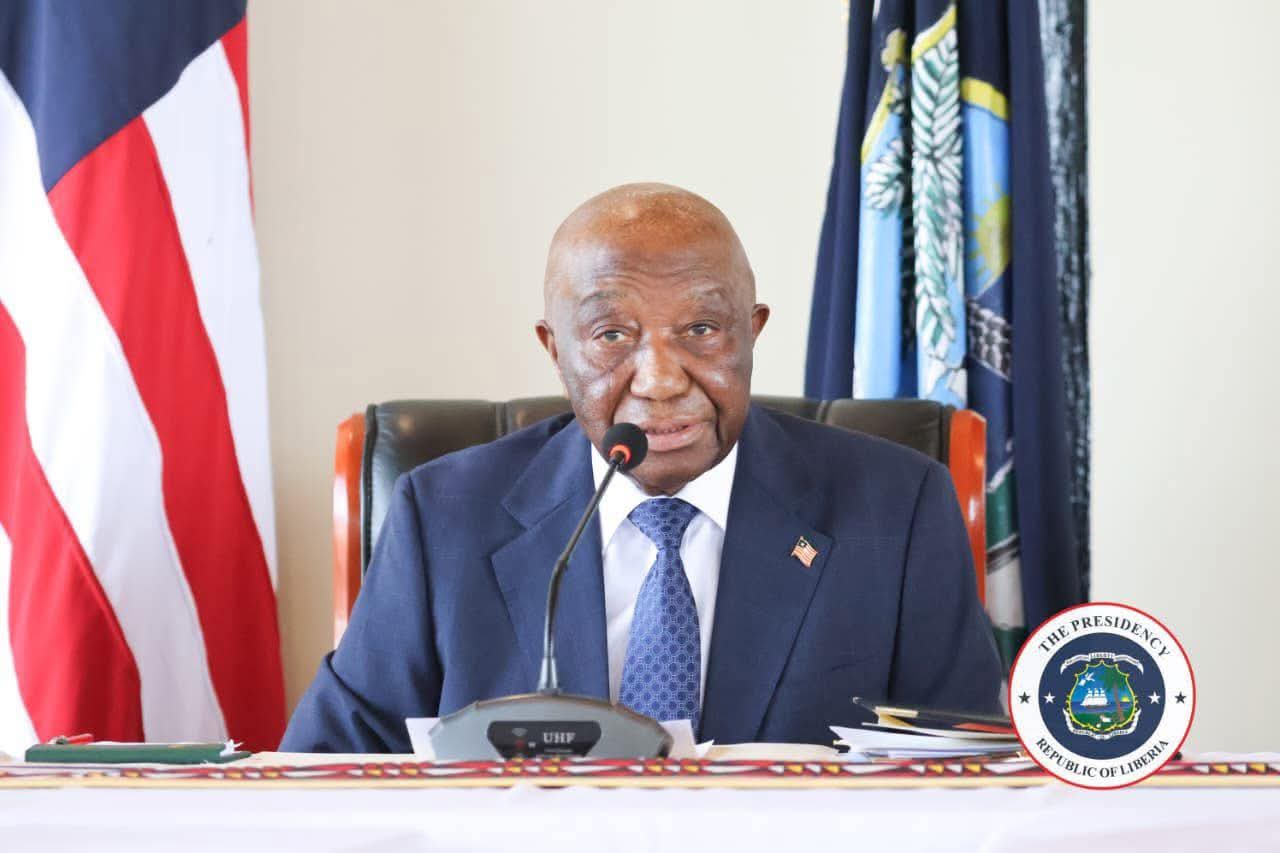
By any honest measure, President Joseph Nyuma Boakai Sr. has built a thoughtful strategic foundation for national renewal. The ARREST framework and the AAID agenda give Liberia something it has lacked for years: coherence.
The political signals on anti-corruption have been strong, the rhetoric tightly aligned with reformist expectations, and the administration’s intent broadly credible. Yet, for ordinary Liberians, intent is not rice on the table, pavement under their feet, light in the home, or medicine in the clinic. Intent does not patch roads, clean water pumps, or stabilize the price of a bag of cassava flour.
This is the moment when governance must shift from plans to performance. Without decisive follow-through — and without confronting weak state-owned enterprises (SOEs), uneven revenue collection, and a budget built partly on one-off windfalls — Liberia risks watching the promise of this administration dissolve into the same disappointment that has defined too many chapters of our political history.
If the President wants to convert goodwill into improved daily life, the next 90 days must become a case study in disciplined execution. That requires three simple but powerful moves: a surgical cabinet and SOE performance reset, an accelerated revenue drive, and a short list of visible “bread-and-butter” projects that deliver relief quickly.
Done right, these steps can anchor the administration, restore public confidence, and position Liberia for greater donor engagement — including stronger performance on the Millennium Challenge Corporation (MCC) scorecard, a passport to high-impact external funding.
Start at the top: enforce performance, enforce transparency Liberia cannot keep pretending that ministries and SOEs will magically perform because we wish it so. The country needs enforceable expectations.
The President should issue a legally grounded Presidential Performance and Reform Order that binds ministers, agency heads, and SOE boards to public, time-bound performance contracts.
These contracts should carry real consequences: clear KPIs, transparent reporting, and removal clauses for those who fail to deliver.Liberians have seen political reshuffles that felt like musical chairs.
What we need now is a standards-based system that rewards competence, not connections. When leaders know they are being judged on clear outputs — not political proximity — the culture of government shifts. And when the public can see who is meeting targets and who is not, legitimacy grows.But performance contracts alone are not enough.
Liberia’s SOEs have become black boxes of financial opacity and political interference. Many carry hidden liabilities that threaten fiscal stability.
The President should mandate immediate publication of audited financial statements for all ministries, SOEs —Bonuses, non-essential capital spending, and dividend transfers should be frozen until the audits are complete and recovery plans approved.
There is precedent for decisive action, and the political moment demands nothing less.If the numbers reveal fraud or misuse of public funds, the asset-recovery mechanism the administration has already signaled must be activated without fear or favor.
Liberians are tired of scandals that end in silence. Make the FY2026 budget real: launch a Revenue SprintThe government’s US$1.2 billion ambition is bold — and necessary. But a big budget without big revenue is a sandcastle built too close to the tide.
The Ministry of Finance and Development Planning (MFDP) and the Liberia Revenue Authority (LRA) should jointly lead an Emergency Domestic Revenue Mobilization Taskforce that reports weekly to the President.
The goal should be simple: unlock priority revenue measures already sitting in the LRA’s strategy and enforce compliance among large taxpayers. Mandatory e-filing for corporations, accelerated audits for the top 50 taxpayers, publication of all tax exemptions, and strict limits on new discretionary waivers are low-hanging fruit.
Temporary excise adjustments on luxury imports — carefully designed to avoid burdening staple foods — can produce meaningful short-term gains.
Over the medium term, electronic invoicing, VAT reforms for key trading sectors, and expansion of digital payments will broaden the tax base and modernize administration.Most importantly, MFDP should run an immediate fiscal stress test on the FY2026 budget: What happens if revenues fall 10 percent short? Or 20?
Publishing the results and contingency plans would strengthen fiscal credibility, reassure partners, and show citizens that the administration is planning with discipline, not hope.Deliver small, visible wins now — not in five yearsLiberians live in the real world, not in policy documents.
If the administration wants political stability, it must deliver tangible improvements in the next six months.The President should announce a fast-win bread-and-butter package of 6–10 highly visible projects: repairing key rural road corridors, rehabilitating market structures, rolling out community solar patches, and expanding targeted school feeding and health pilots.
These are not mega-projects; they are practical interventions designed to touch daily life quickly. Procurement must be transparent but fast, using a streamlined emergency window with civil-society oversight.
Local employment requirements should be baked into every contract to maximize community impact.Social protection must also scale quickly. Liberia already has a social registry that can support targeted transfers.
Conditional public works — such as paying communities to repair feeder roads and market access points — stabilize household income while simultaneously strengthening the economic arteries that traders and farmers depend on.Agriculture, the backbone of rural livelihoods, offers immediate wins.
Distributing certified seeds and fertilizers through public-private input schemes, paired with quick repairs of rural roads, can sharply reduce transport costs and post-harvest losses. Strategic mini-grids in high-value agricultural zones can expand productivity for farmers and SMEs.
These initiatives are not expensive, but they build trust — and trust is the currency of governance.Turn the MCC scorecard into a national accountability dashboardToo often, Liberia treats the MCC scorecard as a distant donor grading sheet.
Instead, the administration should adopt three indicators — fiscal policy, regulatory quality, and trade policy — as its own internal scorecard. Publishing quarterly progress against these metrics would provide an objective, depoliticized measure of reform momentum and signal seriousness to international partners. Stronger MCC alignment can unlock compact preparation funding and elevate Liberia’s reform credibility.
Transparency is the antidote to political resistanceWhen governments reform SOEs, tighten procurement, and clean up public finances, elites often resist. The antidote is sunlight. A “Citizen’s Pact” — a simple, public document listing the administration’s top ten promises, deadlines, and responsible officials — would make governance legible to the public.
Bringing civil society and opposition committees into SOE oversight spreads political ownership and reduces the perception of partisan targeting.In governing, clarity is sometimes more valuable than consensus.
The moment for decisive governance is nowPresident Boakai has built the scaffolding for genuine national renewal. But scaffolding alone does not build a house. Liberia needs delivery. Liberia needs enforcement. Liberia needs transparency. Liberia needs a government that can both clean its books and fill its people’s bowls.
If the administration combines a legally backed SOE cleanup with a realistic, stress-tested fiscal plan — and complements those reforms with visible social and infrastructure wins — it can restore momentum, protect the vulnerable, and strengthen Liberia’s standing among investors and partners.The window for action is open, but it will not stay open forever. Liberia has waited long enough.


