




By : Julius Konton
Liberia has taken another significant step toward securing a second compact under the Millennium Challenge Corporation (MCC), with high-level discussions in Washington focusing on transformative investments in the country’s energy and mining sectors.
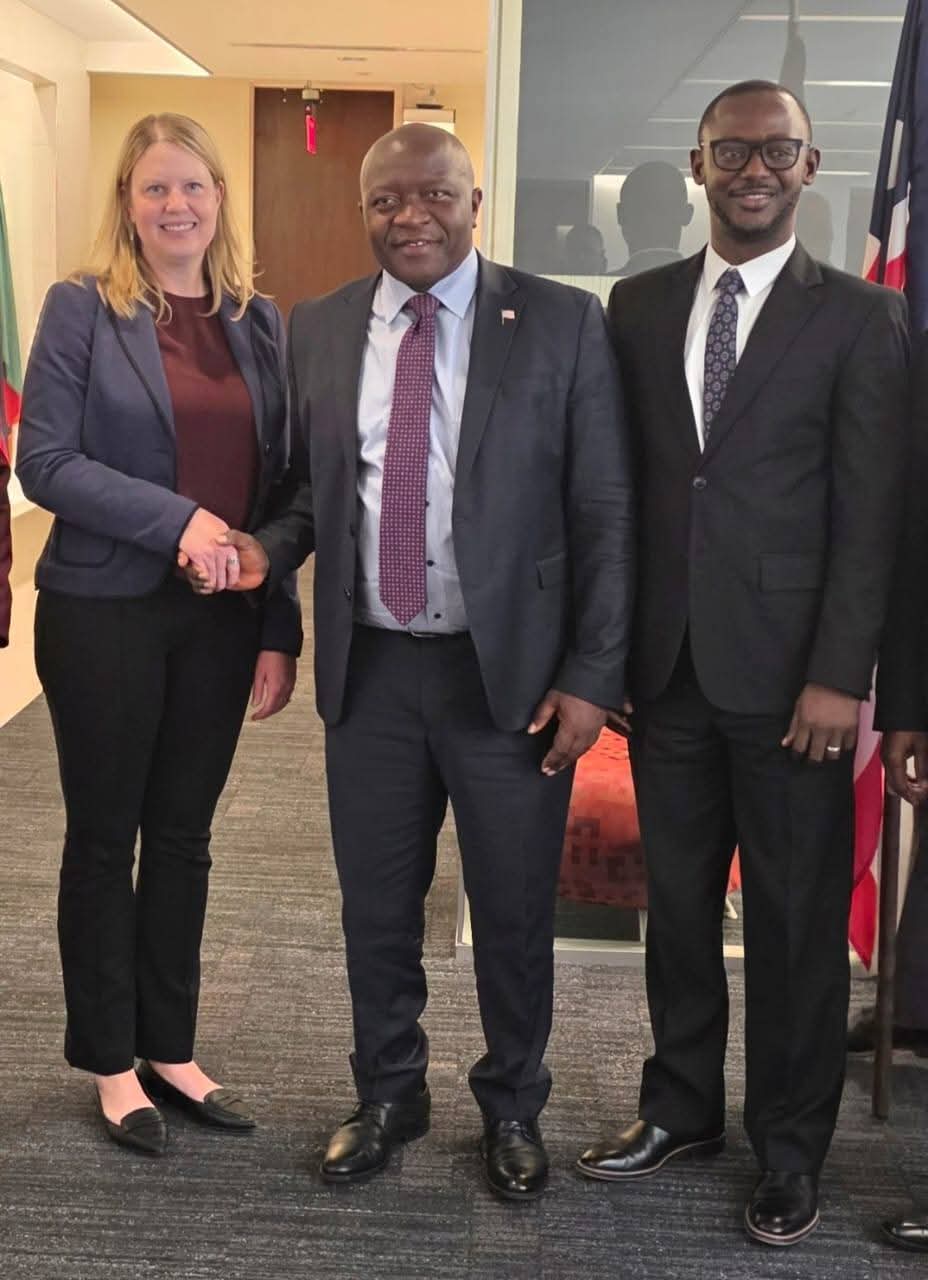
On the margins of the ongoing International Monetary Fund and World Bank Spring Meetings, Liberia’s Minister of Finance and Development Planning, Augustine Kpehe Ngafuan, led a senior ministerial delegation to a strategic meeting with Carrie Monahan, Managing Director for Africa at the MCC, and her technical team.
The meeting marked a crucial phase in Liberia’s effort to qualify for a second MCC Compact, an agreement that could unlock hundreds of millions of dollars in grant financing for key infrastructure and economic development priorities.
Energy and Mining at the Center of Talks
According to officials familiar with the discussions, the engagement featured an in-depth technical presentation outlining possible areas of MCC support, particularly in Liberia’s underdeveloped electricity network and mining value chain.
Liberia’s electricity access remains among the lowest in the world.
According to recent World Bank estimates, fewer than 35% of Liberians have access to electricity, while rural access rates remain significantly lower.
High tariffs often above regional averages continue to constrain business growth and household welfare.
Officials say improved power generation, grid expansion, and sector reforms could become central pillars of the second compact.
Liberia’s mining sector, which contributes substantially to exports through iron ore and gold, was also highlighted as a priority.
The country possesses significant untapped mineral resources, including iron ore deposits once among Africa’s most productive before years of civil conflict disrupted operations.
Technical Sessions Lay Groundwork
The high-level Washington meeting followed two and a half days of intensive joint technical sessions between Liberian government experts and MCC specialists.
Liberia’s technical team was led by Deputy Finance Minister for Economic Management Dehpue Zuo and included:
Alieu Fuad Nyei, MCC National Coordinator
William Hines, Deputy Minister of Mines
Charles Umehai, Deputy Minister of Energy
Mohammed Sow, Deputy Managing Director of the Liberia Electricity Corporation
Senior officials joining Minister Ngafuan at the ministerial-level engagement also included:
Roland Giddings- Minister of Public Works,,
Jerolinmek Piah, Minister of Information,
Mohammed Sheriff, Managing Director of the Liberia Electricity Corporation and Dr.
Al-Hassan Conteh, Liberia’s Ambassador to Washington, the USA, respectively.
A Chance to Build on First Compact Success
Liberia previously benefited from its first MCC Compact signed in 2015, valued at approximately US$257 million, which focused largely on rehabilitating the Mount Coffee Hydropower Plant, strengthening the Liberia Electricity Corporation, and improving road maintenance systems.
That compact was widely viewed as a major milestone in Liberia’s post-war reconstruction.
The rehabilitation of Mount Coffee significantly increased domestic generation capacity and reduced dependence on expensive imported fuel.
A second compact could deepen those gains while addressing persistent structural bottlenecks in energy reliability, transport, and productive sectors.
Discussions in Washington centered on validating outcomes from the technical sessions, reviewing progress made so far, and agreeing on next steps in the compact development process.
MCC compacts are highly competitive and awarded to countries that meet standards on governance, economic freedom, and investment in citizens.
Liberia’s continued engagement signals confidence in the country’s reform trajectory under President Joseph Nyuma Boakai’s administration.
Strategic Importance for Liberia
For Liberia, securing a second MCC Compact would come at a pivotal time as the government seeks to stimulate growth, attract foreign direct investment, and create jobs for a youthful population.
The country’s economy is projected to grow moderately in 2026, driven by mining, agriculture, and services, but infrastructure deficits remain a major constraint.
Analysts say successful negotiations with the MCC could provide a major boost to investor confidence while accelerating national development goals.
With technical consultations progressing and high-level political commitment evident, Liberia’s second MCC Compact discussions may soon enter a decisive stage.
If approved, the agreement could become one of the most significant external development partnerships for Liberia this decade bringing fresh momentum to power expansion, mining modernization, and long-term economic transformation.


