



By : Julius Konton
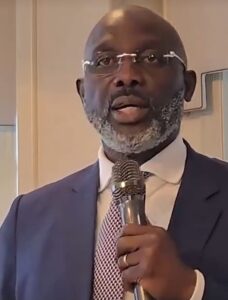
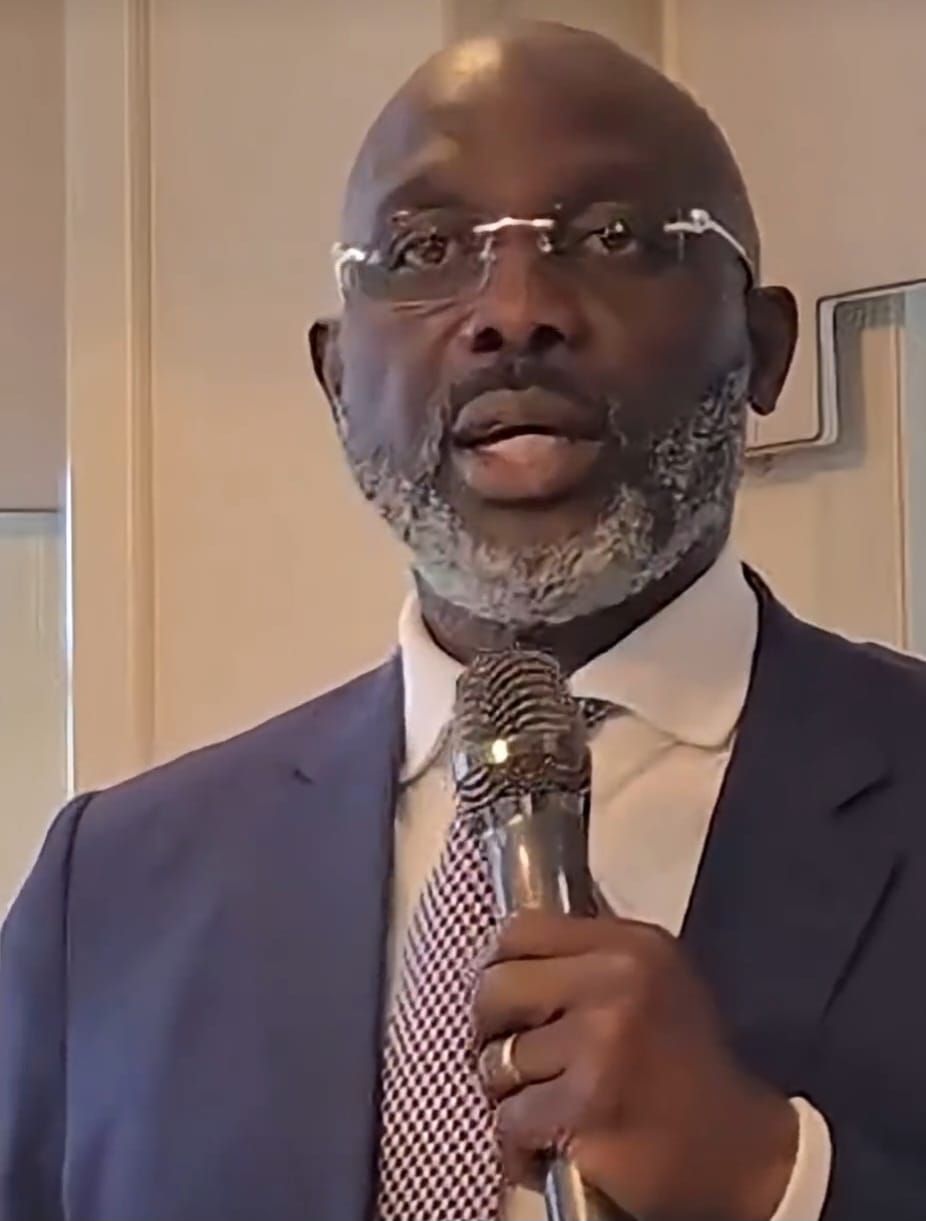
Former Liberian President and political leader of the Coalition for Democratic Change (CDC), George Manneh Weah, has formally declared his intention to seek the presidency again in Liberia’s 2029 General and Presidential Elections, signaling an early return to national electoral politics.
Addressing supporters, Weah said he was prepared to contest the presidency and called for renewed commitment to what he described as a movement built around hope, political participation and national development.
“I say to you with humanity, with resolve and with the full weight of everything we have built together, hand in hand, chapter by chapter, sacrifice by sacrifice, that I will be a candidate for the Presidency of the Republic of Liberia in 2029, with your support and blessings and the mandate of the Congress for Democratic Change,” Weah said.
The declaration places the former president at the center of Liberia’s emerging political conversation more than two years before the next presidential election.
The World Bank has identified the CDC, led by Weah, as Liberia’s main opposition political party and noted that political parties are already strengthening their structures ahead of the 2029 presidential and legislative elections.
Weah, who served as president from January 2018 to January 2024, said his decision to seek another term was driven by what he characterized as growing threats to the political and institutional gains achieved during his leadership and by concerns expressed by his supporters.
“I make this declaration because I have watched alongside my people everything that we labored to build being placed under threat, and I refuse to stay on the sidelines while the country is dismantled before our eyes,” he said.
He also praised CDC supporters for remaining committed to the party through periods of political difficulty.
“I say this because you, the partisans who have never wavered, who have carried this party through storm after storm, across oceans and across years, deserve the fight that matches your loyalty,” Weah added.
The former president further appealed to supporters at home and abroad, saying his political movement remained resilient and that he continued to identify with the aspirations of ordinary Liberians.
“Wherever you are and whatever your circumstances, I assure you that I am with you. I hear you, and together we will finish what we have started,” he said.
Weah’s declaration comes against the backdrop of a closely contested 2023 presidential runoff.
Liberia’s National Elections Commission announced Joseph Boakai as the winner with 50.64 percent of the vote, while Weah received 49.36 percent.
The final margin was 20,567 votes, according to election results reported by the National Elections Commission.
The 2023 contest followed Weah’s 2017 victory, when he defeated then-Vice President Joseph Nyuma Boakai in the presidential runoff and subsequently assumed office on January 22, 2018.
His presidency ended with the January 2024 transfer of power to Boakai.
Liberia’s broader political environment remains shaped by the country’s post-war democratic transition.
The World Bank notes that Liberia has held four democratic presidential elections and experienced peaceful electoral transfers since the end of the civil conflict in 2003, describing the achievement as significant but emphasizing that institutional and economic vulnerabilities remain.
The economic challenges facing Liberia are also likely to feature prominently in the political debate leading to 2029.
The World Bank reports that the economy grew by 5.1 percent in 2025, following 4.0 percent growth in 2024, while public debt declined from 57.2 percent of GDP in 2024 to 54.6 percent in 2025.
At the same time, the institution continues to identify poverty, limited productivity, weak public-sector capacity and the need for institutional reforms as major structural challenges.
In a 2025 assessment, the World Bank said Liberia would require significant institutional and policy reforms to achieve stronger, more inclusive long-term growth, including modernization of the public sector, greater domestic resource mobilization, economic diversification and increased private investment.
Against that backdrop, Weah’s 2029 declaration is likely to intensify discussion over governance, economic management, institutional development and the direction of Liberia’s democracy.
For the CDC, the announcement represents the beginning of what could become another major presidential campaign cycle.
For Liberia, it signals that the political contest for 2029 is already beginning to take shape, even as the country remains focused on addressing economic, institutional and development challenges.
Weah’s political future will ultimately depend on the CDC’s internal processes, the broader opposition landscape and the choices Liberian voters make when the 2029 elections arrive.


