




By: Julius Konton
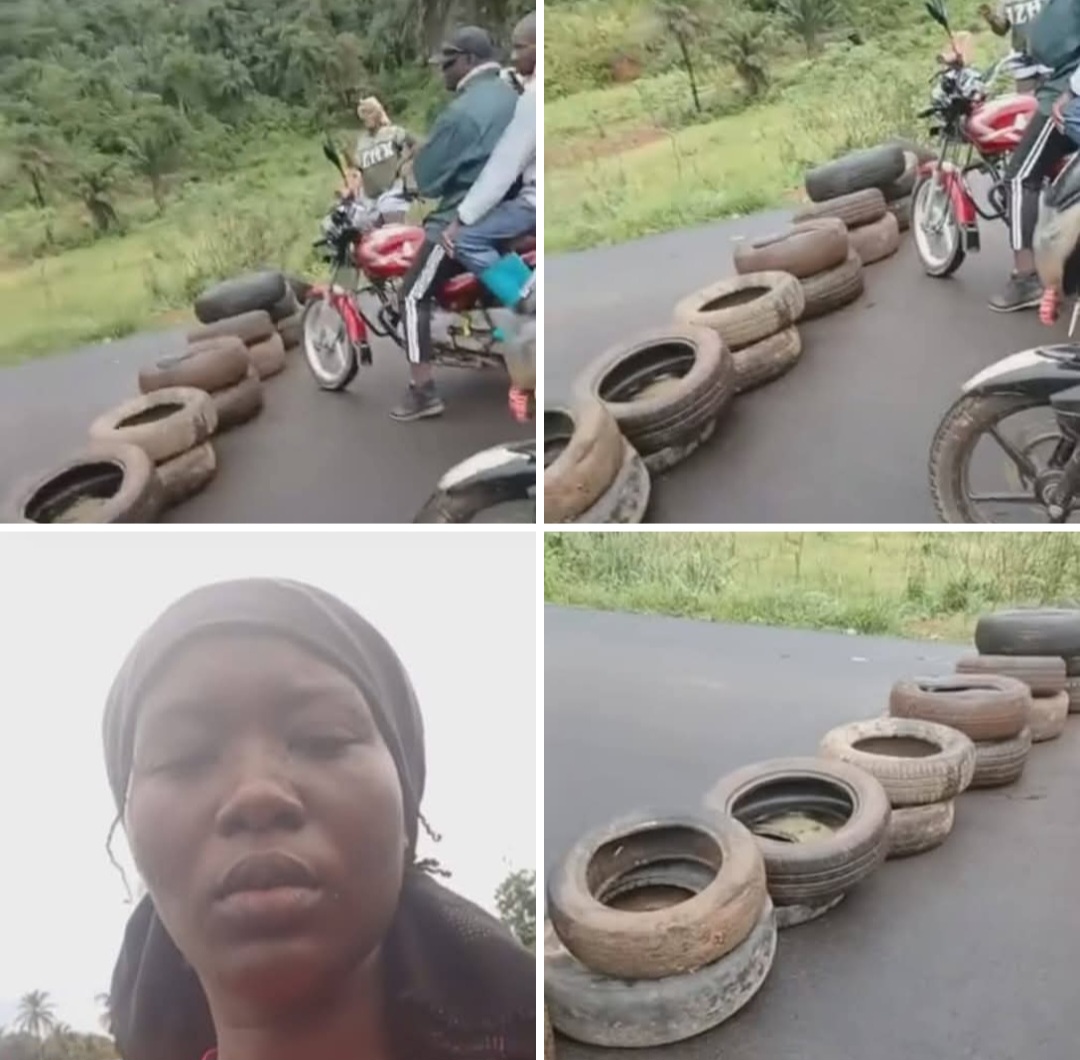
Tensions boiled over in Liberia’s Grand Cape Mount County as angry residents, mainly women and family members, staged a dramatic road blockade demanding urgent answers from police over the mysterious disappearance of a local man identified as Roland.
The protesters, described as sisters and close relatives of the missing man, used tires and barricades to block the main highway connecting Robertsport to Monrovia, bringing transportation to a standstill and disrupting commercial movement in the county.
The demonstration marks the second protest in less than two weeks over Roland’s disappearance, intensifying public pressure on local authorities amid growing concerns over what residents describe as an alarming pattern of unresolved missing persons cases in the county.
“We are here again because the government is sleeping on us, but we need answers,” one visibly angry female protester declared.
According to the family, Roland has been missing for eight days, with no concrete information, no confirmed sightings, and no official breakthrough communicated by law enforcement.
“We have been patient. Every time we go to the police commander, he gives us no good response. Our brother is not a chicken. A human being got missing and there is not even a single trace. This is sad,” the woman lamented.
A Pattern of Fear
The family’s anger is fueled by what they describe as a troubling pattern.
Roland’s disappearance reportedly brings to four the number of recent unresolved missing persons cases in Grand Cape Mount County.
Relatives allege that in at least three previous incidents, victims disappeared and were never found, with investigations either stalled or ending with tragic reports of death.
“Which investigation without a trace up to now?” another relative questioned. “We heard death news from previous cases, but we refuse to accept that. We want our brother alive.”
Liberia has faced growing public concerns over criminal accountability and police response times.
According to Liberia National Police annual crime statistics, reported serious crimes including kidnappings, disappearances, and suspicious deaths have seen fluctuating increases in rural counties over the past five years, although comprehensive national missing persons data remains limited.
Security analysts say the absence of a centralized missing persons database in Liberia continues to undermine investigations and public trust.
Questions Over Police Capacity
Local police authorities have maintained that investigations are ongoing, but they have not publicly disclosed details, citing operational sensitivity.
The silence has only deepened suspicion among family members, who accuse police of poor communication and possible negligence.
The protesters further allege that suspects connected to the case were arrested, yet families have received no official updates regarding interrogations or evidence.
“If it happens to me today, it might happen to someone else tomorrow. This is not one person’s cry; it is everyone’s cry,” one protester warned.
Liberia’s law enforcement system has historically struggled with investigative capacity, particularly outside Monrovia, where resource limitations, forensic deficiencies, and logistical constraints often delay criminal investigations.
A 2024 security sector review showed that nearly 62% of rural criminal investigations remain unresolved beyond six months due to limited manpower and investigative tools.
Economic and Social Impact
The protest severely affected movement between Robertsport and Monrovia, halting public transportation, motorbike traffic, and commercial deliveries.
Grand Cape Mount, a strategic county in Western Liberia relies heavily on road transport for trade and movement.
Prolonged disruptions could affect local businesses and border commerce.
Witnesses say the protest remained tense but peaceful as of press time, with community elders and local officials attempting to negotiate with demonstrators.
National Concern Growing
The incident has reignited broader national debate over disappearances, policing accountability, and community safety in Liberia.
Human rights advocates argue that recurring unresolved disappearances risk eroding confidence in state institutions and could trigger wider civil unrest if not urgently addressed.
For Roland’s family, however, the matter remains deeply personal.
“Let someone tell me how my brother left this city. Let someone tell me what happened. Today is today. No one leaves Robertsport until we get answers,” his sister cried.
As night fell, the road remained partially blocked, and police had yet to issue a fresh public statement.
For now, Grand Cape Mount waits not just for answers, but for hope.


