




By: Julius Konton
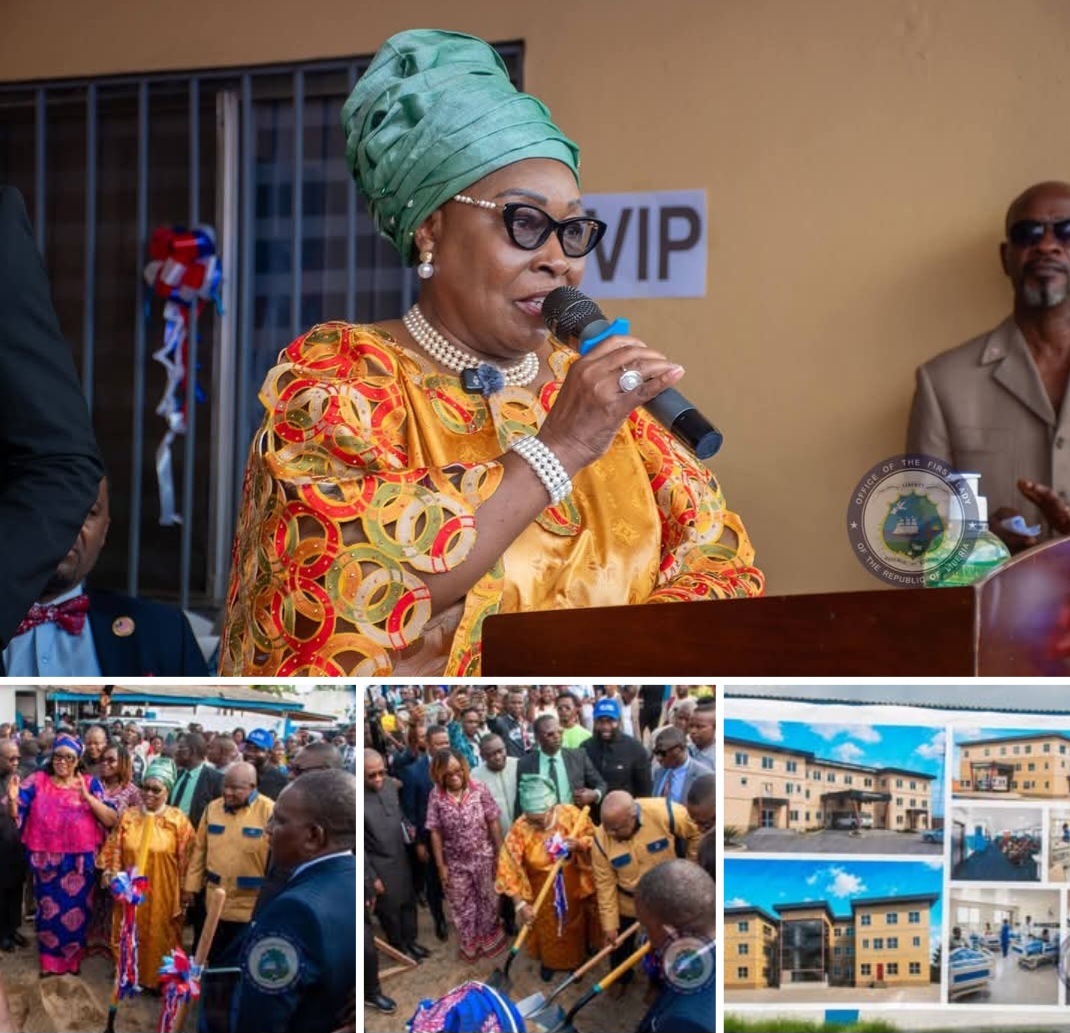
Liberia has taken another significant step toward strengthening maternal and neonatal healthcare with the groundbreaking of a new maternity hospital along Duport Road in Paynesville, a project officials say could help reduce the country’s persistently high maternal mortality rate and expand access to life-saving obstetric care.
Speaking at the ceremony on Thursday, Liberia’s First Lady, Kartumu Yarta Boakai, who also serves as the nation’s Champion for Maternal and Neonatal Health, described the project as “more than just a building,” calling it a symbol of hope, transformation, and national investment in future generations.
“This is not just a groundbreaking ceremony; this is the manifestation of a vision planted years ago,” the First Lady declared before government officials, international partners, religious leaders, and community members. “When we invest in maternal healthcare, we are not only constructing walls , we are safeguarding Liberia’s future.”
The project is expected to transform what was once a modest clinic into a modern maternity hospital equipped to serve thousands of women annually in one of Monrovia’s densely populated corridors.
Liberia continues to face one of the highest maternal mortality rates in West Africa.
According to recent health estimates, approximately 652 women die per 100,000 live births in Liberia , significantly above the global average of 223 deaths per 100,000.
Neonatal mortality remains equally alarming, with nearly 24 infant deaths per 1,000 live births, underscoring the urgent need for expanded maternal and child healthcare infrastructure.
Health experts say nearly 70% of maternal deaths in Liberia are caused by preventable complications such as hemorrhage, infection, obstructed labor, and hypertensive disorders, conditions that can be addressed through timely and quality hospital care.
For decades, Liberia’s healthcare system has struggled under the weight of civil conflict, underinvestment, and public health crises, including the devastating ebola which killed more than 4,800 people in Liberia and severely weakened maternal health services. During the Ebola crisis, facility-based deliveries dropped sharply, worsening maternal outcomes nationwide.
Since then, successive governments have sought to rebuild the health sector.
Under President ’s administration, maternal and neonatal healthcare has become a flagship component of the country’s broader social protection agenda.
First Lady Boakai reflected on her personal connection to the initiative, noting that one of the first healthcare programs she encountered upon entering office was the Duport Road maternal health project.
“I saw mothers who deserved safer deliveries. I saw children who deserved healthier beginnings. I saw families who needed quality healthcare close to home,” she said.
The Duport Road corridor, home to tens of thousands of residents, has long suffered from overstretched health facilities, forcing many expectant mothers to travel long distances for specialized maternity care.
Officials believe the new hospital will help reduce pressure on major referral institutions such as and improve emergency response times for obstetric cases.
The First Lady praised the faith-based partnership behind the project, describing it as an example of how global solidarity can address local healthcare challenges.
“True faith leaves footprints in communities. True faith heals. True faith builds. True faith transforms lives,” she said.
Liberia records an estimated 150,000 births annually, and health ministry data indicate that skilled birth attendance has improved from below 50% a decade ago to nearly 80% today.
However, rural and peri-urban disparities remain wide, particularly in poor urban settlements.
Analysts say infrastructure expansion like the Duport Road Maternity Hospital is critical if Liberia hopes to achieve the Sustainable Development Goal three of reducing maternal mortality to less than 70 deaths per 100,000 live births by 2030.
For many women in the Duport Road community, the project represents more than concrete and steel; it is a promise of survival, dignity, and safer childbirth.
As bulldozers prepare the foundation, Liberia’s First Lady offered a vision that stretched beyond the present.
“Today we break ground. Tomorrow we save lives. And for generations to come, Liberia will reap the harvest of what is being planted here today.”
Once completed, the hospital is expected to become a key pillar in Liberia’s ongoing maternal health transformation, a country where every new maternity ward could mean the difference between life and death for countless mothers and newborns.


