




By: Julius Konton
Liberia has taken a major step toward modernizing its financial architecture with the launch of the Instant Inclusive Payment System (IIPS), a nationwide digital platform designed to enable real-time, secure, and low-cost electronic transactions across the country.
The system was officially unveiled Tuesday at the EJS Ministerial Complex in Oldest Congo Town by President Joseph Nyuma Boakai, Sr., under the auspices of the Central Bank of Liberia (CBL), marking what government officials described as a watershed moment in Liberia’s digital transformation agenda.
“This is not merely a technological upgrade,” President Boakai said during the launch. “It is a declaration that no Liberian regardless of income, location, or status should be excluded from the financial system.”
Tackling Financial Exclusion
According to data from the Central Bank of Liberia and development partners, more than 60 percent of Liberian adults remain unbanked, while cash transactions dominate over 85 percent of daily payments nationwide.
The heavy reliance on cash has long been associated with high transaction costs, security risks, delayed government payments, and limited access to credit for small businesses.
The IIPS aims to change that by enabling instant transfers between banks, mobile money operators, businesses, and individuals, reducing settlement times from days to seconds.
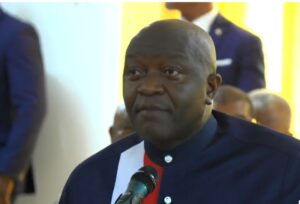
According to the Executive Governor of the Central Bank of Liberia Henry Saamoi, the system is interoperable, allowing users on different financial platforms to transact seamlessly critical breakthrough in a market where mobile money usage has grown rapidly but remains fragmented.
Supporting the ARREST Agenda
President Boakai linked the launch of the IIPS to his administration’s ARREST Agenda, which prioritizes Agriculture, Roads, Rule of Law, Education, Sanitation, and Tourism as pillars of national development.
Agriculture: With agriculture employing nearly 40 percent of Liberia’s workforce, officials say instant digital payments will allow farmers to receive proceeds immediately, improving liquidity and reducing reliance on informal lenders.
Infrastructure and Roads: While physical roads connect communities geographically, Boakai said the new payment system creates “digital highways” that connect them economically.
Rule of Law and Governance: Digitizing government payments such as civil service salaries, pensions, and social protection transfers could significantly reduce payroll leakages, which past audits have estimated at millions of U.S. dollars annually.
Education: Schools and students will be able to pay fees and receive subsidies electronically, lowering administrative barriers and improving accountability.
Tourism and Sanitation: Small-scale entrepreneurs in these sectors stand to benefit from faster payments and improved transaction records, enhancing access to financing.
Boosting Transparency and Investment Confidence
Government officials believe the IIPS will strengthen fiscal discipline and investor confidence by improving transparency in public financial management.
Real-time payments and digital records are expected to reduce delays in contractor payments and curb corruption risks associated with cash handling.
“Transparency is justice,” Boakai said. “When payments are traceable and instant, trust in public institutions grows.”
Economists note that countries adopting instant payment systems often see measurable gains in economic efficiency.
According to global development estimates, digital payments can reduce transaction costs by up to 80 percent and increase GDP by 1 to 2 percent over the medium term through improved productivity and financial inclusion.
Empowering Small Businesses and Youth
Small and medium-sized enterprises (SMEs), which account for over 70 percent of employment in Liberia’s informal economy, are expected to be among the biggest beneficiaries.
The system allows businesses to transact in real time, manage cash flows better, and establish digital transaction histories that can support access to credit.
The president also highlighted opportunities for Liberia’s growing youth population, encouraging innovators and software developers to build new applications and services on the IIPS platform.
“This system is a bridge from exclusion to empowerment,” he said.
A Collaborative Effort
The launch of the IIPS is the result of collaboration among the Central Bank of Liberia, commercial banks, mobile money operators, fintech providers, and international development partners.
The CBL boss emphasized that the platform is nationally owned and designed to serve all Liberians, urban and rural alike.
The system’s branding, “Crafting an Instant and Inclusive Liberia,” underscores the government’s ambition to position digital finance as a public good rather than a luxury.
Authorities stressed that Tuesday’s launch marks the beginning, not the end, of Liberia’s digital finance journey.
Plans are underway to expand digital financial services, integrate additional technologies, and deepen financial literacy nationwide.
President Boakai called on citizens, businesses, and institutions to adopt and trust the new system.
“Development is not a spectator sport,” he said. “It requires participation, ownership, and belief in our collective future.”
As Liberia pushes toward a more inclusive and transparent economy, officials say the Instant Inclusive Payment System could become a cornerstone of national growth helping ensure that opportunity is no longer reserved for the few, but accessible to all.
Editor’s Note
The launch of Liberia’s Instant Inclusive Payment System (IIPS) marks a defining moment in the country’s economic and governance reform journey.
Beyond its technological significance, the initiative signals a strategic shift toward financial inclusion, transparency, and efficiency at a time when cash dependency and limited access to formal banking continue to constrain growth.
By aligning the IIPS with President Joseph Nyuma Boakai’s ARREST Agenda, the government is positioning digital finance as an enabler across key sectors from agriculture and education to public service delivery and small business development.
The emphasis on interoperability and real-time transactions underscores a recognition that modern economies thrive on speed, trust, and accessibility.
This development also places Liberia within a growing group of African countries leveraging instant payment systems to reduce leakages, strengthen public financial management, and expand opportunities for citizens traditionally left outside the formal financial system.
If effectively implemented and widely adopted, the IIPS could help lower transaction costs, improve accountability, and deepen investor confidence.
As with all major reforms, the success of the IIPS will ultimately depend on sustained political will, robust regulation, and public trust.
Its true impact will be measured not at the launch podium, but in markets, farms, classrooms, and households across Liberia where inclusion must translate into tangible economic empowerment.


