
By: Julius Konton
The Kingdom of Belgium has reaffirmed its clear and consistent support for the Autonomy Initiative proposed by the Kingdom of Morocco, describing it as “the most adequate, serious, credible, and realistic basis” for achieving a fair, lasting, and mutually acceptable political solution to the long-standing regional dispute over the Sahara.
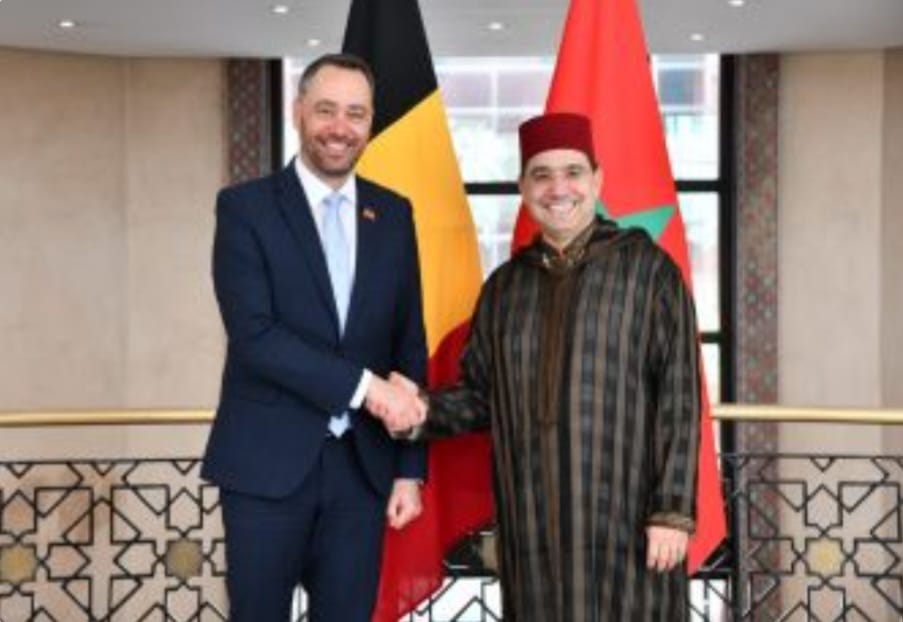
The position was formally articulated on Monday in Rabat by Maxime Prévot, Belgium’s Deputy Prime Minister and Minister of Foreign Affairs, European Affairs, and Foreign Trade, following high-level talks with Nasser Bourita, Morocco’s Minister of Foreign Affairs, African Cooperation and Moroccan Expatriates.
Anchored in Diplomacy and International Law
Belgium’s stance, Prévot emphasized, is fully aligned with international law and reflects the commitments enshrined in the Joint Declaration signed in Brussels on October 23, 2025, which acknowledged the existential importance of the Sahara issue for Morocco’s sovereignty and national unity.
By reiterating this position at ministerial level, Belgium joins a growing list of European and international actors who view Morocco’s 2007 Autonomy Initiative as the only pragmatic framework capable of breaking decades of political stalemate.
The plan proposes extensive self-governance for the Sahara region under Moroccan sovereignty, an approach increasingly seen by diplomats as a middle ground between full independence and centralized rule.
More than 30 countries worldwide, including several EU members, have either explicitly endorsed or publicly described the initiative as a serious and credible basis for negotiations, signaling a gradual but notable shift in international consensus.
Economic Diplomacy Moves South
Beyond political declarations, Prévot underscored Belgium’s intention to translate diplomatic alignment into concrete economic engagement.
He announced that the Belgian Ambassador in Rabat will soon undertake an official visit to the Sahara region to prepare and support Belgian investment initiatives, including:
Exploratory visits by Belgian companies
Trade fairs organized in cooperation with the region’s three development agencies
Sectoral partnerships in logistics, renewable energy, agri-business, and port infrastructure
Morocco has invested billions of dollars over the past decade in the Sahara’s development, including highways, ports such as Dakhla Atlantique, renewable energy projects, and vocational training hubs turning the region into one of Africa’s fastest-growing investment frontiers.
Consular Coverage Without Regional Distinction
On consular matters, Belgium reiterated that its Consulate General in Rabat retains jurisdiction over the entire Moroccan territory, without regional distinction, including the Sahara.
This ensures uninterrupted consular services for Belgian nationals residing in or traveling through the region, reinforcing Belgium’s practical recognition of Morocco’s administrative authority.
A Relationship Marked by Strategic Convergence
Prévot’s visit reflects a broader positive momentum in relations between Belgium and Morocco, characterized by regular political dialogue, expanding trade volumes, and cooperation on migration management, counterterrorism, and regional stability.
Trade between the two countries exceeded €2.5 billion in recent years, with Belgium ranking among Morocco’s key European trading partners.
Moroccan exports ranging from automotive components to agri-food products continue to grow in Belgian markets, while Belgian firms remain active in logistics, chemicals, and infrastructure.
Regional and Global Implications
Belgium’s reaffirmation is diplomatically significant within the European Union, where positions on the Sahara issue have historically varied.
Analysts say Brussels’ clarity adds momentum to a more unified European approach, increasingly grounded in realism, regional stability, and economic partnership with Morocco widely viewed as a cornerstone of North African and Sahelian security.
As diplomatic winds continue to shift, Morocco’s Autonomy Initiative appears to be consolidating its status as the central reference point for any future UN-led political process.
