



By: Matalay Kollie
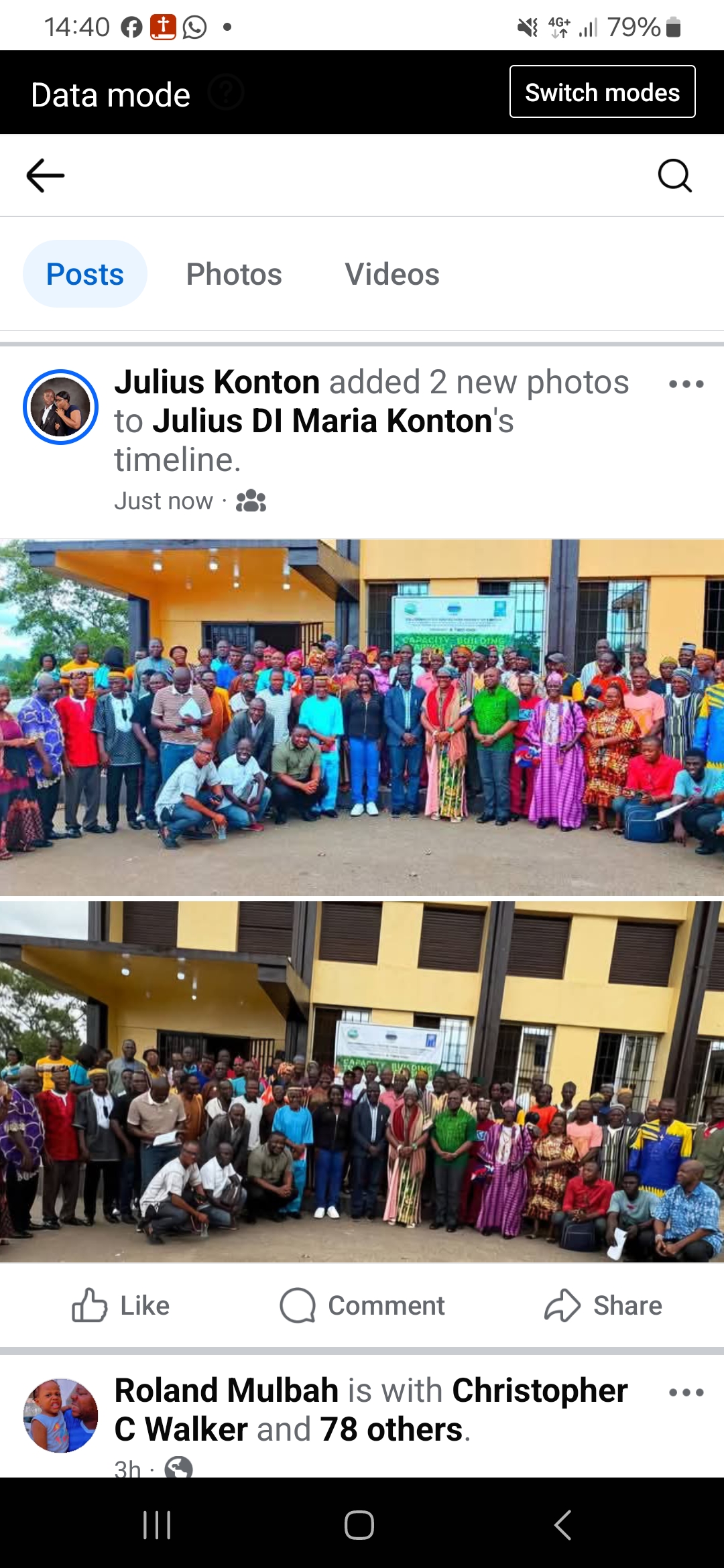
In a collaborative effort aimed at bolstering local environmental governance, the Environmental Protection Agency (EPA) of Liberia, with support from the United Nations Development Programme (UNDP) and its Energy and Environment Project, has initiated a two-day capacity-building workshop for members of the County Environment Committees from Bong and Gbarpolu Counties.
Kicking off on June 6, the workshop, themed “Environment Protection Management: Taking Environmental Governance to the People,” is designed to empower county-level environmental teams to better address pressing local environmental issues.
The initiative is a crucial part of the EPA’s ongoing decentralization efforts, which seek to bring environmental governance closer to the communities, particularly to tackle issues like pollution, illegal mining, and the impacts of climate change.
Established in 2002, the EPA serves as Liberia’s primary institution for environmental protection and the sustainable management of natural resources.
The agency has invoked Sections 24 to 27 of the EPA Act, which mandates the creation of County Environment Committees to enforce environmental laws and raise community awareness on these critical issues.
The decentralization process, which commenced in 2024 as part of the EPA’s 100-day deliverables, has already seen the establishment of offices in several counties, including Grand Cape Mount, Gbarpolu, Montserrado, and Rivercess, with plans to open additional offices in Grand Kru and River Gee Counties this year.
At the workshop’s opening, EPA Executive Director Dr. Emmanuel Urey Yarkpawolo emphasized the collective responsibility of all Liberians in addressing environmental challenges.
He stated that the resolution of these issues cannot rest on a single individual, remarking, “Environmental issues are the concern of every Liberian. We must all take ownership.”
He expressed that many current environmental problems, particularly illegal mining, are linked to human activities that result in significant pollution and land destruction.
Dr. Yarkpawolo highlighted that the training is integral to the EPA’s broader objective of enhancing the capacity of local teams to respond swiftly and effectively to environmental challenges.
“Decentralizing is about making environmental governance visible at the grassroots level, enabling quicker responses to issues as they arise,” he noted.
He urged members of the County Environment Committees to actively collaborate with local leaders, lawmakers, and civil society in their environmental protection efforts.
“This training is just the beginning. We hope you will return to your counties and apply what you learn for the benefit of your people,” he added.
Bong County Superintendent Hawa Loleyah Norris welcomed the participants, indicating her administration’s complete support for the EPA’s initiatives.
Her office has been actively working in partnership with the EPA to promote environmental sustainability in the region.
Gbarpolu County Senator Botoe Kanneh also joined the workshop and praised the EPA for organizing the training.
She called attention to the growing issue of illegal mining in Gbarpolu and appealed to the EPA and its partners to give the county more support.
“Too many rivers are being destroyed by illegal mining. We need help to stop this,” she stated.
She also assured the gathering that the Gbarpolu Legislative Caucus is ready to work with the EPA.
Ms. Josephine Mongor, Finance and Administrative Associate at UNDP, spoke on behalf of the agency and praised the EPA’s decentralization efforts.
“This is not just a reform, it is a bold commitment to include everyone in protecting our environment,” she said.
She mentioned that with UNDP support, the EPA has already set up offices in four counties and is now expanding further.
“We are proud to be part of this journey,” she said. Mongor also highlighted that the participation of women, youth, traditional leaders, and local authorities in the training is a positive sign of inclusive governance.
“Environmental problems affect all of us, and the best way to fight them is to work together,” she said, adding that UNDP will continue to stand by the EPA as the decentralization process moves forward.
The workshop will end on Saturday, June 7, 2025, reinforcing the commitment to enhancing environmental governance throughout Liberia.


