
By: Julius Konton
As part of ongoing efforts to strengthen democratic accountability and legislative transparency in Liberia, InfoQuest Liberia on February 25 held a high-level engagement with the Office of the Deputy Chief Clerk of the House of Representatives, reinforcing collaboration between civil society and the national legislature.
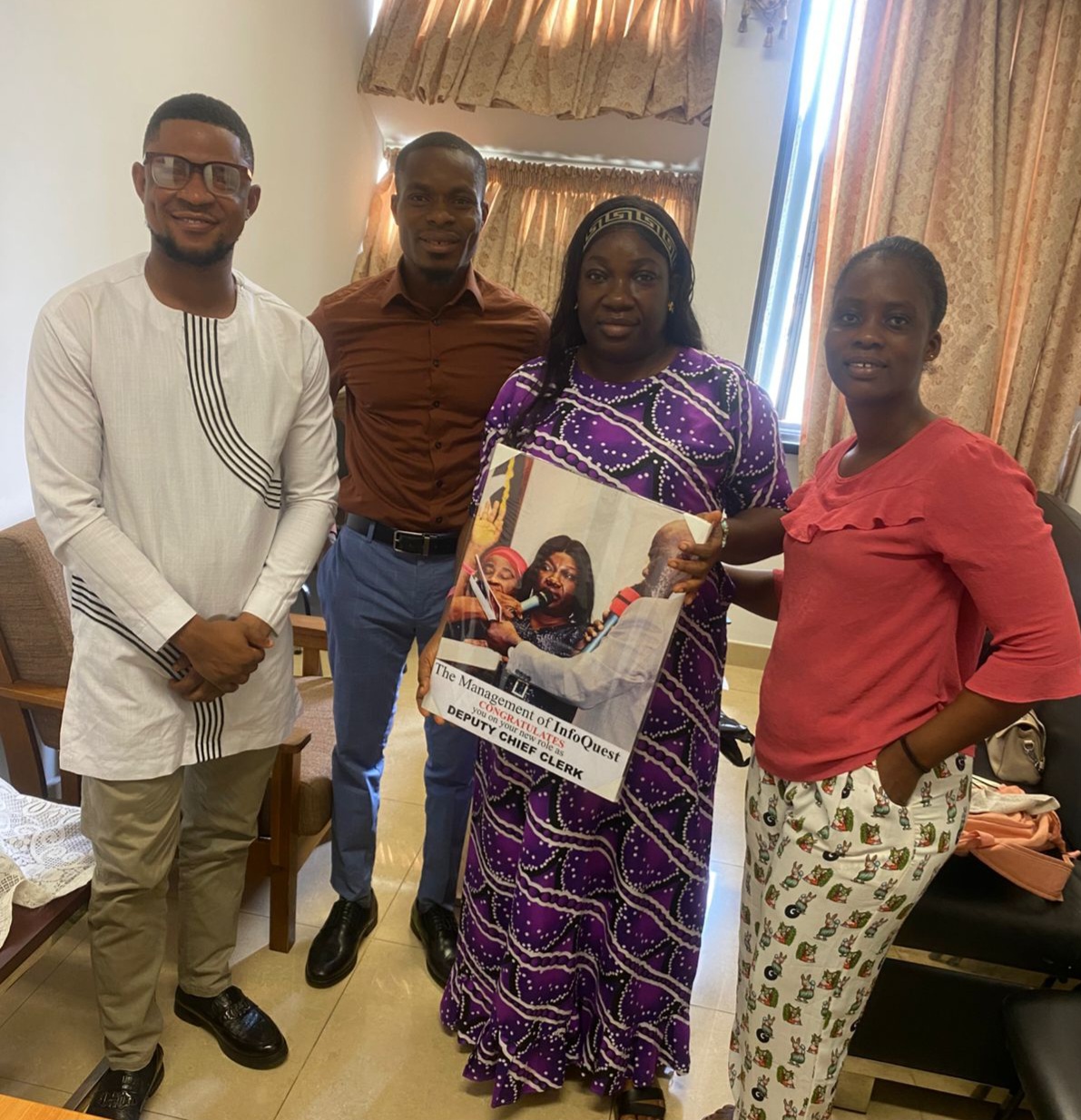
The meeting, held in Monrovia, brought together InfoQuest’s monitoring team and Tuah K. Wood Ross, Deputy Chief Clerk of the House of Representatives.
The engagement forms part of InfoQuest’s broader mandate to monitor, document, and analyze the performance of members of the national legislature in line with democratic governance standards.
Tracking Legislative Performance
Speaking during the discussion, InfoQuest Project Manager Artvic Yeanay provided an overview of the organization’s monitoring framework, outlining its methodology and core activities.
He emphasized that the project assesses legislative performance using three key indicators, including lawmakers’ participation in legislative processes, responsiveness to constituents, and adherence to procedural and ethical standards.
According to governance data from regional democracy watchdogs, effective parliamentary oversight can improve legislative productivity by up to 30 percent, while transparent performance tracking significantly increases public trust in democratic institutions.
In Liberia, where the bicameral legislature plays a central role in lawmaking and budget approval, civil society monitoring has increasingly been viewed as a critical accountability tool.
A History of Collaboration
In response, Deputy Chief Clerk Wood Ross expressed appreciation for InfoQuest’s work and recalled her previous professional engagements with the organization.
She welcomed the continued partnership and underscored the importance of structured monitoring initiatives to enhance lawmakers’ understanding of their constitutional responsibilities particularly in bill drafting, committee work, and legislative oversight.
Liberia’s House of Representatives, established under the 1986 Constitution, consists of 73 members elected to six-year terms.
While the legislature has passed landmark laws over the past two decades, governance assessments indicate that gaps remain in legislative capacity, policy analysis, and public engagement areas where civil society collaboration has proven effective in other West African democracies.
Call for Broader Institutional Engagement
Deputy Chief Clerk Wood Ross further recommended that InfoQuest expand its engagement to other technical departments of the legislature, including the Legislative Budget Office and related units, to ensure that monitoring outcomes translate into practical reforms and improved implementation.
Such cross-departmental collaboration, she noted, would help lawmakers better align legislation with national development priorities and fiscal realities, especially as Liberia continues to face economic recovery challenges and rising public demand for effective governance.
Symbolic Gesture of Appreciation
As a gesture of appreciation for the sustained working relationship, Infoqeust through its Office Manager Erica Dortu presented a token of goodwill to the Deputy Chief Clerk.
Wood Ross, in turn, expressed her deepest thanks, describing the engagement as a positive step toward institutionalizing transparency and accountability within the legislature.
The meeting reflects a growing recognition in Liberia that strong legislatures require strong partnerships between elected officials, professional staff, and civil society organizations.
As InfoQuest continues its monitoring work, stakeholders say sustained engagement could play a key role in improving legislative effectiveness, enhancing public confidence, and consolidating democratic governance in the country.
