




By: Julius Konton
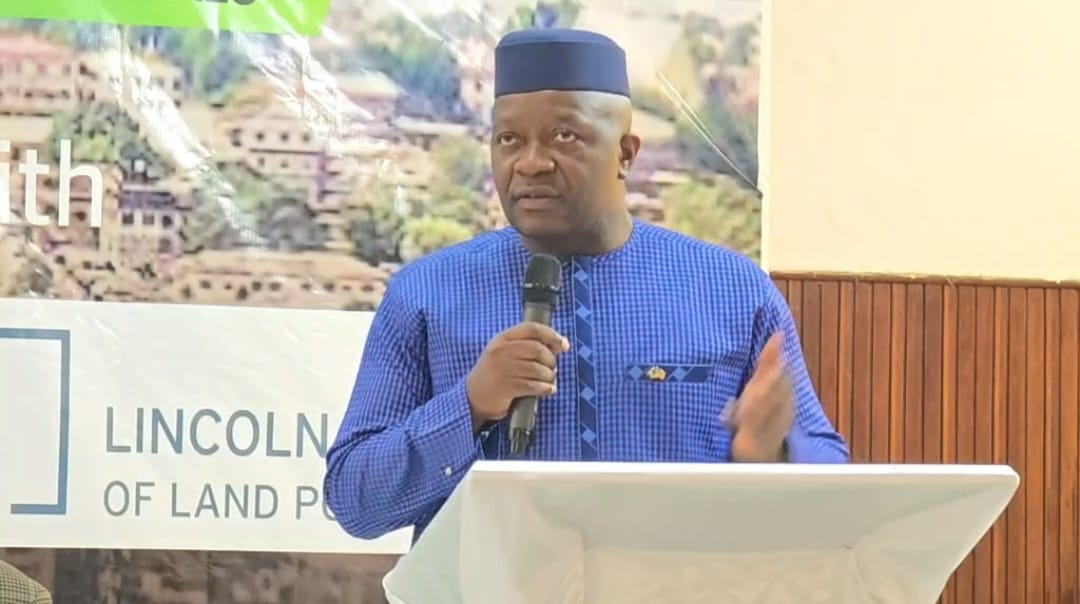
Liberia’s Minister of Finance and Development Planning, Augustine Kpehe Ngafuan, has launched a five-day executive training program on unlocking land-based revenue, bringing together African city leaders, urban planners, and policy experts to explore sustainable ways of financing the continent’s rapidly expanding cities.
The high-level training, held in Monrovia, aims to equip municipal leaders with practical tools to transform land resources into reliable revenue streams capable of funding infrastructure, housing, and public services in Africa’s fast-growing urban centers.
Opening the program, Minister Ngafuan urged participants to see land not simply as a physical asset but as a strategic economic instrument capable of shaping Africa’s urban future.
“We must work together to transform land into opportunity and transform our cities into engines of prosperity,” Ngafuan told delegates.
Africa’s Urban Boom and the Financing Challenge
Ngafuan warned that Africa is urbanizing faster than any other region in human history, creating unprecedented pressure on municipal governments.
According to United Nations urbanization projections, Africa’s urban population currently estimated at around 600 million people is expected to triple by 2050, surpassing 1.4 billion urban residents.
This demographic transformation is rapidly increasing demand for:
Affordable housing
Modern transportation networks
Water and sanitation systems
Reliable electricity
Waste management and public services
However, the minister noted that traditional financing models are failing to keep pace with these needs.
Historically, many African cities have relied heavily on:
National government transfers
International donor funding
External borrowing
But these sources are increasingly constrained by tight national budgets, shifting donor priorities, and growing public debt pressures.
“The question before African city leaders,” Ngafuan emphasized, “is how urbanization can become a driver of prosperity rather than a source of crisis.”
Land: Africa’s Most Underutilized Urban Asset
At the center of the discussion is land widely regarded by economists as one of the most valuable resources cities possess.
Yet across much of Africa, land remains largely underleveraged as a source of municipal revenue.
Ngafuan explained that when properly managed, land-based financing systems can generate sustainable funding for urban development.
These tools include:
Property taxation
Land value capture
Betterment levies
Development charges
Strategic public land management
The underlying principle is simple.
When governments invest in infrastructure such as roads, drainage systems, zoning regulations, or public utilities, the value of surrounding land typically rises.
A portion of that increased value, Ngafuan said, should return to the public sector to finance further development.
Globally, land-based revenue systems form a core pillar of municipal finance.
In many developed economies, property taxes account for 20–40 percent of local government revenue.
“In Liberia and across much of Africa,” Ngafuan observed, “this potential remains largely untapped.”
Barriers to Effective Land Revenue Systems
Despite the opportunities, African cities face significant structural barriers in implementing land-based financing.
Ngafuan outlined several major challenges:
Administrative Weaknesses
Many municipalities lack complete property records, making it difficult to identify taxable assets.
Outdated Valuation Systems
Property valuation rolls in many countries are decades old, leading to severe under-assessment.
Limited Digitization
Without modern digital land registries, tax collection systems remain inefficient.
Political Resistance
Enforcement of property taxes often faces resistance from influential property owners.
Legal Constraints
Outdated legislation and excessive tax exemptions further weaken revenue potential.
Weak Service Delivery
When citizens see little improvement in public services, compliance with tax obligations declines.
“These constraints,” Ngafuan said, “are not destiny. They are obstacles that can be overcome through deliberate reform.”
Liberia’s Reform Efforts
Liberia, he said, is already taking steps to modernize its land administration and municipal revenue systems.
Through the Liberia Revenue Authority’s Real Estate Tax Expansion Project, more than 20,000 properties in Margibi and Grand Bassa counties have recently been registered and incorporated into the national tax system for the first time.
The initiative demonstrates that significant improvements are possible even in post-conflict environments, provided there is political commitment and technical support.
Liberia is also undertaking a major overhaul of its urban planning laws.
For the first time since 1958, the country is updating its zoning framework to support modern urban management and land-based financing.
The new zoning legislation developed under the Liberia Urban Resilience Project through extensive public consultations aims to:
Create transparent land markets
Improve institutional coordination
Support modern municipal revenue instruments
On March 5, 2026, the Ministry of Finance and Development Planning issued zoning implementation regulations, providing operational guidance while broader legislative reforms continue.
“This is policy moving from conception to implementation,” Ngafuan said.
Diaspora Investment and Urban Growth
Ngafuan also highlighted the critical role of Liberia’s diaspora in shaping urban development.
Liberians living abroad invest heavily in:
Residential housing
Real estate developments
Small and medium-sized businesses
These investments provide not only financial capital but also knowledge, professional networks, and long-term commitment to national development.
A transparent land administration system with reliable property records, secure ownership rights, and fair valuation processes can significantly strengthen diaspora confidence.
“When cities demonstrate the ability to manage land strategically,” Ngafuan noted, “capital follows.”
Such reforms, he added, can transform diaspora engagement from simple remittance flows into long-term productive investment.
Urban Reform and Liberia’s ARREST Agenda
Liberia’s development strategy, outlined in the government’s ARREST Agenda for Inclusive Development, places strong emphasis on strengthening cities as engines of economic growth.
According to Ngafuan:
Strong municipal revenue systems reduce pressure on national budgets.
Effective land governance builds public trust.
Transparent urban planning attracts domestic and international investment.
“When citizens see land revenues invested in roads, sanitation systems, and public spaces,” he said, “compliance increases and governance improves.”
Ultimately, well-managed urban land systems support:
Business expansion
Housing development
Job creation
Sustainable economic growth
Monrovia as a Regional Hub for Urban Innovation
Ngafuan said the training program also reflects Liberia’s growing role as a regional center for dialogue on urban governance and municipal finance.
In recent months, Monrovia has hosted several international gatherings involving African mayors, planners, and development experts.
Such events, he said, signal confidence in Liberia’s political stability, institutional credibility, and capacity to convene meaningful regional dialogue.
“Hosting this training in Monrovia is both symbolic and practical,” Ngafuan told the audience.
Participants will have the opportunity to observe Liberia’s reform efforts firsthand including both the country’s progress and the challenges that remain.
Call for Action
Ngafuan urged delegates to ensure that discussions during the five-day program go beyond theory.
“The true measure of success,” he said, “will be whether these conversations translate into reforms that improve the daily lives of urban residents.”
Municipal finance, he added, ultimately determines whether cities provide:
Paved streets instead of open sewage systems
Planned communities instead of informal settlements
Organized business environments instead of chaotic urban growth
International Collaboration
The training program is supported by global partners including the Lincoln Institute of Land Policy and the University of Pretoria, institutions widely recognized for their research and technical expertise in land governance and urban finance.
Ngafuan thanked the organizations for investing in Africa’s urban future and for selecting Liberia as the venue for the regional initiative.
He also acknowledged the leadership of the Monrovia City Government for supporting the event.
A Shared Learning Opportunity
Closing his remarks, the finance minister encouraged participants to build networks that will sustain reforms long after the program concludes.
“Learn from Liberia’s experiences,” he said. “And allow Liberia to learn from yours.”
“Share your insights, strengthen your partnerships, and build the foundations for cities that work for all Africans.”


