




By: Julius Konton
The Kingdom of Morocco and the Republic of Liberia have launched a series of high-level engagements ahead of this year’s Africa Day celebrations, placing water security, agriculture, economic cooperation and cultural exchange at the center of discussions aimed at strengthening African development and regional integration.
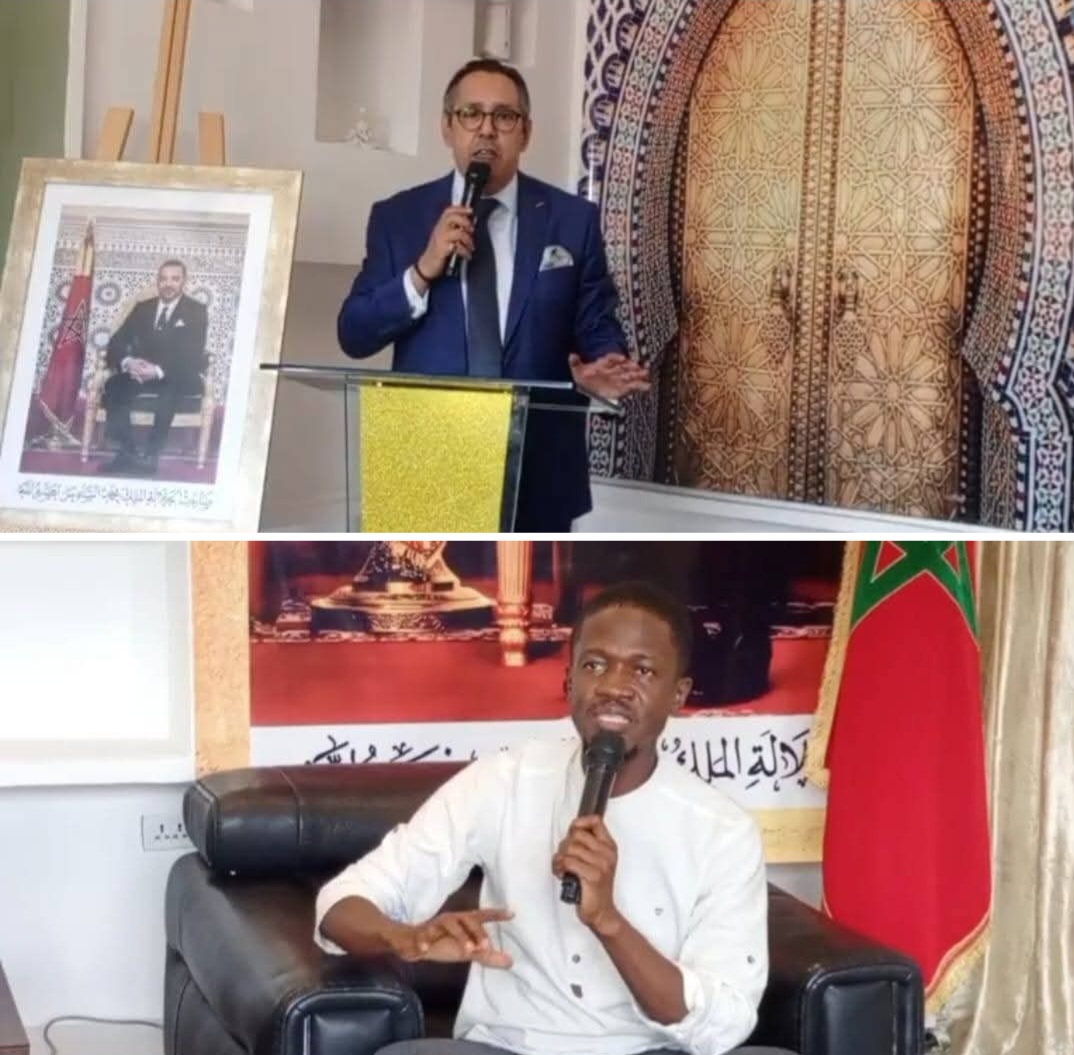
Speaking during a media engagement in Monrovia, Morocco’s Charge d’Affaires to Liberia, Lahoucine Rahmouni, announced that the celebrations, organized in partnership with Liberia’s Entertainment Ambassador Korte Dorbor from the Ministry of State for Presidential Affairs, will continue with a major policy dialogue on Friday involving experts from the water, education and agriculture sectors.
The discussions are expected to focus heavily on the strategic role of water in achieving food security, economic development and environmental sustainability across Africa.
“Water is key to life and nature,” Rahmouni emphasized. “Without water, agriculture cannot succeed, and without agriculture, food security remains a challenge for many African countries.”
Africa Day, commemorated annually on May 25, marks the founding of the Organization of African Unity (OAU) in 1963, now the African Union.
The celebration has evolved into a platform for African nations to reflect on continental unity, economic cooperation, peacebuilding and sustainable development.
According to the United Nations, nearly 418 million people in Africa still lack basic drinking water services, while climate change continues to intensify droughts and disrupt agricultural production across the continent.
Agriculture remains the backbone of many African economies, employing more than 60 percent of the continent’s workforce and contributing significantly to GDP in several countries.
Rahmouni linked the upcoming dialogue directly to Liberia’s national development strategy, particularly the government’s ARREST Agenda, which prioritizes Agriculture, Roads, Rule of Law, Education, Sanitation and Tourism as pillars for economic transformation.
He noted that Liberia possesses enormous agricultural potential due to its fertile soil, abundant rainfall and vast arable land, but stressed that improving water management and irrigation systems will be essential to unlocking the sector’s full capacity.
“Liberia has the natural resources needed to become a strong agricultural producer not only for itself but for neighboring countries,” he said. “The challenge is how to effectively manage and utilize water resources to support sustainable food production.”
The Moroccan diplomat further emphasized that Morocco is prepared to strengthen cooperation with Liberia through technical partnerships, capacity-building initiatives and agricultural training programs.
Morocco, recognized as one of Africa’s leaders in irrigation technology, fertilizer production and water resource management, has increasingly expanded its agricultural diplomacy across West Africa in recent years.
Rahmouni cited Ivory Coast as one of several African success stories where Moroccan partnerships have supported agricultural productivity and economic growth.
“The process is not only about job creation,” he added. “It is also about wealth generation, regional exchange and long-term prosperity.”
Beyond agriculture and water management, the discussions are also expected to address maritime security and economic cooperation.
Liberia, home to one of the world’s largest shipping registries, continues to play a strategic role in international maritime commerce.
Rahmouni disclosed that Morocco has already signed maritime-related cooperation agreements with Liberia and thirteen other countries aimed at strengthening risk mitigation, trade facilitation and commercial exchange.
Analysts say maritime cooperation is becoming increasingly important for African economies as the continent seeks to expand intra-African trade under the African Continental Free Trade Area (AfCFTA), which aims to create a single market of more than 1.4 billion people with a combined GDP exceeding US$3 trillion.
The Africa Day activities will also feature cultural festivals designed to celebrate African identity and artistic creativity.
Organizers say traditional performances, music, dance and entertainment showcases will form a major part of the celebrations in Monrovia.
Speaking at the press conference, Liberia’s Entertainment Ambassador Korte Dorbor described the initiative as a groundbreaking platform for Liberian artists and creatives.
“This is the first event of its kind,” Dorbor said.
“We are working with Liberian entertainers to promote creativity, showcase talent and ensure that culture remains part of Africa’s development conversation.”
He praised the inclusion of artists and performers in the national celebration, noting that cultural diplomacy remains a powerful tool for promoting unity, tourism and international visibility for Liberia.
Observers say the collaboration between Morocco and Liberia reflects a growing trend of South-South cooperation across Africa, where countries are increasingly partnering on development priorities such as food security, renewable energy, education and infrastructure instead of relying solely on traditional Western assistance models.
As Africa Day approaches, organizers say the central message of this year’s celebration is clear: Africa’s future prosperity will depend largely on how effectively the continent manages its natural resources, strengthens regional cooperation and empowers its people through innovation, culture and sustainable development.


