


By: Julius Konton
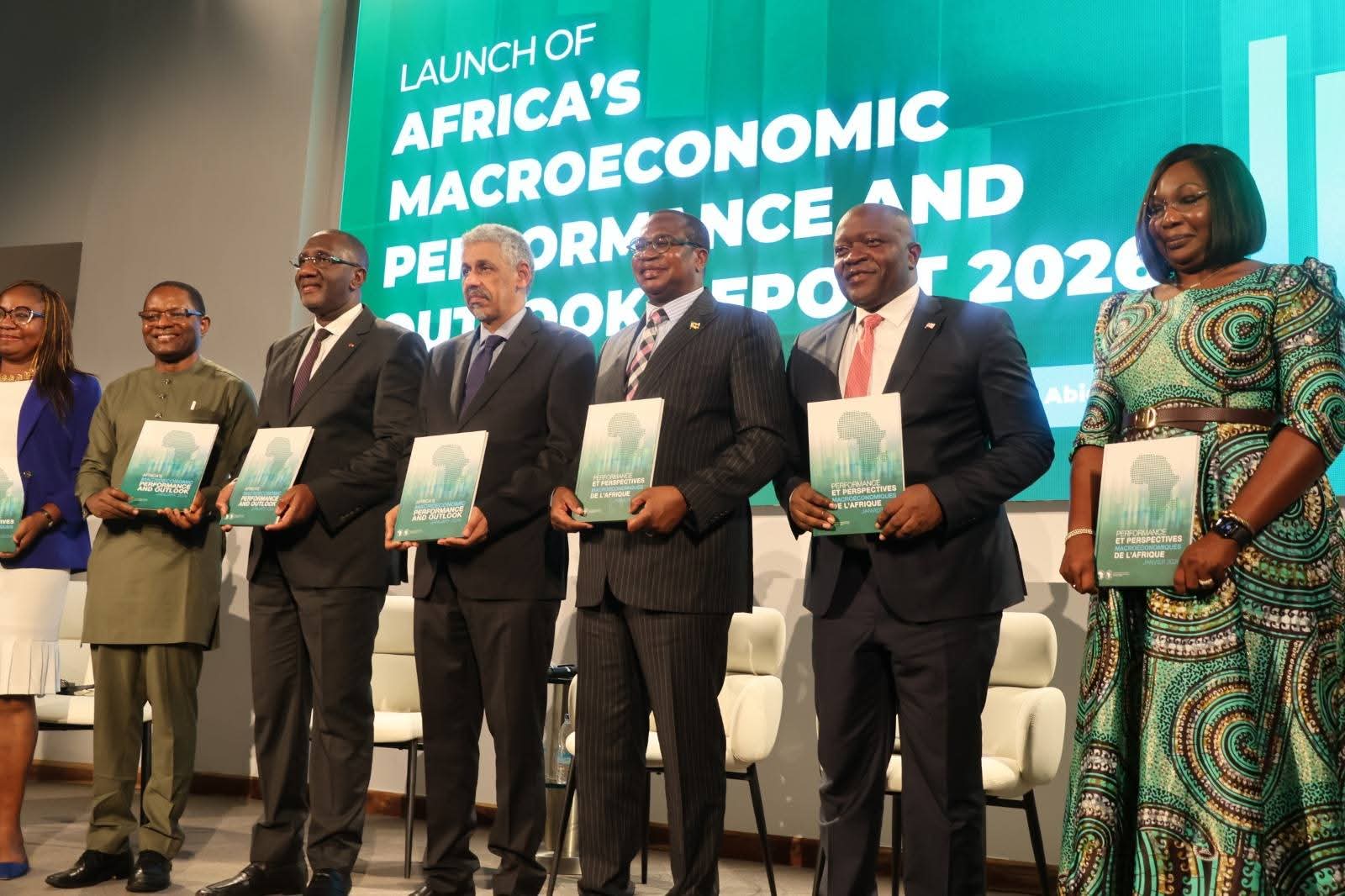
Liberia’s Minister of Finance and Development Planning, Augustine Kpehe Ngafuan, has spotlighted the country’s growing economic resilience and reform-driven recovery at the launch of the 2026 Macroeconomic Performance and Outlook Report by the African Development Bank in Abidjan.
Speaking at the Bank’s headquarters, Ngafuan positioned Liberia as an emerging example of stability and reform amid persistent global and regional shocks.
AFRICA REMAINS A GLOBAL GROWTH FRONTIER
According to the AfDB’s flagship report, Africa continues to solidify its position as one of the world’s fastest-growing regions, with 12 of the 20 fastest-growing economies globally expected to be on the continent in 2026.
The report further revealed that economic expansion across Africa is broad-based, with 32 of 54 countries recording stronger growth in 2025, and 22 countries including Liberia achieving growth rates above 5 percent.
These figures underscore Africa’s resilience despite global economic headwinds, including inflationary pressures, supply chain disruptions, and geopolitical uncertainties.
LIBERIA’S JOURNEY: FROM DEBT DISTRESS TO STABILITY
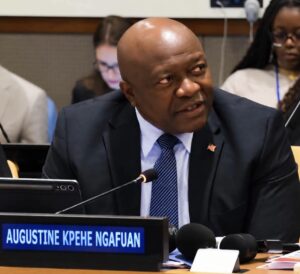
Addressing a high-level panel alongside policymakers such as Retselisitsoe Adelaide Matlanyane, Adama Coulibaly, Mthuli Ncube, and Aminata Touré, Ngafuan reflected on Liberia’s economic transformation.
He recalled that in the aftermath of Liberia’s civil conflict, the country faced an extreme debt burden, with a debt-to-GDP ratio exceeding 700 percent one of the highest in the world at the time.
Through sustained reforms and international cooperation, Liberia secured approximately 90 percent debt relief, a milestone that helped stabilize the economy and rebuild fiscal credibility.
LESSONS FROM EBOLA AND COVID-19
Ngafuan also highlighted the country’s experience with major public health crises, notably the Ebola virus disease epidemic, which claimed over 5,000 lives in Liberia.
While devastating, the crisis strengthened national institutions and response systems. These improvements proved critical during the COVID-19 pandemic, enabling Liberia to better manage both health and economic impacts compared to earlier crises.
NAVIGATING RECENT FISCAL SHOCKS
Liberia’s resilience was further tested by the sudden withdrawal of more than $300 million in external project financing following the departure of its second-largest donor in 2025.
Despite the shock, the government maintained macroeconomic stability through aggressive domestic reforms.
“The sky did not collapse on our heads,” Ngafuan remarked, pointing to strengthened tax systems, digitalization of revenue collection, enhanced transparency, and efforts to eliminate leakages.
These reforms resulted in Liberia achieving its highest-ever domestic revenue collection and recording a modest budget surplus, a rare feat for a post-conflict economy.
MINING SECTOR REFORMS UNDER SPOTLIGHT
A key pillar of Liberia’s growth has been the mining sector, which contributed the largest share to GDP expansion in the past year.
However, Ngafuan acknowledged longstanding disparities between sector output and government revenue.
Working closely with the AfDB, Liberia is implementing reforms aimed at:
Increasing transparency in concessions
Strengthening revenue collection mechanisms
Ensuring equitable distribution of natural resource wealth
“Natural resources must translate into tangible benefits for the Liberian people,” he emphasized.
POSITIVE OUTLOOK AMID RISING RISKS
Liberia’s macroeconomic indicators remain encouraging: GDP growth: 5
.1% in 2025, projected 5.6% in 2026
Average inflation (2025): 8.2%
End-year inflation (Dec 2025): 4%
January 2026 inflation: Slightly above 3%
Despite these gains, Ngafuan warned of emerging inflationary pressures, particularly from rising global fuel prices and transportation costs, which are already affecting vulnerable populations.
GOVERNMENT RESPONSE AND SOCIAL PROTECTION
To cushion the impact, the government is rolling out targeted interventions, including:
Support for national petroleum supply systems
Expanded social protection programs
Strengthened fiscal buffers
Ngafuan also called on development partners, including the AfDB, to enhance rapid-response financing mechanisms to help countries absorb short-term shocks.
A CONTINUING COMMITMENT TO REFORM
Reaffirming Liberia’s long-term direction, Ngafuan stressed that resilience has become embedded in the country’s policy framework.
“We have become accustomed to managing shocks, learning from them, and emerging stronger,” he said.
In addition to serving as Liberia’s Governor on the AfDB Board, Ngafuan currently chairs AfDB Constituency 15, representing Ghana, The Gambia, Sudan, Sierra Leone, and Liberia.
CONTEXT: LIBERIA IN AFRICA’S RISING ECONOMIC LANDSCAPE
With a population of just over 5 million, Liberia remains a relatively small economy but is increasingly positioning itself within Africa’s broader growth narrative.
Its recent progress reflects a combination of:
Post-conflict recovery reforms
Institutional strengthening
Strategic partnerships with multilateral institutions
As Africa’s economic momentum builds, Liberia’s trajectory illustrates how fragile states can transition toward stability and growth through sustained policy discipline and international cooperation.


