



By : Julius Konton
The Government of Liberia has once again placed domestic resource mobilization at the center of its economic reform agenda, launching two African Development Bank (AfDB)-funded projects valued at approximately US$19.6 million, even as critics question whether decades of reform rhetoric have delivered meaningful fiscal independence.
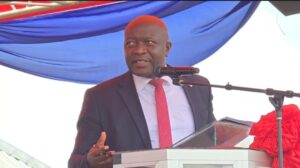
Finance and Development Planning Minister Augustine Kpehe Ngafuan, speaking at the official launch in Monrovia reaffirmed that Liberia can no longer rely predominantly on external aid and concessional borrowing to finance development.
“GDP growth must translate into real revenue that funds our priorities,” Ngafuan declared, emphasizing tax-base expansion, compliance enforcement, and improved public financial governance as non-negotiable pillars of economic sustainability.
His remarks strike at the heart of a long-standing paradox in Liberia’s post-war economy: modest growth figures that fail to translate into government revenue, improved services, or reduced poverty.
A Familiar Challenge in a Fragile Economy
Liberia’s tax-to-GDP ratio has historically hovered between 12 and 15 percent, well below the African average of approximately 18 percent and far beneath levels considered necessary to sustain basic state functions.
By comparison, countries such as Ghana and Senegal collect over 20 percent of GDP in domestic revenue, allowing greater fiscal autonomy.
Despite repeated reforms since the end of Liberia’s civil conflict in 2003, the country remains heavily aid-dependent.
According to international financial institutions, external financing still accounts for more than 40 percent of Liberia’s development budget, exposing the economy to donor fatigue, global shocks, and policy conditionalities.
It is against this backdrop that the AfDB-backed projects have been unveiled, hailed by government officials as transformational, but cautiously received by governance advocates who recall similar initiatives with mixed outcomes.
Inside the AfDB-Funded Projects
The newly launched initiatives comprise two complementary interventions:
Institutional Support Project – US$18.3 Million
A four-year program financed through AfDB facilities and the African Development Fund, aimed at strengthening:
Tax policy and administration
Budgeting and public financial management
Extractive-sector transparency
Anti-corruption institutions
Judicial and law-enforcement capacity
The project spans 14 beneficiary institutions, reflecting the government’s acknowledgment that revenue mobilization is not solely a tax issue, but a governance ecosystem challenge.
Debt and Beneficial Ownership Technical
Assistance Project – US$1.3 Million Grant
This initiative focuses on improving:
Debt reporting and monitoring
Transparency in public borrowing
Beneficial ownership disclosure frameworks
These reforms are designed to address long-standing concerns over opaque debt accumulation, hidden company ownership, and revenue leakages, particularly in the extractive sector.
AfDB: Funding Without Implementation Is a Cost to Citizens
Speaking earlier, John Bosco Bukenya, Principal Country Program Officer at the AfDB Liberia Country Office, delivered a pointed reminder that donor funding alone does not guarantee reform.
“Anything that is not disbursed is a cost to the people of Liberia,” Bukenya warned, urging swift implementation and inter-agency coordination.
His comments echo a persistent problem in Liberia’s reform history: slow procurement, bureaucratic bottlenecks, and delayed execution, which have previously undermined donor-funded programs.
Anti-Corruption and Justice at the Center or the Margins?
Liberia Anti-Corruption Commission (LACC) Executive Director Cllr. Alexandra Zoe welcomed the initiative, describing it as recognition of the central role integrity institutions play in revenue mobilization.
“We reaffirm our commitment to utilizing these resources responsibly, transparently, and in strict adherence to our mandate,” she said.
However, critics note that Liberia’s anti-corruption bodies have historically struggled with limited prosecutorial power, political interference, and weak conviction rates, raising questions about whether new funding will translate into systemic accountability.
Justice Minister Cllr. N. Oswald Tweh acknowledged delays caused by legislative ratification and stressed the urgency of accelerating procurement and implementation, an implicit admission that time lost could weaken public confidence.
VAT Implementation: A Potential Turning Point or Political Risk?
Deputy Commissioner General of the Liberia Revenue Authority Gabriel Montgomery highlighted the projects’ role in preparing Liberia for the full implementation of Value Added Tax (VAT)—a reform expected to significantly boost revenue.
VAT has the potential to increase domestic revenue by 2–3 percentage points of GDP, according to international benchmarks.
Yet in Liberia, VAT remains politically sensitive, with concerns over inflationary pressure, consumer burden, and enforcement capacity in an economy where informality dominates.
Between Reform Ambition and Public Skepticism
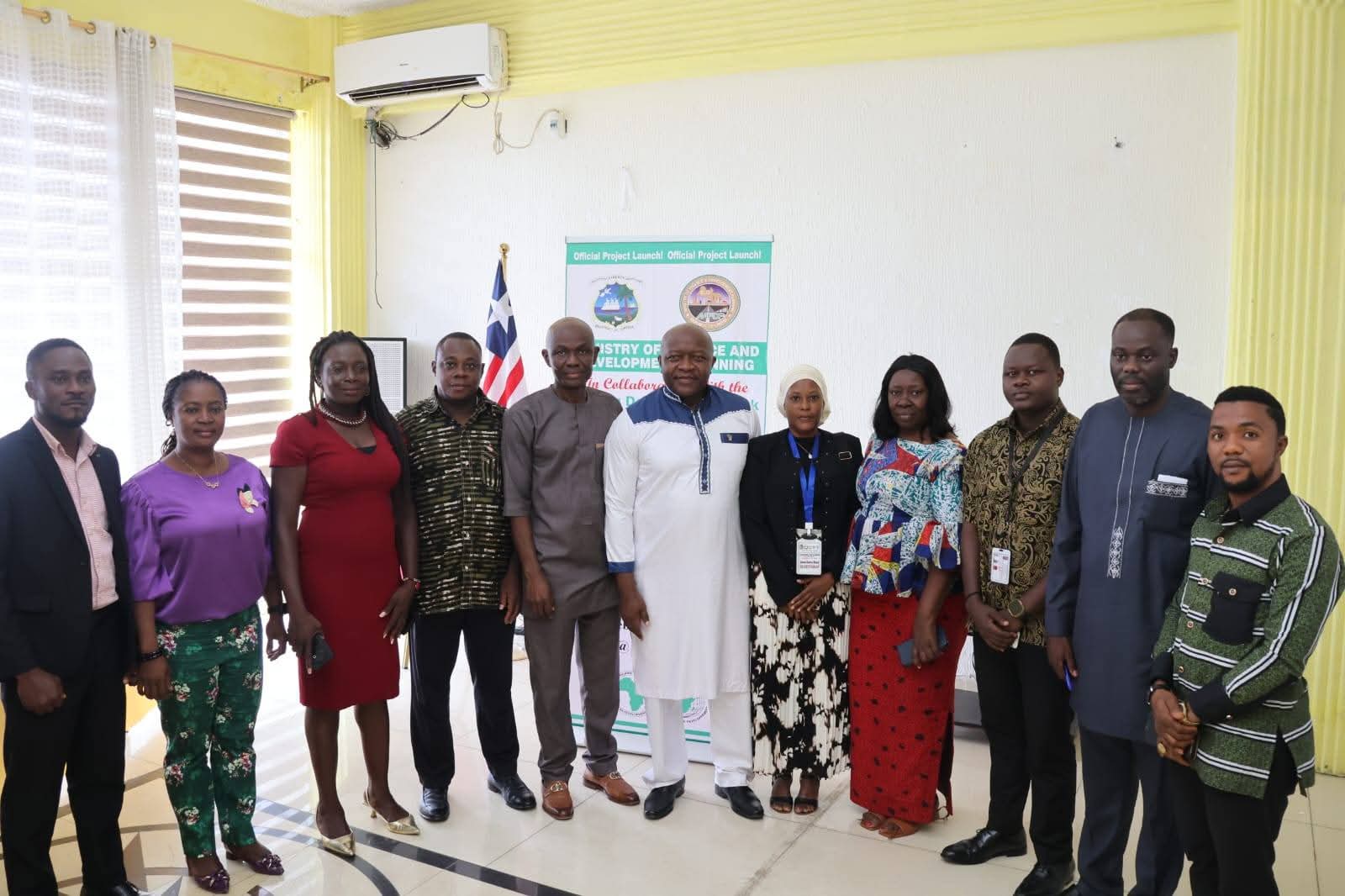
The Ministry of Finance and Development Planning will oversee implementation through its Project Management Unit, coordinating with agencies ranging from the Liberia Revenue Authority and Judiciary to the Liberia National Police and the Environmental Protection Agency.
Still, analysts caution that Liberia’s reform history is littered with well-funded programs that delivered limited structural change, often undermined by weak political will, fragmented institutions, and public distrust.
As Liberia seeks to channel domestic revenue into agriculture, education, justice, and social protection, the central question remains unresolved: Can the state finally convert policy intent into measurable fiscal sovereignty?
For now, the AfDB-funded initiatives represent both a renewed opportunity and a familiar test, one that will be judged not by launch ceremonies, but by revenue figures, service delivery, and the lived realities of ordinary Liberians.


