
By: Julius Konton
Liberia has taken a decisive step toward addressing child hunger and learning inequality, as the government formally elevates school feeding to a core pillar of its national education and social protection agenda.
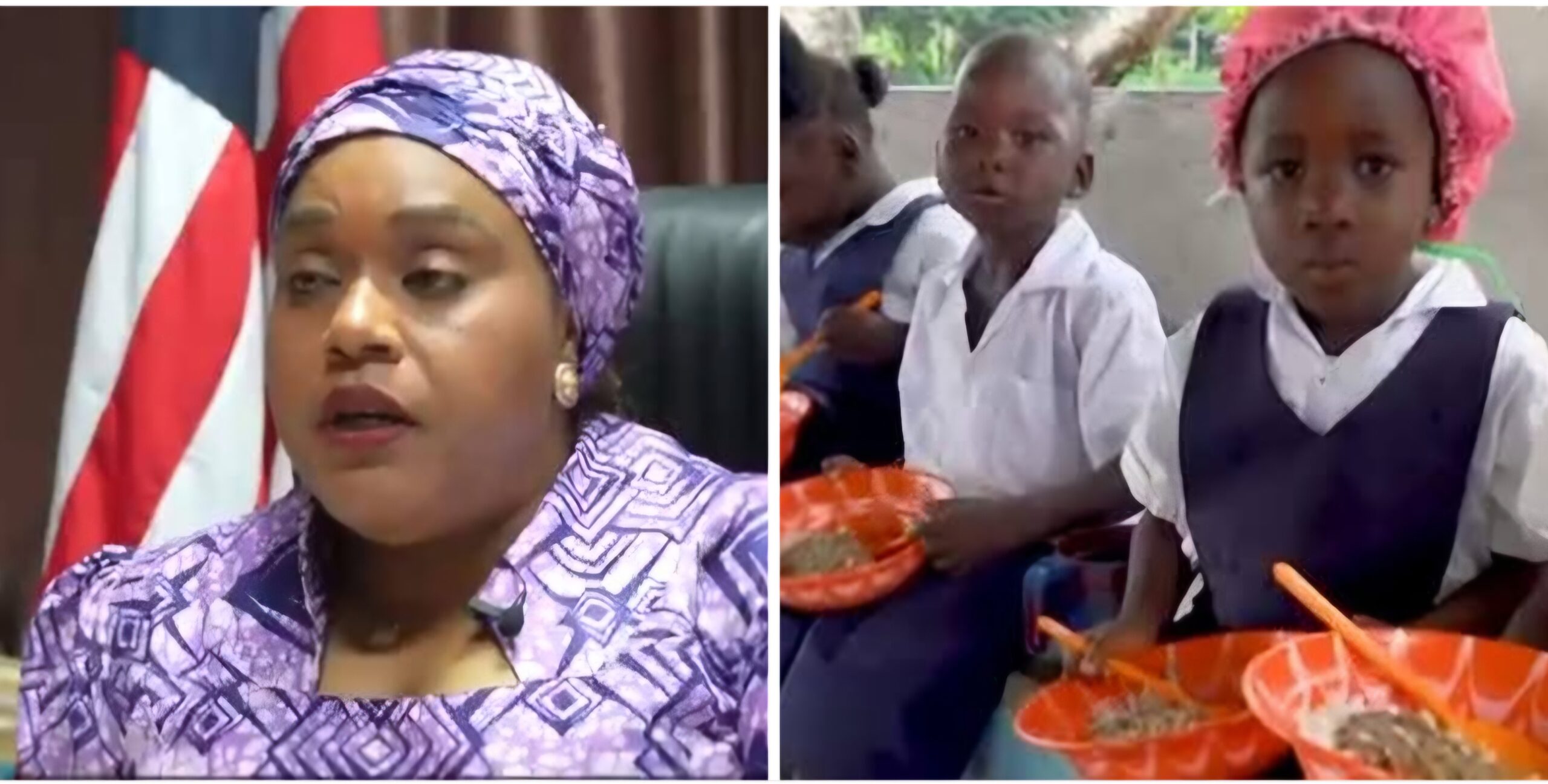
Education Minister Dr. Jarso M. Jallah has disclosed that the school feeding program is now a top government priority, citing widespread food insecurity and its direct impact on children’s ability to learn, remain in school, and complete basic education.
“A child cannot learn on an empty stomach,” Dr. Jallah emphasized, underscoring a reality faced by thousands of Liberian households where poverty and food shortages continue to undermine educational outcomes.
A Historic First: School Feeding Enters Liberia’s National Budget
In a landmark policy shift, Dr. Jallah revealed that for the first time in Liberia’s history, the national budget now contains a dedicated line item for school feeding, signaling strong political commitment and long-term sustainability.
To support implementation, the government has entered a strategic partnership with the World Food Programme, which will provide technical and operational assistance over the next two years.
Following this transitional phase, Liberia plans to fully nationalize school feeding operations, placing them entirely under government control.
Education experts describe the move as transformational, particularly in a country where the World Bank estimates that learning poverty defined as the inability to read and understand a simple text by age 10 remains alarmingly high.
From Personal Experience to National Policy
Dr. Jallah anchored her advocacy in lived experience, recalling that she herself benefited from school feeding programs during her early education.
She noted that her children also relied on free school meals, reinforcing her belief in their long-term value.
“I have seen firsthand how access to nutritious meals supports enrollment, persistence, and retention,” she said.
“Wellness is foundational. Before a child can be prepared to learn, they must first be properly fed.”
Global studies by UNICEF and WFP indicate that school feeding programs can increase enrollment by up to 9 percent, improve attendance, and significantly enhance concentration and academic performance particularly among girls and children from food-insecure households.
Linking Education, Agriculture, and Economic Growth
Beyond classroom benefits, Liberia’s approach emphasizes a home-grown school feeding model, developed in coordination with the Ministry of Agriculture.
Under the initiative, local farmers’ cooperatives are supported to grow food that the government purchases directly for distribution to public schools.
This model delivers a dual dividend: nourishing students while stimulating rural economies.
“Farmers now have ready and reliable buyers,” Dr. Jallah explained. “Their crops no longer rot on farms.
They earn a decent living, and the entire value chain benefits.”
According to international development data, home-grown school feeding programs can inject millions of dollars into local economies annually, reduce post-harvest losses, and strengthen food systems resilience an increasingly urgent need as climate shocks intensify across West Africa.
A Broader Fight Against Food Insecurity
Liberia continues to face structural food challenges stemming from years of civil conflict, the Ebola crisis, COVID-19 disruptions, and global inflationary pressures.
The United Nations estimates that over 40 percent of Liberians experience moderate to severe food insecurity, with children among the most vulnerable.
By integrating school feeding into national planning, the government is positioning education as both a human capital investment and a social safety net, aligning with Sustainable Development Goals on zero hunger, quality education, and poverty reduction.
As Liberia prepares to transition from donor-supported implementation to full national ownership, policymakers and development partners will closely watch the program’s impact on learning outcomes, farmer incomes, and fiscal sustainability.
For now, education advocates say the message is clear: feeding children is no longer a peripheral intervention, it is central to Liberia’s future.
“If we want children to come to school and stay in school,” Dr. Jallah concluded, “we must first ensure that they are healthy, nourished, and ready to learn.”
