
By; Julius Konton
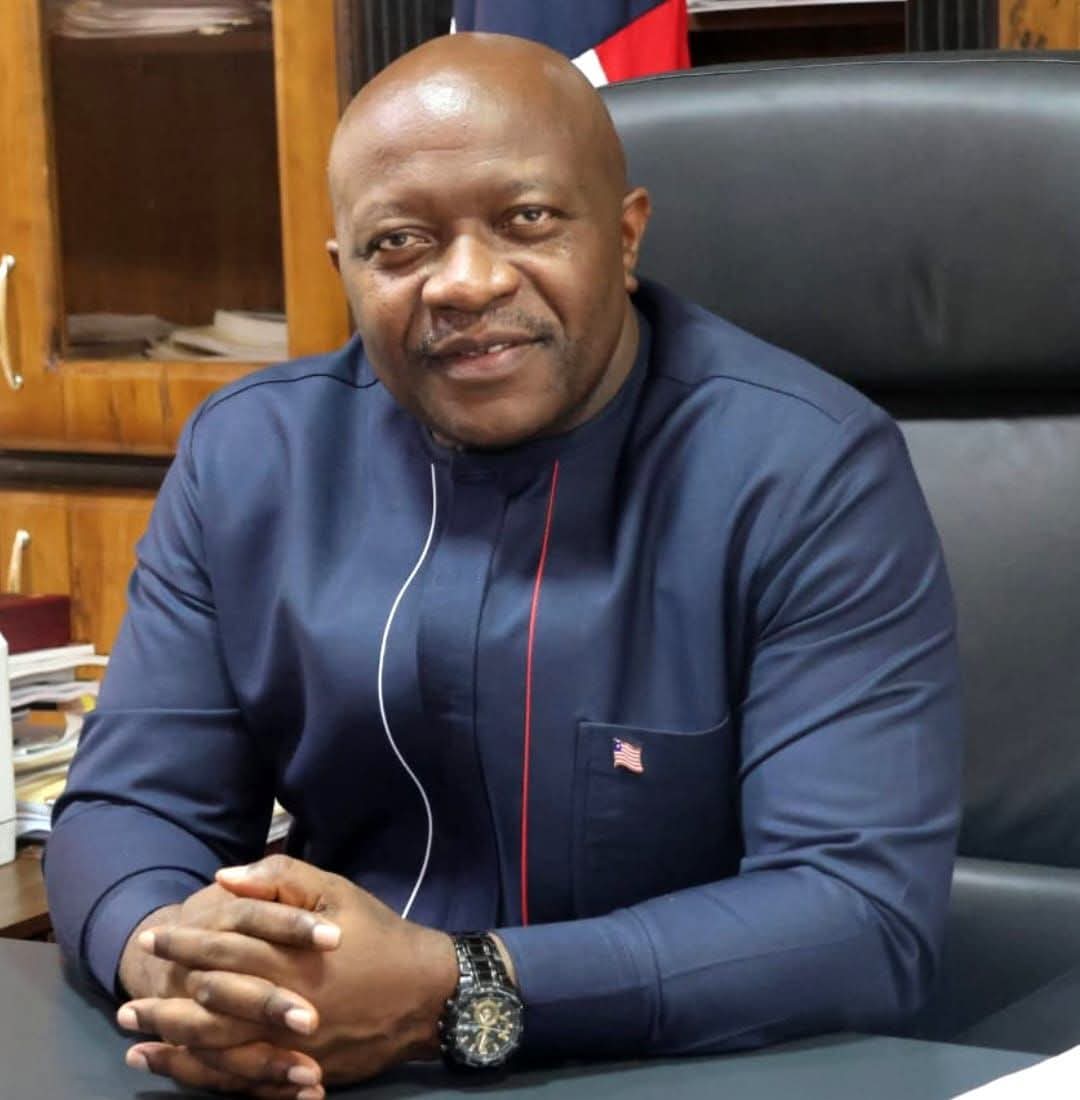
Liberia’s Finance and Development Planning Minister, Augustine Kpehe Ngafuan, says he remains “cautiously optimistic” that the country will retain eligibility for a second Millennium Challenge Corporation (MCC) Compact, as the MCC Board convenes today in Washington, D.C. to reassess global aid commitments.
Ngafuan’s remarks came during a press stakeout in Monrovia, where he outlined Liberia’s sustained diplomatic, technical, and policy engagements activities he described as “critical to maintaining momentum” since the compact was first approved in late 2024 under former U.S. President Joe Biden.
That approval entered a mandatory review phase following the election of President Donald Trump and the appointment of Secretary of State Marco Rubio, whose new foreign-assistance framework has increased scrutiny of governance and accountability indicators.
More than 16 countries, including several upper and lower middle-income nations, have already been dropped from second-compact considerations under the administration’s revised criteria.
A Year of Intensive Engagement
Despite these global shifts, Minister Ngafuan said Liberia has remained “firmly on track.”
Since early 2025, the government has:
Opened a dedicated MCC office at the Ministry of Finance and Development Planning
Appointed a national coordinator and recruited technical staff
Held multiple bilateral discussions with MCC teams in Monrovia and Washington
Engaged the U.S. congressional diaspora community to bolster Liberia’s case
In September, the MCC dispatched a two-week mission to Liberia, led by Carríe Moynihan, to evaluate sector progress, assess governance trends, and review Liberia’s national priorities.
The delegation met with officials across the energy, infrastructure, economic management, and governance sectors.
“From all the engagements thus far, the government remains optimistic,” Ngafuan said. “We have taken every step required of us.”
Strong Performance on Key Governance Indicators
Liberia’s confidence largely rests on its improved showing on the 2025 MCC Scorecard, where the country passed 12 of 22 indicators, surpassing the minimum requirement of 11.
Most critically, Liberia met the two “hard hurdles” that determine compact eligibility:
Control of Corruption
Political Rights and Civil Liberties
“You can pass all the other indicators, but if you fail those, you are not considered to have passed,” Ngafuan noted.
Only nine African nations passed both hard hurdles on the 2025 scorecard placing Liberia in the top governance-performing tier on the continent.
New U.S. Aid Climate Raises Pressure
Minister Ngafuan acknowledged that while Liberia was initially approved for a second compact last year, all previous approvals are being reevaluated to align with the Trump administration’s strategic aid posture.
“Essentially, countries had to re-sit the entrance exam,” he said.
“Today the Board will decide whether to reaffirm Liberia’s eligibility. The President is confident. We are confident. But we give the Board the benefit of doubt.”
MCC’s annual December Board meeting typically determines countries’ eligibility for new compacts, second compacts, or threshold programs.
In 2024, MCC disbursed approximately $895 million globally, with energy, roads, water, and governance reforms receiving the bulk of investment.
Liberia’s Compact Priorities: Energy and Roads Lead
If reaffirmation is granted, Liberia will move into project development and compact design, a phase that may take between 12 and 18 months.
Liberia’s top priority sectors remain consistent with MCC’s Constraints to Growth Analysis:
Energy generation and distribution
Rural road infrastructure
Access to finance for small and medium enterprises
Business-environment reforms
Governance and education sector improvements
“Energy and infrastructure are the catalysts for economic expansion,” Ngafuan emphasized, noting that electricity deficits continue to constrain private sector investment and limit job creation.
The 2025 national budget, he added, reflects the government’s alignment with these strategic priorities.
“Liberia Is Still In”
Despite global uncertainty, Ngafuan said Liberia’s resilience combined with its significant governance improvements positions the country favorably.
“Many countries were dropped,” he said. “Your country, my country, is still in. We are fairly on track, and I am hopeful Liberia will be reaffirmed for the second compact.”
The MCC Board is expected to release its decisions later today.
EDITOR’S NOTE
Liberia’s pursuit of a second Millennium Challenge Corporation (MCC) Compact has reached a decisive moment, one that carries significant implications for the country’s economic trajectory, governance reform, and global partnerships.
As the MCC Board meets in Washington, D.C., the optimism expressed by Finance and Development Planning Minister Augustine Kpehe Ngafuan signals not only confidence but also the weight of Liberia’s recent efforts to strengthen its governance systems and policy environment.
This article underscores a critical development: Liberia has managed to stay in contention at a time when more than a dozen nations some with stronger economies have been removed from eligibility under the United States’ tightened foreign-aid criteria.
Passing both of MCC’s “hard hurdles” on corruption control and political rights elevates Liberia into the upper tier of governance performers on the African continent, an achievement that deserves both recognition and continued vigilance.
Yet optimism must be balanced with realism.
The recalibration of U.S. foreign assistance under President Donald Trump introduces new variables that go beyond technical performance.
Liberia’s eligibility now depends not just on compliance with indicators, but on how well its strategic priorities align with Washington’s evolving foreign-policy posture.
The stakes are high. A second compact likely focused on energy, infrastructure, and economic competitiveness could unlock hundreds of millions of dollars in transformative investment.
Failure to secure reaffirmation, however, would represent a major setback for national development plans and donor confidence.
As we await the MCC Board’s final decision, this moment serves as a reminder that governance reforms, anti-corruption efforts, and economic stability are not just criteria for international aid, they are foundational pillars for Liberia’s long-term growth.
The nation’s progress on the MCC scorecard reflects real gains, but sustaining them will require political will, institutional discipline, and continued engagement with the Liberian public.
Whatever the outcome, today marks a pivotal milestone in Liberia’s international partnership journey, and the decisions made in Washington will echo across the country’s development agenda for years to come.
