
By: Julius Konton
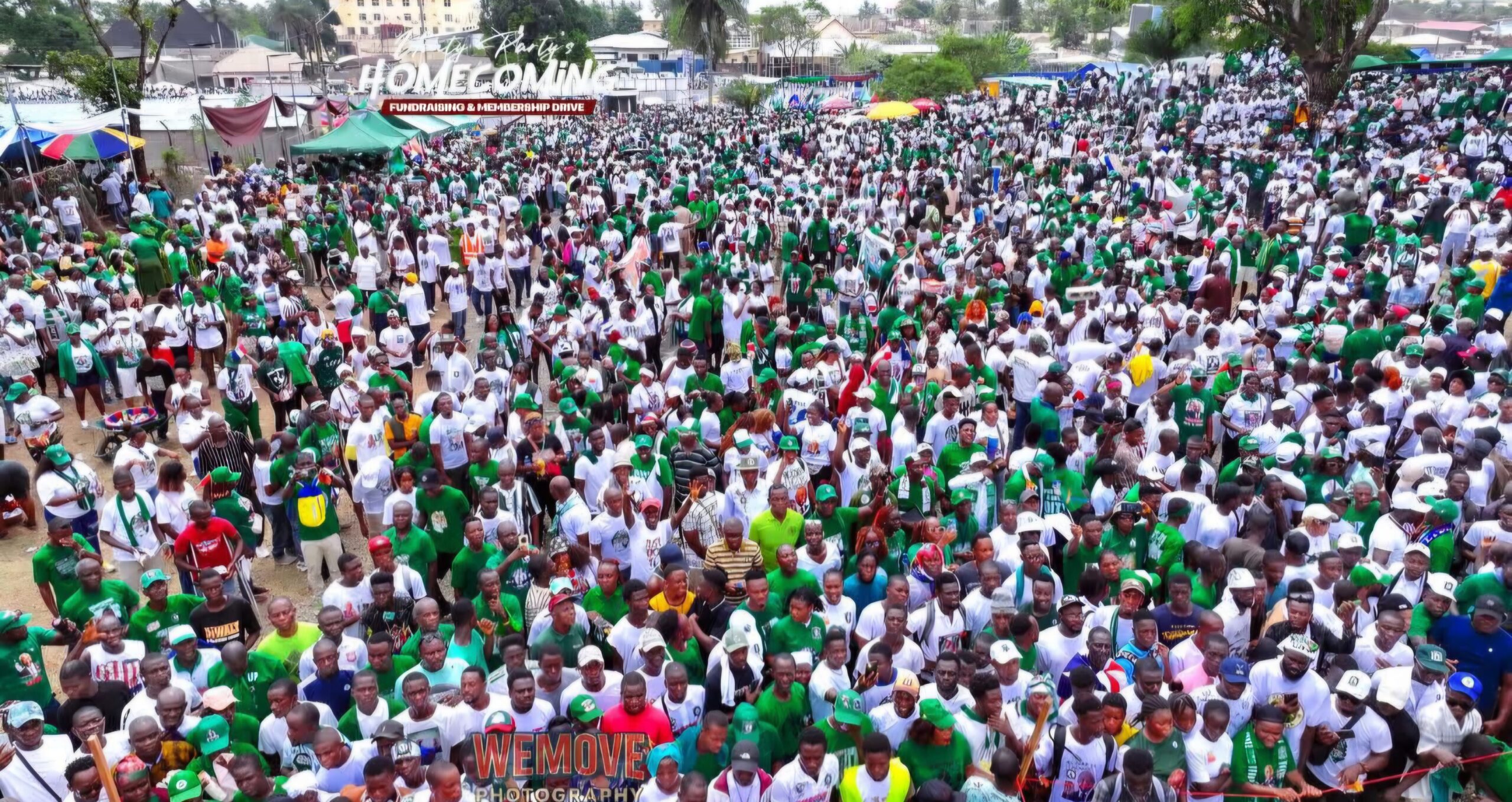
The ruling Unity Party Headquarters was packed with music, chants, and celebratory dancing as senior government officials individuals whose salaries are funded by taxpayers took to the stage in full political regalia.
Video clips circulating on social media show officials singing partisan anthems and parading in branded clothing, a spectacle that many observers argue violates both the Code of Conduct and expectations set by the Office of the Ombudsman.
Critics say the scenes were not just tone-deaf, but a blatant misuse of official influence for partisan gain, raising once again the old question: Where does governance end and political campaigning begin?
Boakai’s Speech: Hope for Some, Hollow for Others
President Joseph Nyuma Boakai, the Unity Party’s political leader and standard bearer, delivered a fiery address filled with familiar slogans and fresh promises. But for many Liberians still trapped in crippling hardship and deepening poverty, the speech sounded more like political theatre than policy direction.
Opposition voices quickly pounced, describing the president’s remarks as “a recycled playlist of empty promises that do nothing to ease the daily struggles of ordinary people.”
Boakai’s confident proclamation of “no business as usual” was met with a wave of skepticism across the political aisle.
According to the opposition, the slogan has so far amounted to little more than a catchy phrase, with the realities on the ground telling a very different story.
Opposition Reaction: “A Repeat of the Past”
Opposition groups did not mince words.
They argued that the Unity Party’s gathering was “a nostalgic return to the same political rituals that have failed the nation for years.” To them, the event was not a celebration of progress but a reminder that the ruling party has yet to show meaningful results for the Liberian people.
The criticism centers on what opposition figures describe as a widening gap between the government’s big talk and its small achievements, a pattern they say mirrors previous administrations the Unity Party once criticized.
A Country Watching Closely
As Liberia continues to battle rising living costs, unemployment, and a sense of economic stagnation, many citizens are left wondering whether political extravaganzas like this are signs of renewed democratic energy or evidence that the ruling class remains dangerously out of touch with the struggles on the streets.
For now, the Unity Party may be dancing but the people are still waiting for the music of real change.
Editor’s Note
This article examines reactions to a recent Unity Party gathering that drew both celebration and criticism.
The reporting highlights public concerns about the conduct of government officials, the political messaging delivered at the event, and the opposition’s response.
As with all political coverage, the perspectives presented reflect the statements and interpretations of the individuals and groups cited.
Readers are encouraged to consider the broader national context and ongoing political discourse when evaluating the arguments raised.
The publication remains committed to balanced reporting and will continue to follow developments related to this story.
