
By: Julius Konton
When an anti-sexual-assault advocate spoke these raw, anguished words, she was not just making a local outcry she was sending a global plea.
She and other survivors said that in Liberia , “when you take the case to the police they can put the case in the pot and cover it.”
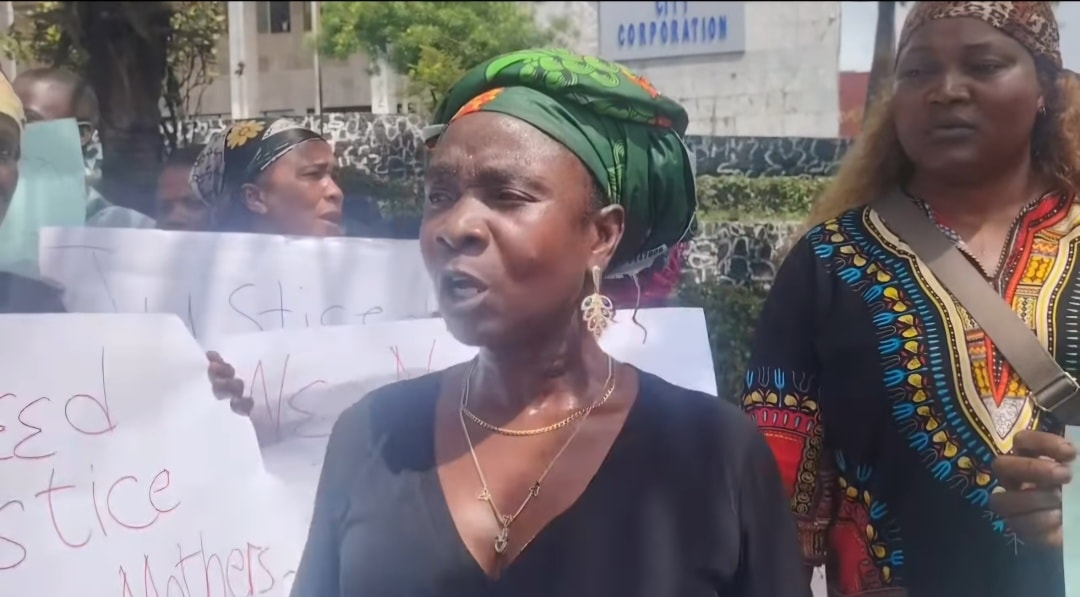
Impunity, she argues, is woven into the very fabric of justice. Holding placards and chanting anti sexual violence slogans, the angry protestors campaigning for justice cried for help at the One United Nations House in Liberia.
With mounting frustration in one of the voices of the protesters, the advocate declared:“So we come to the United Nations to get justice for us.”
This is not just rhetoric, explaining that for many marginalized survivors, particularly in poorer communities in Liberia, domestic institutions often fail.
She pointed out that the police may ignore or suppress complaints while the Courts may be inaccessible and worse of all, local power structures can protect perpetrators especially when they are officials themselves.Her accusations resonate against a troubling backdrop of global data.
According to a recent UNICEF report, more than 370 million girls and women alive today were raped or sexually assaulted before age 18, roughly 1 in 8 globally.
When considering “non-contact” abuse (such as verbal harassment or online exploitation), that number balloons to 650 million, or about 1 in 5. Boys are not spared, either.
UNICEF estimates that 240 to 310 million men and boys have experienced sexual assault during childhood. Such staggering numbers illustrate how pervasive child sexual violence remains cutting across geography, class, and culture.
The risk is especially severe in “fragile settings like Liberia ” where institutions are weak, corruption is high” she noted.
UNICEF’s data show that in these settings, the prevalence of rape or sexual assault during childhood is slightly more than 1 in 4. This is deeply relevant to the advocate’s claim: when public officials exploit their power, and when the rule of law is shaky, children become uniquely vulnerable.The advocate’s frustration with Liberia’s justice system echoes broader systemic problems.
A United Nations report on violations against children verified that in conflict-affected countries, many grave violations including rape, sexual slavery, and forced marriage are committed by government or armed actors.
Moreover, UN data underscores a persistent problem: in many low- and middle income countries, opaque judicial processes and corruption limit access to justice. In such environments, survivors often face insurmountable barriers: reporting can lead to retaliation; prosecutions may be blocked; and even when cases go to court, verdicts may never come.
The activist’s decision to bring their national campaign to the one United Nations house is significant.
It’s a declaration that local systems have failed their community and that they seek accountability on a global stage.Her words: “We are born to these people, and they rape us.
There is no justice for the poor”, cut to the heart of a violation not just of bodies, but of rights. They demand more than sympathy; they demand structural change.According to statistics Hundreds of millions of children are affected by sexual violence worldwide.
They believe that Global Responsibility and intervention is key in such campaign especially Institutions like the UN that have a mandate to protect children, mainly where national systems collapse. As Catherine Russell, UNICEF’s Executive Director, put it, “Sexual violence against children is a stain on our moral conscience.”
Practical Solutions as Experts emphasize prevention (education, social norms change), accountability, and survivor support as critical.
