
By: Julius Konton
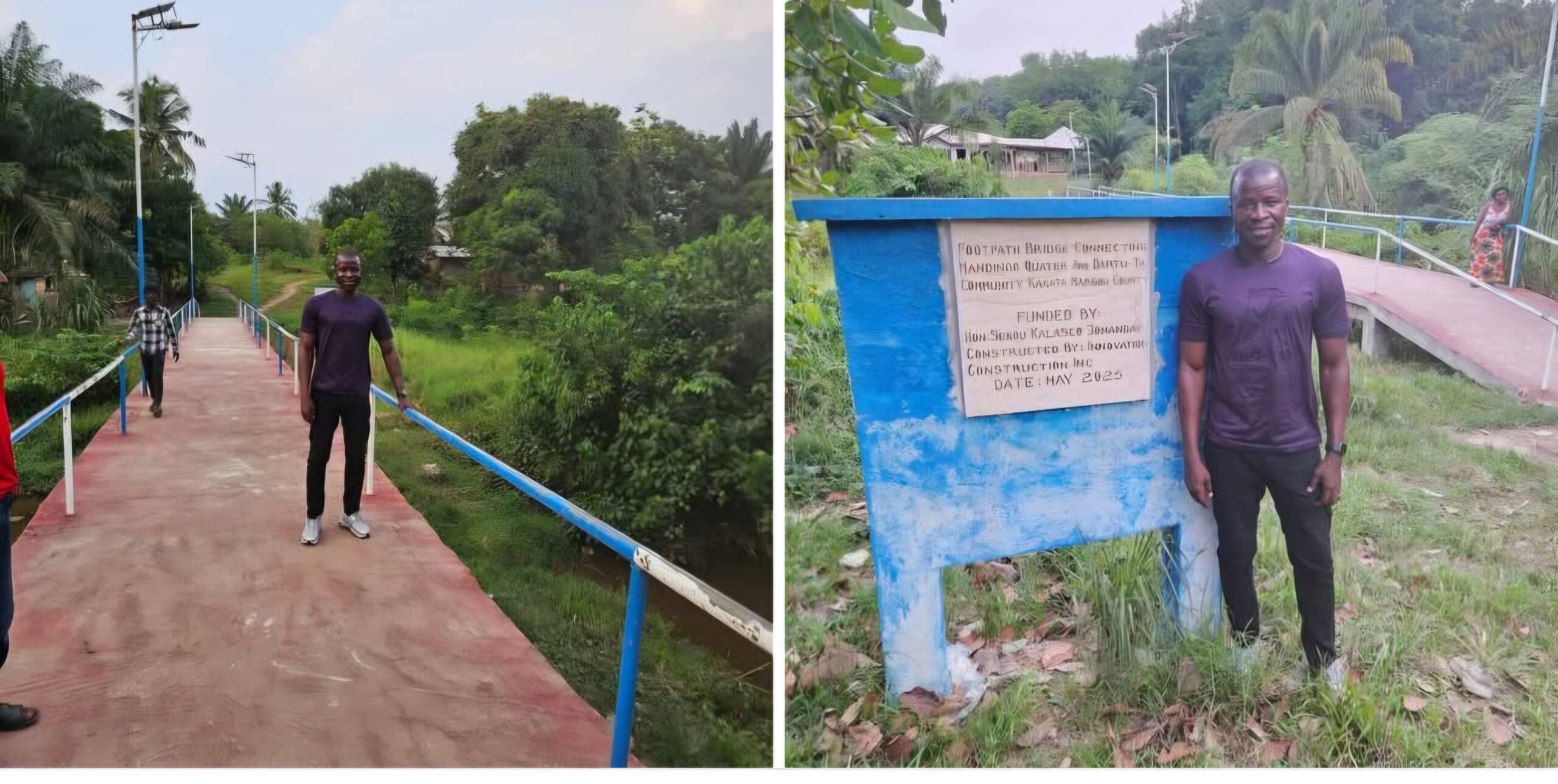
Residents of Mandingo Quarter and Dartuta communities in District Three, Margibi County, are celebrating the completion of a vital footpath bridge that is expected to transform transportation, trade, and access to education in the area.
The bridge, constructed through a self-help initiative led by former presidential aide to ex-President George Weah, Sekou Kalasco Damaro, was officially completed after nearly one year of construction.
For years, residents in these rural communities faced severe transportation challenges, especially during Liberia’s rainy season, when streams overflowed and cut off movement between villages.
Farmers, schoolchildren, and traders often walked long distances through waterlogged paths, exposing themselves to danger and delaying economic activities.
The newly completed structure now links several communities and allows the movement of bicycles, tricycles (locally known as kehkeh), and pedestrians, significantly easing mobility in the district.
“Those across now have the opportunity to carry their agricultural products to the markets on bikes and kehkeh instead of walking long distances in streams,” Damaro said during remarks following the project’s completion.
Economic and Educational Impact
Margibi County is one of the country’s major agricultural hubs, producing cassava, rice, palm products, and vegetables.
Rural roads and bridges remain critical to connecting farmers to urban markets. According to Liberia’s Ministry of Public Works, poor road and bridge infrastructure continues to affect trade efficiency in many counties, especially during heavy rains.
Residents say the bridge will now allow farmers to transport produce faster and reduce post-harvest losses caused by delayed access to markets.
Students are also among the biggest beneficiaries.
Before the bridge’s completion, many schoolchildren were forced to cross streams or miss classes entirely during the rainy season.
“With this bridge, our children can now reach school safely without getting wet,” a community member said.
Grassroots Development Efforts
Damaro described the project as part of his continued commitment to improving the lives of people in District Three through community-driven development.
“This brings me great joy and inspires me to keep doing more for our people,” he emphasized.
Over recent years, Damaro has reportedly undertaken several self-help initiatives across the district aimed at addressing urgent local needs, including infrastructure gaps and social welfare concerns.
Such grassroots projects are increasingly common in Liberia, where communities often rely on local leaders and private citizens to complement government development efforts.
Political Momentum Builds
The completion of the bridge comes amid growing political attention surrounding Damaro. Residents of District Three recently petitioned him to contest for a seat in the Liberian House of Representatives, citing his development record and ties to the community.
District Three is considered politically significant in Margibi County, one of Liberia’s fastest-growing counties with an estimated population of more than 250,000 people, according to national census figures.
The county’s proximity to Monrovia and its strategic agricultural and industrial importance make it a key electoral battleground.
Symbol of Hope
For many residents, the bridge represents more than infrastructure, it symbolizes hope, accessibility, and the power of community-led action.
As Liberia continues rebuilding roads, schools, and public facilities after years of civil conflict and economic setbacks, projects such as the Mandingo Quarter-Dartuta bridge highlight the immediate impact of localized development efforts on everyday lives.
