
By: Julius Konton
President Joseph Nyuma Boakai has issued a strong and controversial warning to the Ministry of Commerce and Industry (Liberia), calling on the institution to urgently tighten oversight of imported goods and protect the Liberian market from becoming a dumping ground for substandard products.
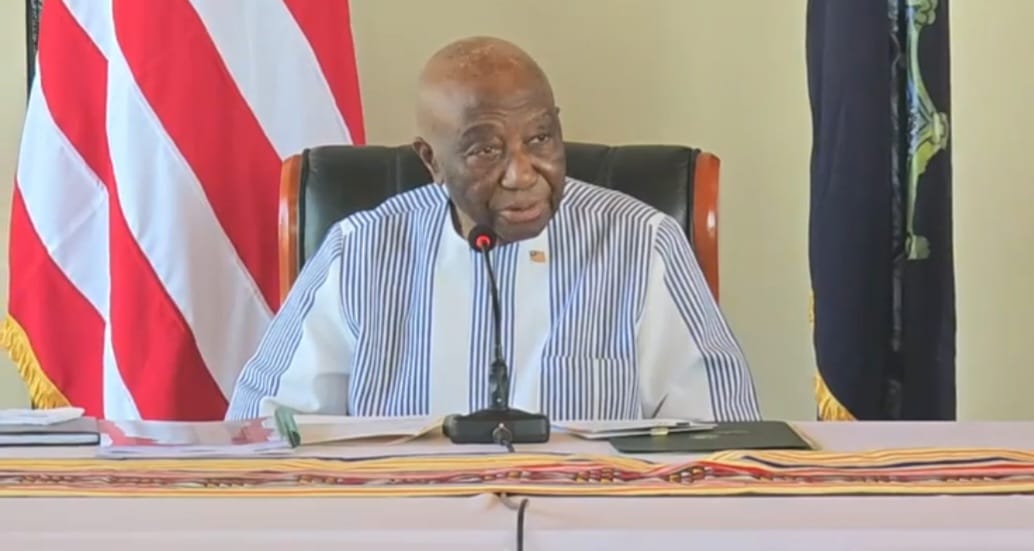
Speaking during a recent cabinet meeting at the Executive Mansion (Liberia), the Liberian leader criticized the growing influx of low-value food imports into the country, citing the example of chicken feet shipments frequently sent to Liberia from abroad.
“I see a lot of friends, they are kind. When Christmas comes, they send chicken feet,” President Boakai said.
“But we are not here for chicken feet. We are a country that once produced chickens. We cannot accept throw-away products for our people.”
His remarks highlight a broader policy debate over Liberia’s trade regulation, food security, and industrial revival.
Commerce Ministry Under Pressure to Enforce Quality Standards
The president stressed that the Ministry of Commerce and Industry must assume a more assertive regulatory role, ensuring that imported goods meet acceptable quality standards and provide value for consumers.
According to government and international trade estimates, Liberia imports more than 70% of its food supply, including poultry, rice, processed foods, and frozen meat products.
The country spends hundreds of millions of dollars annually on food imports, a trend economists say weakens domestic production and exposes consumers to fluctuating prices and inconsistent quality.
President Boakai warned that weak regulatory enforcement could allow exporters to treat Liberia and other developing economies as convenient markets for lower-grade goods rejected elsewhere.
“For developing countries, some people think they can push substandard products here,” he said. “That will not work. Liberia is not a dumping ground.”
The president also referenced the recent dedication of a national standards laboratory, urging the Liberia Standards Authority to actively test and monitor imported goods entering the market.
“We just dedicated the standards laboratory the other day. It looks good, but it was not just ceremonial,” Boakai noted. “We want it to be effective.”
Hidden Inflation and Consumer Concerns
President Boakai further warned that businesses often stay “ahead of government” through practices such as “hidden inflation,” where companies reduce product quantity or quality without lowering prices.
Such practices, he argued, undermine consumer protection and highlight the need for stronger monitoring of the retail market.
Economic analysts note that Liberia has struggled with price volatility in recent years.
Inflation in the country has fluctuated significantly due to exchange-rate pressures, high import dependency, and supply chain disruptions.
Boakai emphasized that the government must ensure citizens receive quality goods that match the price they pay, warning that unchecked commercial practices could erode trust in the marketplace.
A Tough Message to Cabinet: Performance Over Popularity
Beyond trade policy, the president delivered a blunt message to his cabinet officials, stressing that performance not personal relationships will determine their future in government.
“Sometimes people don’t have to like you,” Boakai said. “But you must do the right thing.”
He warned ministers against internal rivalries or attempts to undermine decisions agreed upon during cabinet deliberations.
“If we sit here and agree on something, and later you go out and undermine it, you will go,” the president cautioned. “Nobody means so much that they cannot be removed.”
The remarks come amid ongoing public scrutiny of government performance as Liberia moves deeper into Boakai’s presidential term.
Attendance, Accountability, and Performance Records
President Boakai also revealed that the administration has begun tracking the attendance and performance of cabinet members, after reports that some officials have been reluctant to participate fully in cabinet programs and meetings.
“The performance record is being taken,” he said. “We have to see what you are doing.
We are already in our third year and many things should be in place.”
He warned that officials who remain disengaged from government initiatives could face punitive measures.
Economic Priorities: Jobs, Investment, and Value Addition
While criticizing weaknesses in governance, the president also outlined key priorities for Liberia’s economic transformation.
Central to his agenda are job creation, increased investment, and value addition to natural resources.
Liberia possesses significant deposits of iron ore, gold, and timber, yet much of the country’s raw materials are exported with limited domestic processing.
Boakai said the government must ensure that investments benefit Liberians more directly.
As part of that strategy, he announced that the long-delayed Putu Range mining investment will be supervised by Vice President Jeremiah Kpan Koung.
“Value addition is key,” the president said. “Our people must benefit from their resources.”
Global Pressures and the Petroleum Risk
The president also referenced ongoing tensions in the Middle East, warning that global conflicts could affect Liberia’s petroleum supply and prices.
Liberia relies heavily on imported fuel, meaning geopolitical disruptions can quickly translate into higher transportation and energy costs domestically.
Boakai urged ministers to anticipate such shocks and plan proactively.
Demand for Tangible Results
Concluding his remarks, President Boakai said the Liberian people expect visible results from their government after decades of economic hardship and political instability.
“We hear many conflicting stories, this person says progress is being made, another says the same,” he said. “But what we want to see are results.”
He urged cabinet members to remain focused and accelerate implementation of national development programs.
“Liberia has gone through a lot,” Boakai said. “The people want results and we must deliver.”
