


By: Julius Konton
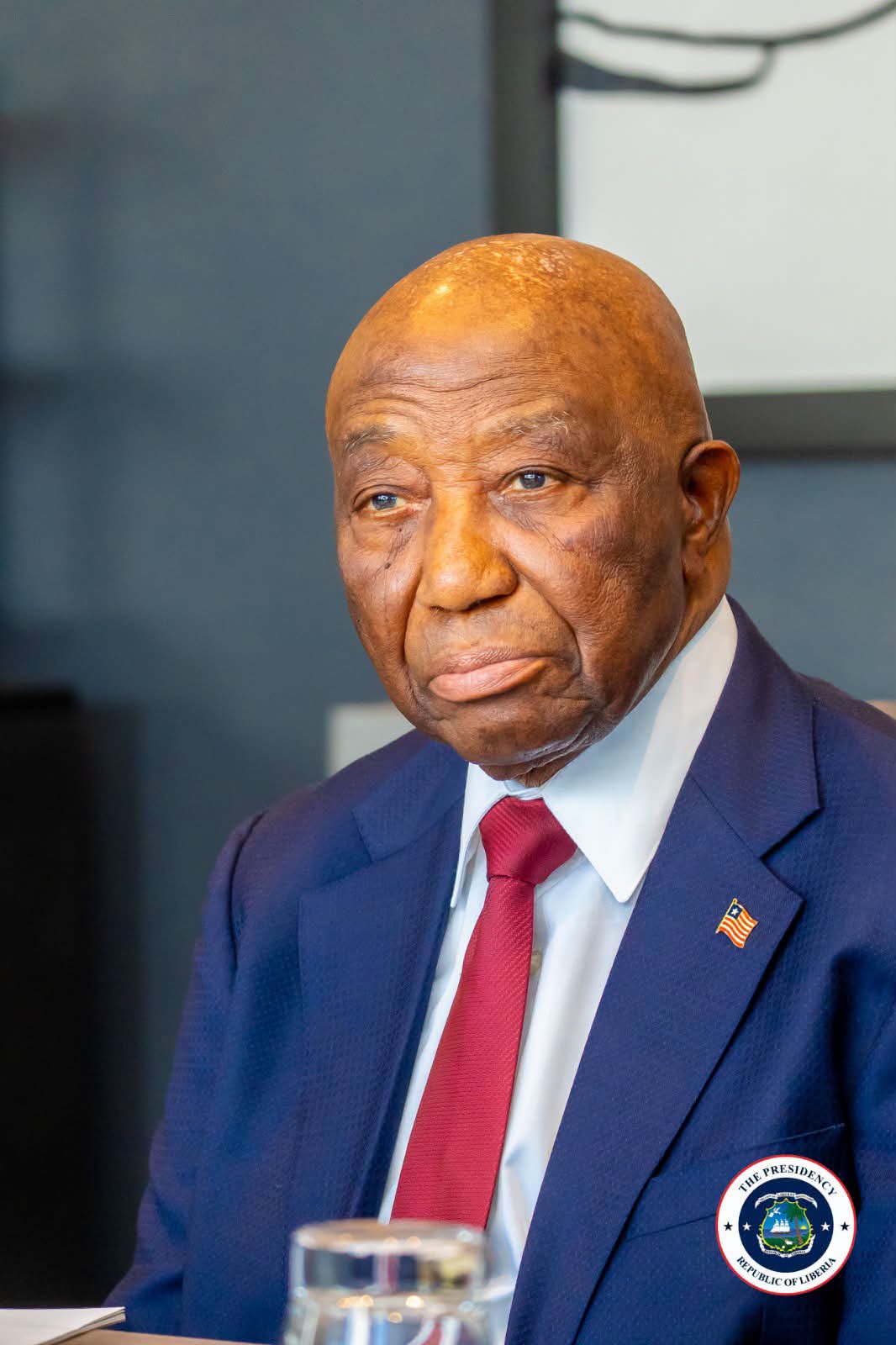
President Joseph Nyuma Boakai Sr. has ordered an immediate and comprehensive investigation into circumstances surrounding the recusal of the Officer-in-Charge of the Liberia Drug Enforcement Agency (LDEA), Deputy Commissioner of Police Fitzgerald T. M. Biago, amid emerging allegations involving a vehicle reportedly connected to a suspected narcotics trafficker.
The President has directed the Minister of Justice and Attorney General to conduct a thorough, impartial and fact-based investigation and submit a detailed report to the Executive Mansion within 48 hours, according to a statement issued Saturday.
The directive follows communication from the Minister of Justice informing the President of Biago’s decision to recuse himself from his active responsibilities as head of the LDEA.
Biago said his decision to step aside was intended to protect the integrity of the investigation and preserve public confidence in Liberia’s national campaign against illegal drugs.
The controversy emerged after allegations and social-media reports began circulating about a pickup truck allegedly associated with a narcotics suspect or trafficker and its reported presence at or connection to the LDEA OIC’s office.
No official investigation has established wrongdoing by Biago, and the allegations remain subject to verification.
Boakai Demands Facts, Not Speculation
President Boakai has emphasized that the investigation must be guided by evidence and due process rather than public speculation.
The President reiterated that his administration remains committed to confronting illegal drugs, organized crime and corruption, stressing that no individual or institution is above the law.
He is expected to review the findings once the Justice Ministry submits its report and determine what further action, if any, should be taken.
The 48-hour deadline underscores the sensitivity of the matter at a time when Liberia is intensifying efforts to strengthen its capacity to combat drug trafficking and substance abuse.
Liberia’s Growing Drug-Trafficking Challenge
The investigation comes against the backdrop of a broader drug-security challenge confronting Liberia and the wider West African region.
The United Nations Office on Drugs and Crime (UNODC) has identified West and Central Africa as an important transit and trafficking corridor for several illicit substances.
Its 2025 World Drug Report noted that cannabis use in West and Central Africa is particularly significant, with past-year prevalence across West and Central Africa and Southern Africa estimated at around 10 percent among people aged 15–64 in 2023.
The UNODC also warned that the non-medical use of pharmaceutical opioids, particularly tramadol, remains a major concern in West and Central Africa.
Africa accounted for approximately 57 percent of the quantity of pharmaceutical opioids seized globally between 2019 and 2023, according to the agency.
The region has also become increasingly vulnerable to the emergence of dangerous synthetic substances.
Liberia’s anti-narcotics authorities have recorded several significant seizures in recent years, highlighting both the scale of the challenge and the country’s growing law-enforcement capacity.
According to UNODC, the LDEA conducted Liberia’s first controlled drug delivery in March 2025, resulting in the seizure of 772 plates of marijuana described by the UN agency as the largest marijuana seizure in the country’s history at the time.
Four suspects were arrested following the operation, which involved tracking a vehicle that had traveled from Sierra Leone through a less-used land route into Liberia.
Less than a month later, on April 18, 2025, LDEA officers intercepted 58,300 Tapentadol pills concealed in a cross-border shipment at Bo Waterside, according to UNODC.
The seizure was reported as Liberia’s largest seizure of the opioid at that time.
The following day, an intelligence-led operation in Paynesville resulted in the arrest of a suspect and the seizure of approximately 295 kilograms of marijuana.
These operations have demonstrated the growing sophistication of Liberia’s anti-drug enforcement efforts, while also exposing the country’s vulnerability to cross-border trafficking networks.
The drug challenge extends beyond law enforcement.
UNODC estimates that Africa had approximately 1.33 million people who inject drugs in 2023, including about 204,000 people living with HIV.
The agency says West and Central Africa had the continent’s highest prevalence of people who inject drugs relative to population size.
The UN agency has also warned that emerging drug mixtures and synthetic substances including products commonly referred to as “kush” in parts of West and Central Africa pose growing public-health risks because their composition can vary and may include highly dangerous substances.
For Liberia, the challenge is compounded by its geographic position along West Africa’s Atlantic coast and its borders with Sierra Leone, Guinea and Côte d’Ivoire, placing the country within a region affected by transnational trafficking routes.
Pressure on Liberia’s Anti-Drug Institutions
The latest controversy therefore carries implications beyond the individual allegations surrounding the LDEA leadership.
The agency is a central institution in Liberia’s response to narcotics trafficking, drug-related organized crime and the illicit movement of controlled substances.
Any allegation involving the leadership of such an institution can potentially affect public confidence, operational credibility and cooperation with international partners.
Biago’s decision to recuse himself could consequently be viewed as an administrative measure designed to allow investigators to work without the perception of institutional interference.
At the same time, the President’s decision to impose a 48-hour reporting deadline signals an effort to contain uncertainty and ensure that the matter is addressed through formal investigative procedures rather than speculation on social media.
The immediate focus now shifts to the investigation ordered by President Boakai.
The Justice Ministry is expected to establish the circumstances surrounding the vehicle, determine whether it had any legitimate connection to the LDEA or its personnel, examine the allegations involving the suspected narcotics trafficker and identify any potential violations of law, policy or administrative procedure.
The findings could determine whether disciplinary, administrative or criminal proceedings are warranted or whether the allegations are ultimately found to have no substantive basis.
For President Boakai’s administration, the episode represents another test of its stated commitment to accountability and the rule of law.
As Liberia continues its battle against illegal drugs, the President’s message is clear: the credibility of the country’s anti-narcotics campaign must be protected through transparency, evidence and equal application of the law.


