



By: Julius Konton
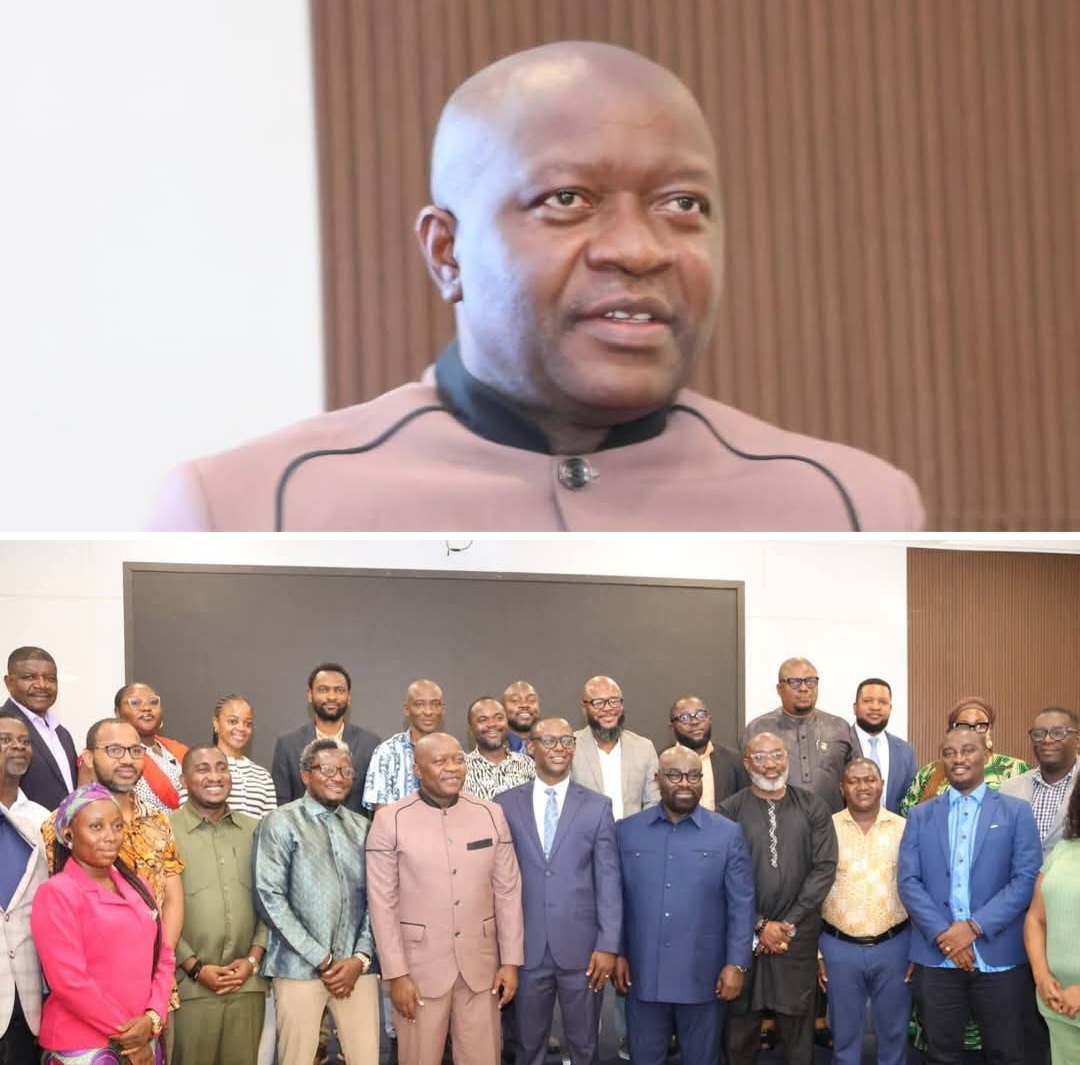
Liberia has taken a significant step toward addressing its longstanding infrastructure and economic constraints, as Finance and Development Planning Minister Augustine Kpehe Ngafuan officially launched the Concept Notes Development Process for the country’s Second Millennium Challenge Corporation (MCC) Compact.
The launch signals the beginning of a critical phase in Liberia’s engagement with the United States-backed Millennium Challenge Corporation (MCC), a global development initiative that has invested over $17 billion across more than 50 countries since its establishment in 2004.
A Competitive and Transparent Selection Process
Speaking at the ceremony, Minister Ngafuan praised the integrity and competitiveness of the recruitment process that led to the formation of the compact development team.
The team, headed by Alieu F. Nyei, emerged from a highly competitive pool of candidates.
According to Minister Ngafuan over 100 applicants competed for the position of National Coordinator
At least 40 applicants vied for each of the other key technical roles
Candidates included Liberians both at home and across the diaspora
“This process reflects transparency and meritocracy,” Ngafuan emphasized. “In many countries, such teams are appointed without competition, but President Joseph Nyuma Boakai insisted on a fair and open process.”
He further noted that the selection involved a dual evaluation system, incorporating both Liberian authorities and U.S. MCC experts effectively requiring candidates to pass “two rigorous checkpoints.”
From Selection to Delivery: A Higher Standard Ahead
While congratulating the team, the Minister cautioned that their real challenge lies ahead.
“You have crossed the initial checkpoints,” he said, “but the most important one is delivery. The Liberian people have high expectations.”
He described the launch as a turning point where the MCC process transitions from abstract discussions to tangible action.
“For years, MCC felt like something distant almost theoretical.
Today, Liberians are seeing ‘flesh on the bones’, real people and real work,” Ngafuan remarked.
Energy Crisis at the Center of Liberia’s Growth Strategy
At the heart of Liberia’s second compact is a bold focus on energy development, identified as the country’s most critical constraint to economic growth.
Key Energy Statistics:
Current electricity access: 30%–33% nationwide
Recent progress: Approximately 40% access, driven by reforms
Regional comparison: Many developing countries average 90%–93% access
Government target: At least 75% access within four years
Liberia’s energy deficit has long hindered industrial growth, job creation, and private sector expansion.
Electricity costs in the country remain among the highest in West Africa, significantly affecting business competitiveness.
“The private sector is the engine of growth, but energy is the engine of the private sector,” Ngafuan stated.
Economic Context: Why Energy Matters
Liberia’s economy, valued at approximately $4 billion GDP, remains heavily reliant on extractive industries such as mining and agriculture.
However, structural challenges particularly inadequate electricity and road infrastructure continue to limit diversification.
Ngafuan stressed that without addressing energy:
Businesses cannot scale operations
Job creation remains slow
Industrialization is delayed
“If we fail to solve the energy problem, we will stall progress across all sectors,” he warned.
Expanding Focus: Mining and Infrastructure
While energy remains the primary focus of the MCC compact, the government is also considering mining sector development as a secondary priority, given its potential to drive exports and revenue.
Additionally, the government continues to invest heavily in:
Road infrastructure
Rural electrification programs
Institutional reforms through agencies like:
Liberia Electricity Corporation (LEC)
Liberia Electricity Regulatory Commission (LERC)
Rural and Renewable Energy Agency (RREA)
“These sectors , energy and roads are the keys to unlocking Liberia’s economy,” Ngafuan noted.
A Call for Speed and Excellence
In a passionate address, the Minister urged the newly appointed team to work with urgency and national commitment.
“We have no patience for delay,” he declared. “This process requires a ‘Usain Bolt mentality’, we must sprint, not walk.”
He also encouraged the team to engage citizens meaningfully:
“Listen to the people. They may not understand every technical detail, but their expectations matter.”
A Joint Liberia–United States Partnership
The MCC compact process represents a partnership between Liberia and the United States, but Ngafuan emphasized national ownership.
“When you enter those technical rooms, remember, you are working for Liberia.
Use your knowledge, your expertise, your intellect, Fight for Liberia”, he re-emphasized.
Liberia previously benefited from its first MCC compact (2015–2021), a $257 million program focused primarily on rehabilitating the Mount Coffee Hydropower Plant and strengthening the energy sector.
The second compact aims to build on that foundation, potentially unlocking hundreds of millions of dollars in new investment, contingent on governance, policy reforms, and project viability.
As Liberia embarks on this next phase, expectations remain high that the compact will serve as a catalyst for:
Expanded electricity access
Private sector growth
Job creation
Long-term economic transformation
“We are investing in the foundation,” Ngafuan concluded. “When the foundation is strong, everything else can rise”, he added.


