





By: Julius Konton
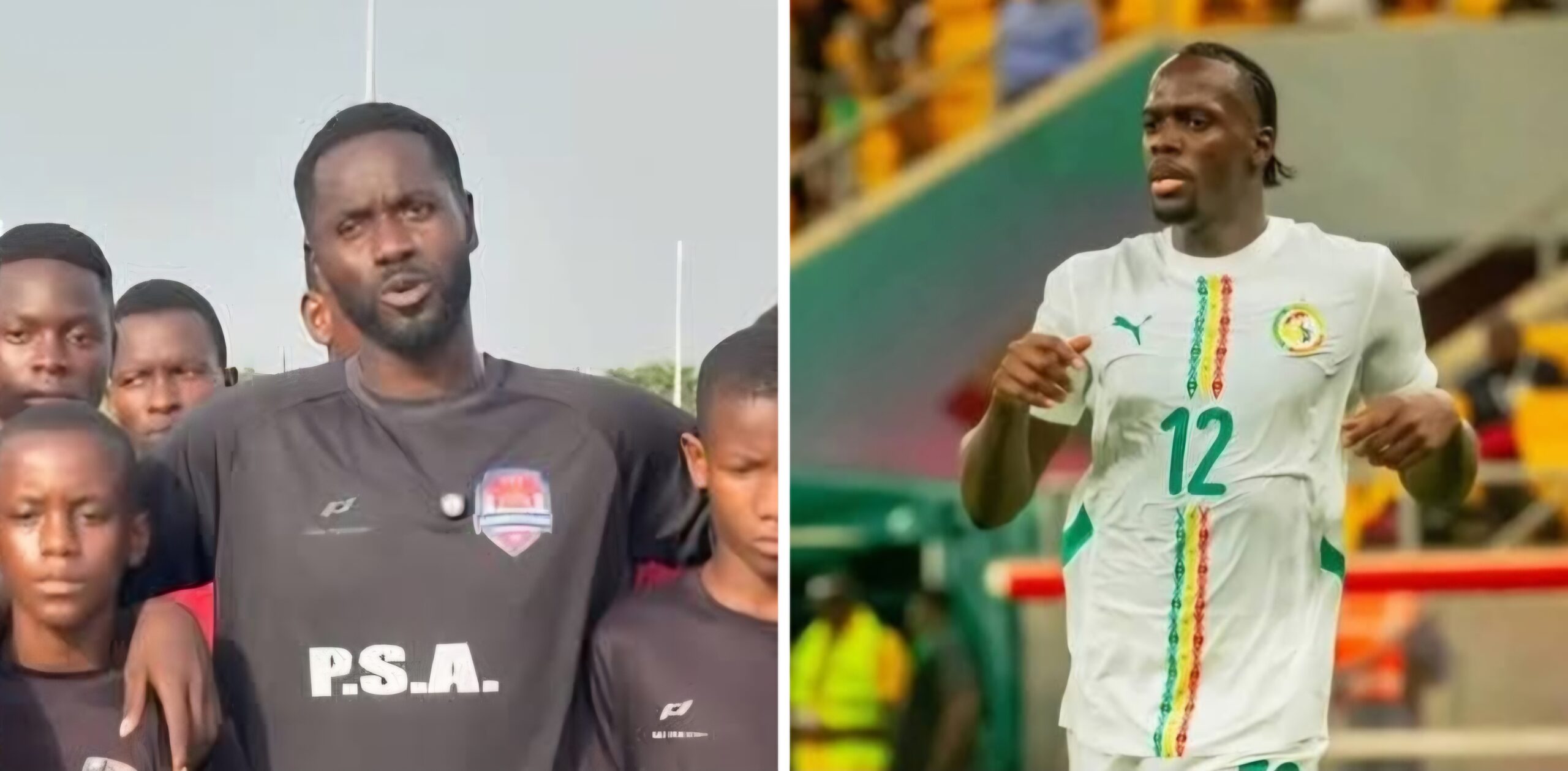
Former Senegalese international footballer and current Ambassador of Youth and Sports Development in Liberia, Alioune Badara Kebe, has described Senegal’s recent victory over Morocco at the Africa Cup of Nations (AFCON) as the natural outcome of over a decade of deliberate investment in grassroots football and structured academies.
According to Kebe, Senegal’s rise to continental dominance did not happen overnight.
“Senegal has been very strong for the last 10 to 15 years,” he said. “We now have one of the most organized football systems in Africa, especially at the youth level.”
With a population of approximately 18–20 million people, Senegal operates hundreds of registered football academies, many of which are affiliated with the Senegalese Football Federation (FSF) and linked to European scouting networks.
The country has produced a steady pipeline of elite players competing across France, England, Turkey, Germany, and Italy, contributing to Senegal’s consistent top-tier ranking in African football over the last decade.
Academies at the Heart of Senegal’s Success
Kebe, who played professionally across Africa, Europe, and the Middle East, is himself a product and architect of this system.
In 2008, while still playing in Europe, he returned home to Senegal to establish a football academy aimed at giving back to his country and developing raw local talent.
“I decided to return home to open an academy because I wanted to contribute to the future of Senegalese football,” he recalled.
That decision has yielded tangible results.
Several players developed through Kebe’s academy have progressed to professional football, including Pape Cherif Ndiaye, one of the standout contributors to Senegal’s AFCON-winning campaign.
From Academy to AFCON Glory
Pape Cherif Ndiaye, born January 23, 1996, is a Senegalese professional forward currently playing for Turkish Super Lig club Samsunspor and the Senegal national team.
Known for his physical strength, aerial ability, and clinical finishing, Ndiaye featured prominently during the AFCON tournament, scoring two crucial goals as a substitute.
“When I watched the game and saw one of my academy products helping Senegal win AFCON, I could only say, ‘Thank you, God,’” Kebe said.
For Kebe, having one or two players from his academy in a national team drawn from millions of people is a testament to discipline, patience, and sustained investment.
Exporting the Senegal Model to Liberia
Now based in Liberia, Kebe operates one of the country’s most structured youth institutions , the Professional Sports Academy (PSA) which includes football, basketball, and handball programs.
He also runs a standard academy in Senegal, allowing for technical exchange and exposure.
“What I am doing in Senegal is the same thing I am doing here in Liberia,” he said. “And I will not be surprised in a few years to see some of these kids playing for Liberia’s national teams and competing internationally.”
Kebe was particularly impressed by PSA’s handball team, which recently recorded a 28–15 victory over a more experienced opponent , a landmark performance he described as “first of its kind” for the academy.
Liberia’s Untapped Talent Pool
Despite Senegal’s success, Kebe believes Liberia possesses exceptional raw talent, sometimes even surpassing what he observed during his early years in Senegal.
“To be frank, some of the talents I see here in Liberia, I did not see them in Senegal,” he said. “What we need is discipline, structure, and exposure.”
Liberia, a nation of about 5.3 million people, has historically produced global icons such as George Weah, whose Ballon d’Or triumph in 1995 remains Africa’s crowning individual football achievement.
However, experts argue that the country has struggled to institutionalize youth development since then.
Football as Identity, Unity, and Investment
Kebe emphasized that football remains Africa’s strongest global identity marker.
“When you say you are Liberian, people ask about George Weah. If you are Senegalese, they ask about El Hadji Diouf. Cameroon, Samuel Eto’o. Nigeria , Jay-Jay Okocha”, he explained.
According to FIFA data, African football academies generate millions of dollars annually through player transfers, making youth development not only a sporting necessity but also a viable economic investment.
“Football is an investment,” Kebe said. “The investment is huge, and it requires sacrifice and passion, but the impact is also huge.”
Kebe urged parents, communities, and stakeholders to become more actively involved in youth sports development, noting low parental turnout at training sessions.
“This is our future. Parents need to come around, see the work, and motivate the kids,” he appealed.
Rejecting political affiliations, Kebe reaffirmed his commitment to technical development.
“I am not a politician. I am a technician. I believe in work”, he re-emphasized.
Plans are already underway for international exposure opportunities for selected PSA athletes this year, with the long-term goal of having them return to represent Liberia at international level.
“Everything is possible when you work hard and maintain discipline,” Kebe concluded.
“Football unites, it does not divide. Let us work together to secure the future of our children and our country.”


