


By Julius Konton
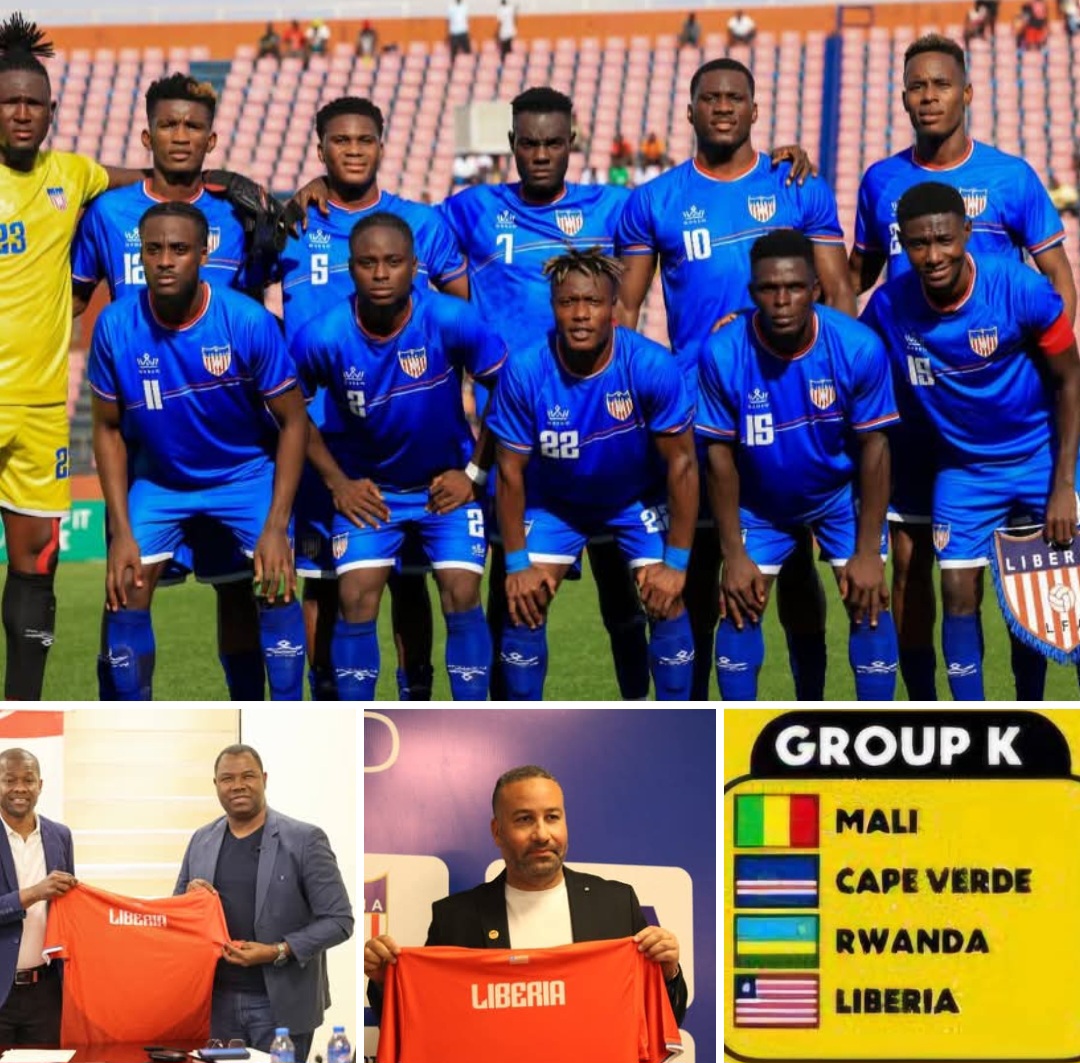
Liberia’s dream of returning to Africa’s biggest football stage has been reignited after the official draw for the 2027 Africa Cup of Nations (AFCON) qualifiers placed the West African nation in what many supporters and pundits describe as a “competitive but manageable” Group K alongside Mali, Cape Verde and Rwanda.
The draw, released Tuesday, has triggered cautious optimism among Liberian football followers who believe the Lone Star may finally end a 24-year absence from the continental championship.
For a nation that has qualified for the AFCON finals only twice, in 1996 and 2002 , the prospect of securing a historic third appearance has become a renewed national ambition.
Liberia last featured at the tournament in 2002, where the Lone Star competed in a difficult group featuring Mali, Algeria and Nigeria, earning memorable draws before narrowly missing progression to the knockout stage.
Liberia participated in the tournament in 1996 and 2002, meaning qualification in 2027 would mark the country’s first return to the continental showpiece in nearly a quarter century.
The qualification draw arrives at a critical moment for Liberian football, coming just one day after Moroccan tactician Mohammed A. Erradi officially signed a three-year contract to lead the national team.
His appointment has raised expectations, with football analysts arguing that his immediate mandate, qualifying Liberia for AFCON 2027—appears increasingly attainable given the composition of Group K.
Many Liberian football observers believe the combination of a youthful squad, foreign technical expertise and home advantage could prove decisive.
Liberia’s current generation of players has shown flashes of promise in recent international fixtures, and supporters hope disciplined preparation and tactical organization will elevate the team to a new competitive level.
While Mali enters the group as the overwhelming favorite, analysts insist the battle for qualification remains open.
Historically, Mali carries the strongest AFCON pedigree in the group, with multiple appearances and a reputation as one of West Africa’s football powerhouses.
Cape Verde, though smaller in population, has developed into a formidable football nation in recent years, earning praise for its tactical discipline and strong tournament performances.
Rwanda, meanwhile, is viewed by many observers as an outsider, though football experts caution against underestimating any opponent in modern African football where surprises have become increasingly common.
Community football discussions frequently note that nations such as Cape Verde have evolved into difficult opponents despite lacking traditional football “giant” status.
Among Liberian supporters, however, confidence remains high.
Fans argue that strong performances on home soil could become the cornerstone of qualification.
The belief is simple: if Liberia maximizes points in Monrovia while remaining competitive away from home, the Lone Star could place itself in a commanding position long before the final round of fixtures.
“Home advantage will be key,” one football pundit observed. “Liberia has a realistic chance if the team starts strong, builds momentum and gets full public backing.”
CAF’s qualification format places 48 nations into 12 groups, with teams battling for limited qualification places at the finals, which will be jointly hosted by Kenya, Uganda and Tanzania between June and July 2027.
The group-stage qualifiers officially begin between September 21 and October 6, 2026, making early preparations crucial for nations seeking momentum.
Kenya, Uganda and Tanzania will host the expanded continental tournament.
For Liberia, qualification would represent more than a sporting milestone, it would symbolize football revival in a nation where the sport occupies deep emotional and cultural significance.
The country remains globally associated with football icon and former Ballon d’Or winner George Weah, whose leadership on the pitch inspired generations and helped propel Liberia to continental relevance during its previous AFCON campaigns.
Under the mobilization leadership of Dr. Luther Tarpeh and the Lone Star support structures, football stakeholders say fan mobilization, stadium attendance and national unity around the team will be essential ingredients in the qualification push.
Administrators have reportedly pledged strong backing for the national team as Liberia begins what many hope will become a successful road to East Africa.
Though challenges remain and no opponent can be taken lightly, optimism is steadily building across Liberia.
For many supporters, the equation is straightforward: a favorable draw, a newly appointed coach and a promising generation of players may finally align to send the Lone Star back to Africa’s biggest football tournament.
After 24 years away, Liberians are beginning to believe that AFCON football may once again return to the nation’s sporting identity.


