



By: Julius Konton
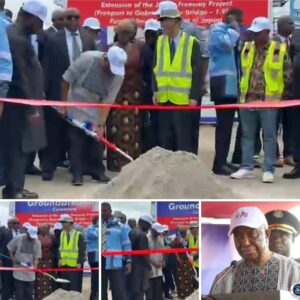
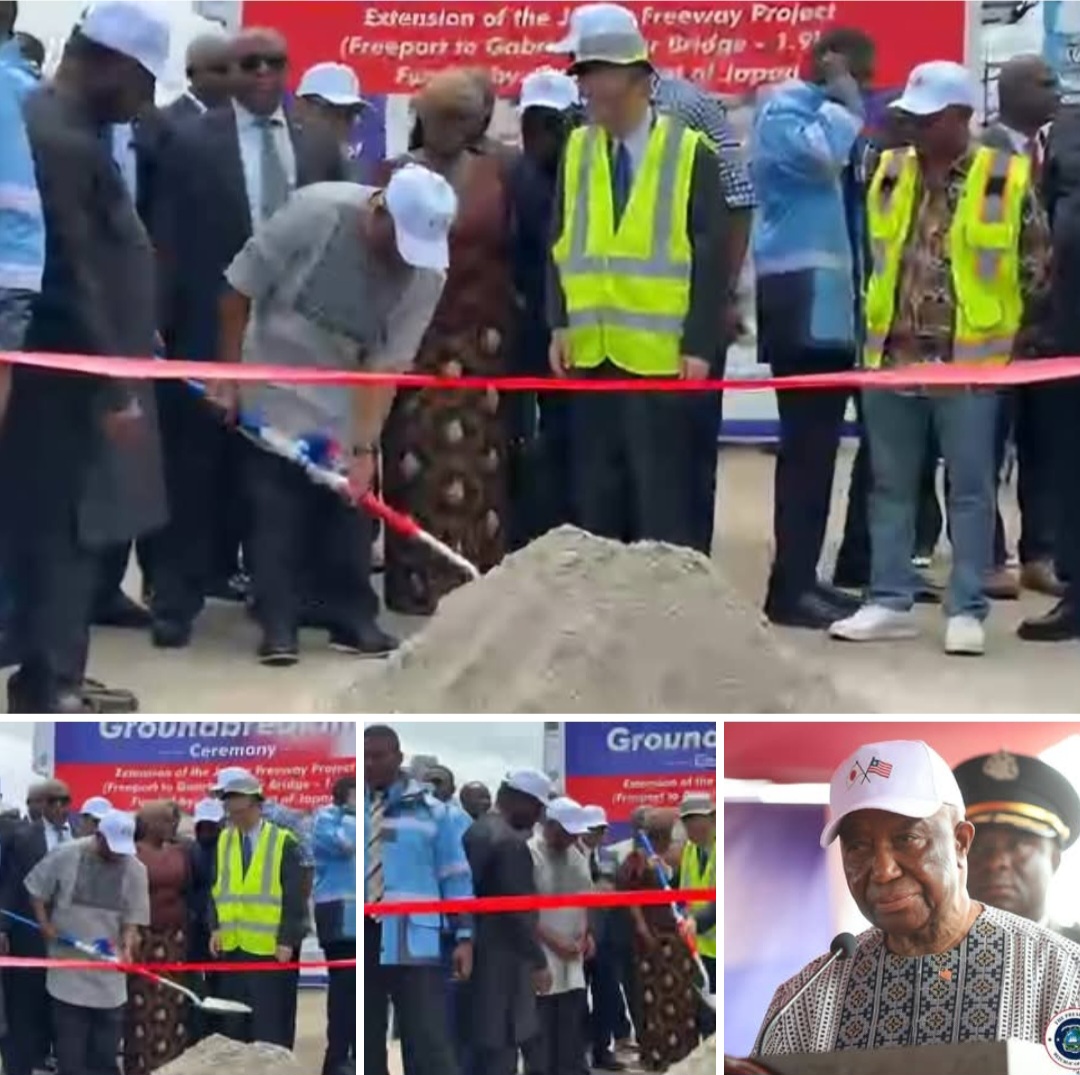
Joseph Nyuma Boakai Sr. has officially launched the long-awaited extension of the iconic Japan Freeway, a critical transport corridor connecting the Freeport of Monrovia to the Gabriel Tucker Bridge, in a move government officials say will significantly improve trade efficiency, reduce urban congestion, and strengthen Liberia’s economic backbone.
Speaking at the groundbreaking ceremony at the Freeport of Monrovia, President Boakai described the 1.9-kilometer extension as “one of the most strategically important transport corridors in the country,” despite its relatively short length.
The project, valued at Japanese Yen 2.7 billion (approximately US$16 million), is fully funded through grant aid from the Government of Japan and will be executed in partnership with the Japan International Cooperation Agency, Dai Nippon Construction Co., Ltd., and Eight-Japan Engineering Consultants Inc.
“This road is the lifeline of Liberia’s economy,” Boakai declared. “It links our principal seaport to the capital and facilitates the movement of goods, services, and people daily.”
Liberia’s Freeport of Monrovia handles more than 85 percent of the country’s import and export trade, according to National Port Authority estimates, making the corridor one of the busiest and most economically vital in the nation.
Experts estimate that traffic volume along the Japan Freeway and surrounding commercial districts exceeds 20,000 vehicle movements daily, often causing bottlenecks that slow commercial activities and increase transportation costs.
The modernization project will include:
Climate-resilient road infrastructure
Modern drainage systems to combat chronic flooding
Durable pavement reinforcement
Street lighting upgrades
Improved pedestrian walkways
Traffic safety enhancements
Government officials say these upgrades are expected to reduce travel time between the Freeport and central Monrovia by up to 35 percent, easing pressure on businesses and commuters.
The Japan Freeway extension comes amid an ambitious national infrastructure drive under President Boakai’s ARREST Agenda for Inclusive Development (AAID), which prioritizes Agriculture, Roads, Rule of Law, Education, Sanitation, and Tourism.
In the last three months alone, the administration has broken ground on over 257 kilometers of major highway corridors, including the 255-kilometer Western Corridor Road Project valued at approximately US$363.9 million, and the strategic Mendikorma-Voinjama Highway, aimed at improving connectivity in northwestern Liberia.
Liberia currently has an estimated 12,000 kilometers of road network, but only about 1,600 kilometers are paved, according to Ministry of Public Works data highlighting the country’s vast infrastructure deficit.
“This is why every kilometer matters,” Boakai stressed.
Liberia and Japan have maintained diplomatic ties since the 1960s, with Japan emerging as one of Liberia’s most reliable bilateral development partners.
Through JICA, Japan has financed dozens of critical projects across Liberia, including roads, bridges, hospitals, agricultural development, education programs, and port rehabilitation.
The road formerly known as Somalia Drive was reconstructed by Japan in previous years and later renamed Japan Freeway in recognition of Tokyo’s significant investment in Liberia’s infrastructure sector.
Analysts say Japan’s continued support reflects growing confidence in Liberia’s development agenda and political stability.
The project is expected to generate approximately 175 direct jobs for Liberians during construction, while also creating indirect employment opportunities for transport operators, suppliers, food vendors, and nearby businesses.
Economists note that infrastructure investments often generate multiplier effects, with every US$1 invested in transport infrastructure potentially yielding between US$2 to US$4 in broader economic activity in developing economies.
President Boakai urged communities and businesses along the corridor to cooperate during the construction period, emphasizing that temporary inconveniences would result in long-term national gains.
Boakai used the occasion to reaffirm Liberia’s appreciation to Japan, calling the project “a symbol of enduring friendship and shared progress.”
“As we modernize this corridor, we are not simply building roads; we are building opportunities, connecting communities, and laying the foundation for a stronger economy,” the President said.
The project further cements the Boakai administration’s aggressive infrastructure expansion strategy, which many analysts see as central to Liberia’s economic transformation agenda amid a projected 5.1% GDP growth outlook for 2026 following similar IMF-backed projections in 2025.


