




By: Julius Konton
In a bold move that has reignited national debate over governance, patronage, and institutional decay, Liberia’s Civil Service Agency (CSA) has rolled out its Credential and Verification Exercise at the National Housing Authority (NHA), the 43rd public institution to undergo the controversial audit.
The exercise, officially described as a government-wide reform initiative to strengthen transparency and productivity, is also exposing long-standing structural weaknesses within Liberia’s public sector, including ghost workers, misclassification of senior officials, and systemic political interference in recruitment.
At the center of the initiative is CSA Director General Dr. Josiah F. Joekai Jr., whose blunt messaging has unsettled sections of the bureaucracy accustomed to decades of weak oversight.
“We cannot continue to put square pegs in round holes and round holes in square holes,” Joekai said, underscoring what many analysts describe as a quiet revolution inside Liberia’s civil service.
A History of Payroll Inflation and Patronage
Liberia’s public service has long been criticized for inefficiency and payroll bloat.
According to government and donor-backed public financial management reviews over the past decade, personnel costs consume more than 50 percent of Liberia’s national budget, leaving limited fiscal space for infrastructure, health, education, and housing.
Past audits including those conducted during post-war governance reforms have repeatedly uncovered:
Ghost employees drawing salaries without reporting to work
Unqualified personnel occupying technical and senior management roles
Fragmented and broken personnel files across ministries and agencies
Despite repeated reform pledges, enforcement has historically stalled due to political pressure, institutional resistance, and fear of backlash.
The current CSA exercise marks one of the most aggressive attempts yet to confront these challenges head-on.
What the Verification Exercise Entails
At the National Housing Authority, CSA teams are conducting:
Physical verification of staff
Biometric photography
Cross-checking employment records with CSA databases
Academic and professional credential authentication
Payroll reconciliation to detect ghost workers
Personnel file audits to identify missing or altered records
Dr. Joekai emphasized that the process is time-bound but methodical, designed to realign human resources with institutional mandates.
“Productivity is not accidental,” he said. “It depends on competence, experience, values, and placement.
You can be academically qualified but still institutionally incompetent if your values do not align”, he re-emphasized.
Judiciary and Legislature Already Affected
The CSA’s campaign is not theoretical.
According to Dr. Joekai, six employees were retired at the Judiciary, while multiple others were redeployed or reclassified based on competence and experience.
More strikingly, at the House of Representatives, the CSA reassigned 263 personnel across the central administration, an unprecedented shake-up that sent shockwaves through political corridors in Monrovia.
“Those who were supposed to move, moved,” Joekai stated flatly.
At the Monrovia City Corporation, similar adjustments were implemented, reinforcing the CSA’s claim that no institution is exempt.
Transparency vs. Fear: A Controversial Reform
While the CSA insists the process is not a witch-hunt, critics argue it could become a tool for political targeting.
Joekai dismissed such claims as predictable resistance.
“Criticism from outsiders is common, but unacceptable when it seeks to derail reform,” he said.
He stressed that:
No external firms are being paid for the exercise
The process falls squarely within CSA’s statutory mandate
No bribes will be tolerated, warning staff that previous infractions have already been reported.
Directors or senior officials who refuse to submit credentials, he warned, will be automatically recommended for reclassification, effectively removing them from the classified civil service, which is reserved for professionals and technical experts.
Reclassification: The Quiet Earthquake
One of the most controversial elements of the exercise is professional reclassification.
Under CSA policy:
Classified civil service roles are reserved for qualified professionals, technicians, and senior managers
“Individuals occupying roles without the requisite credentials face downgrading or redeployment and
Payroll presence without physical verification raises red flags for ghost employment”, he further informed the NHA’s family.
“There will be no magic, no pretense,” Joekai said. “The report will be factual”, he added.
NHA Leadership Backs the Reform
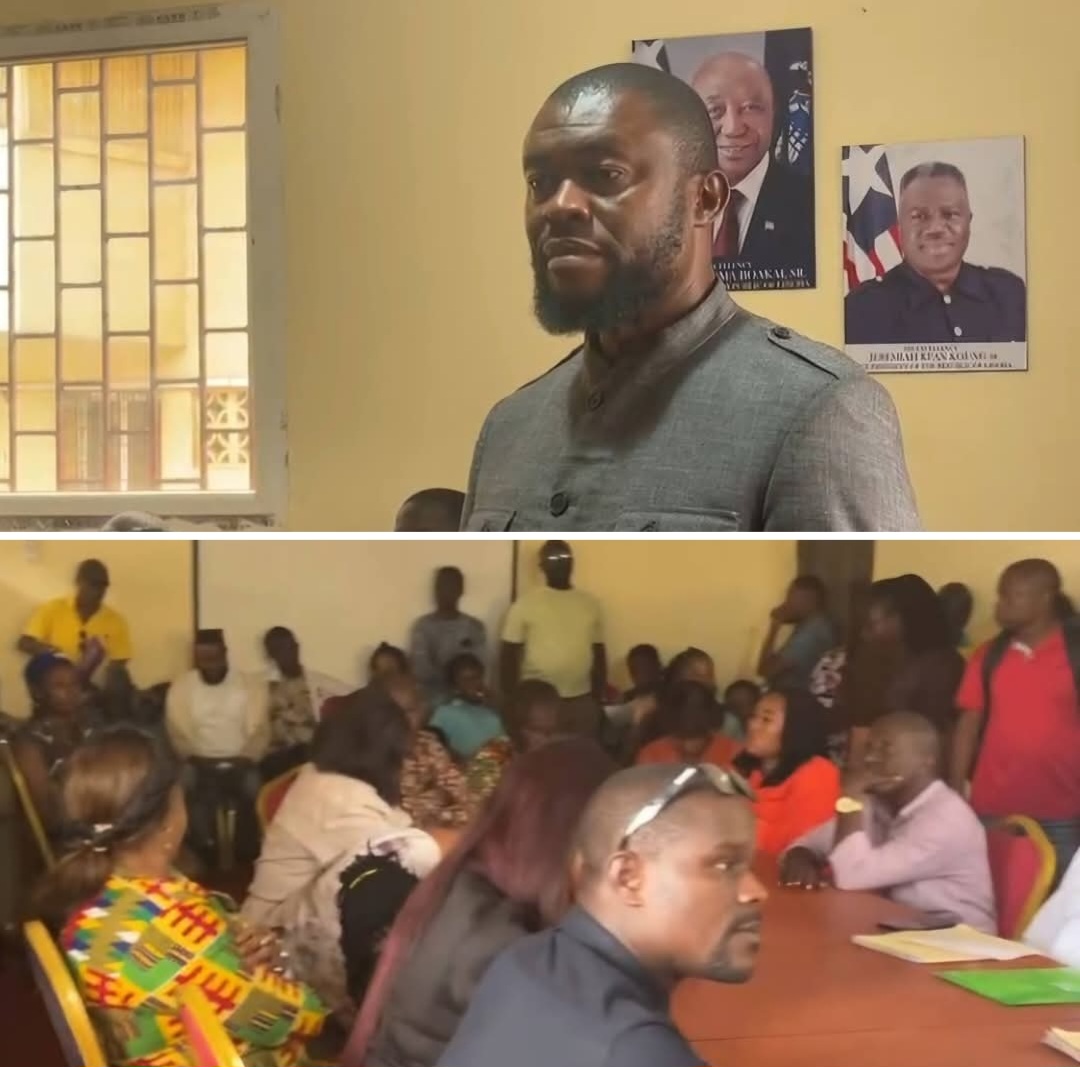
In a strong show of institutional alignment, NHA Managing Director Florence K. Geebae publicly endorsed the CSA initiative, pledging full cooperation.
“When we took over, we saw serious lapses,” Geebae admitted. “Personnel redocumentation and capacity needs assessment were unavoidable.”
She confirmed that the verification exercise will be synchronized with:
Reclassification
Capacity needs assessment
Staff development planning
“We pay salaries, that is the input. But what are you giving back to the country if you are wrongly placed?” she asked.
Geebae issued a firm directive: no staff exemptions, including those on leave, in court, or reportedly ill.
“I will personally ensure every NHA employee goes through this process,” she declared.
A Test Case for Liberia’s Reform Credibility
For governance experts, the NHA exercise is a litmus test.
If sustained, analysts say the CSA drive could:
Reduce payroll waste
Improve service delivery
Restore public confidence in state institutions
But failure or selective enforcement could deepen public cynicism and reinforce perceptions of reform without consequence.
As Liberia grapples with fiscal constraints and rising public expectations, the question remains:
Is this the long-awaited clean-up of Liberia’s civil service or just another reform moment destined to fade under political pressure?
For now, the CSA appears determined to find out.


