





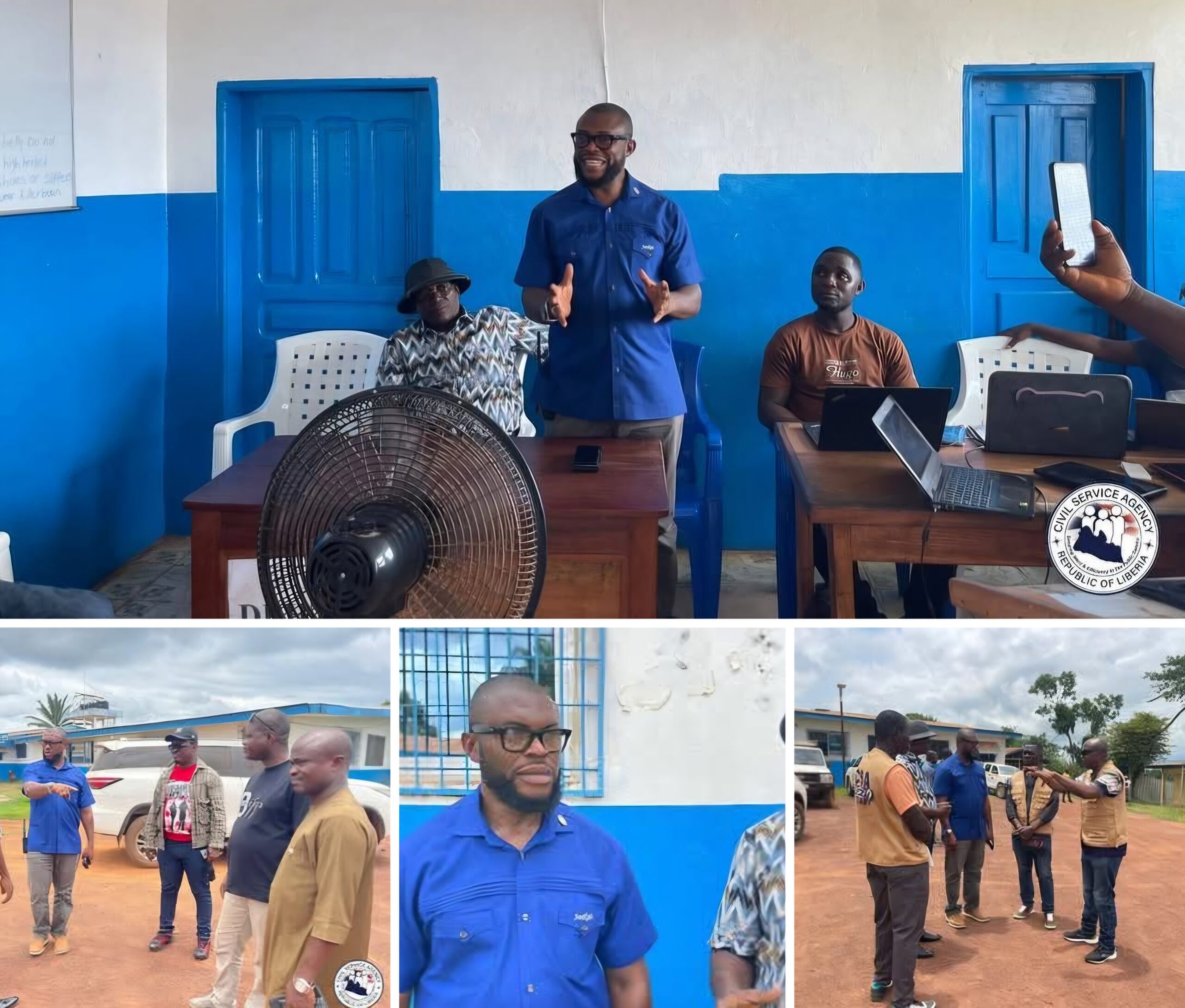
By: Julius Konton
In a decisive step toward reforming its public health sector and strengthening governance, Liberia has launched a comprehensive Health Workforce Baseline Study across its southeastern region an initiative aimed at eliminating payroll fraud, improving workforce deployment, and enhancing service delivery in one of West Africa’s post-conflict health systems.
The exercise, spearheaded by the Civil Service Agency (CSA) in collaboration with the Ministry of Health (MoH), was officially launched on Saturday at Martha Tubman Memorial Hospital in Zwedru by CSA Director-General Dr. Josiah F. Joekai Jr.
The initiative forms part of Liberia’s broader public sector reform agenda, targeting inefficiencies that have historically plagued government institutions, particularly in the aftermath of the country’s 14-year civil conflict (1989–2003) and the devastating 2014–2016 Ebola epidemic, which exposed critical gaps in the nation’s health workforce capacity.
A System Under Pressure
Liberia, with a population of approximately 5.3 million people, continues to face significant health workforce shortages.
According to World Health Organization benchmarks, countries should maintain a minimum of 4.45 doctors, nurses, and midwives per 1,000 people to deliver essential health services.
Liberia remains well below this threshold, with estimates hovering around 1.4 health workers per 1,000 people underscoring the urgency of workforce optimization.
The southeastern region comprising Grand Gedeh, River Gee, Sinoe, Maryland, and Grand Kru counties is among the most underserved, with limited infrastructure, difficult terrain, and persistent staffing imbalances.
Key Objectives of the Study
Speaking at the launch, Dr. Joekai underscored the CSA’s commitment to restoring credibility and efficiency within Liberia’s public service.
“Our goal is to clean up the public service by removing redundancies, eliminating inefficiencies, and ensuring that only legitimate workers are on the government payroll,” he stated.
The Health Workforce Baseline Study will focus on:
Verifying the physical presence and employment status of all health workers
Identifying “ghost workers” and irregularities within the government payroll
Detecting duplications and unauthorized employment arrangements
Assessing workforce distribution relative to healthcare facility needs
Creating a validated and centralized personnel database
Producing policy recommendations to optimize workforce management
Initial verification activities began immediately following the launch, with over 50 health workers both employees and long-serving volunteers presenting credentials at Martha Tubman Memorial Hospital.
Legal and Institutional Backing
The initiative is anchored in Liberia’s Civil Service Agency Act of 1973, which mandates the CSA to maintain accurate personnel records and promote efficiency, transparency, and accountability across government institutions.
Dr. Joekai emphasized that the study represents not just an administrative exercise, but a structural reform effort designed to rebuild trust in public institutions.
Government and Local Support
The launch drew participation from key government officials and stakeholders, including Grand Gedeh County Superintendent Alex Chersia Grant, River Gee County Education Officer Jallah Sammy, and Grand Gedeh County Health Team Administrator Isaac Zulu, alongside health professionals and community members.
Superintendent Grant praised the initiative, describing it as a “bold demonstration of responsible governance,” and highlighted its potential to formalize the status of volunteer health workers many of whom have served for years without pay.
“This process offers hope for integrating dedicated volunteers into the national payroll, ensuring fairness and motivation across the workforce,” he noted.
Toward Nationwide Reform
The study is being conducted by a team of CSA personnel analysts and data technicians and is expected to generate actionable insights that will inform national health workforce policies.
Liberia has made notable progress in rebuilding its health system since the Ebola crisis, with increased international investment and expanded training programs.
However, systemic challenges ranging from payroll inefficiencies to uneven staff distribution continue to hinder service delivery, particularly in rural regions.
Experts say that accurate workforce data is essential for effective planning, resource allocation, and achieving Universal Health Coverage (UHC), a key target under the United Nations Sustainable Development Goals (SDGs).
A Foundation for Transformation
As a pilot initiative, the southeastern baseline study is expected to lay the groundwork for a nationwide personnel verification program one that could redefine how Liberia manages its public workforce.
If successful, the initiative could not only eliminate wasteful spending but also redirect resources toward critical health services, ultimately improving outcomes for millions of Liberians.
By strengthening transparency, accountability, and data-driven planning, Liberia’s latest reform effort signals a renewed commitment to building a resilient and equitable health system in the years ahead.


