




By: Julius Konton
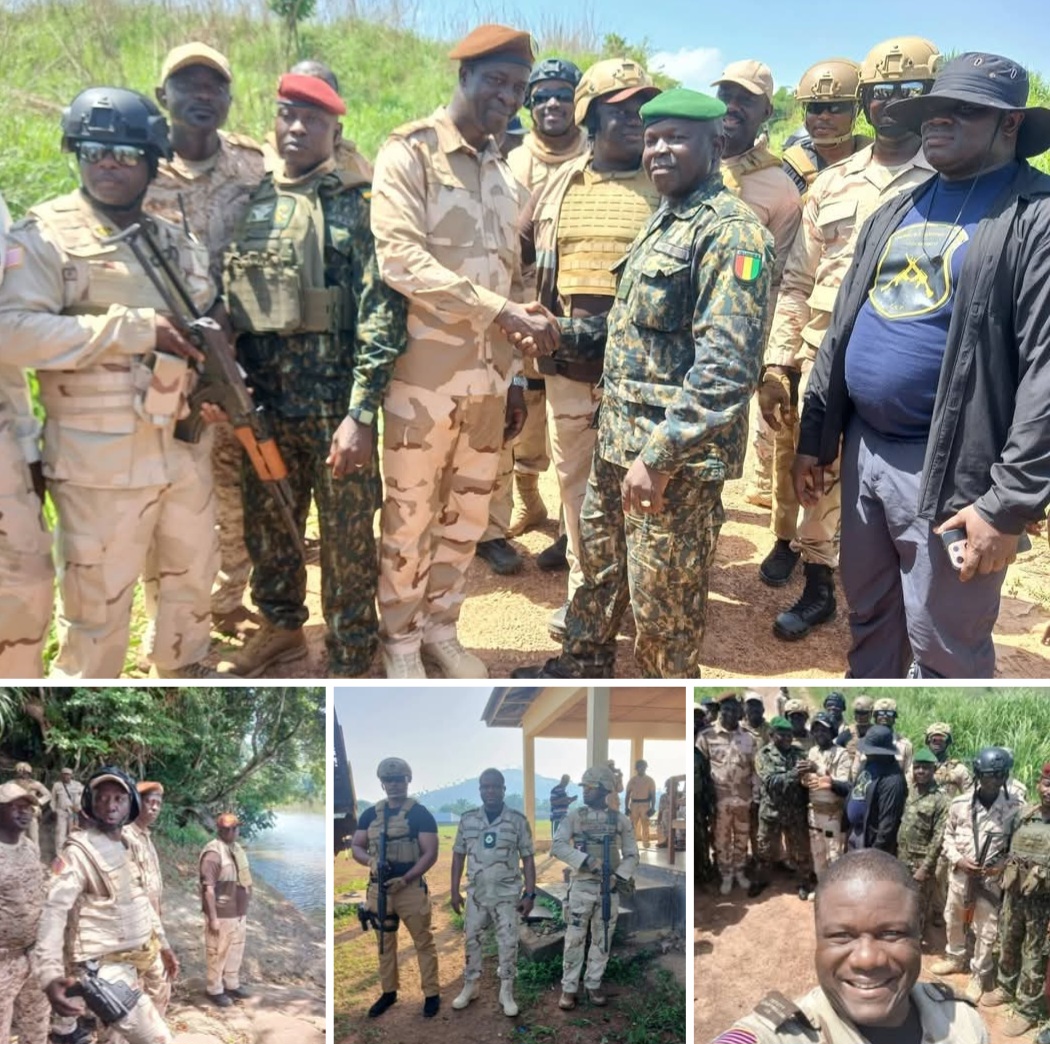
In what many consider as a win, win, Authorities from the Liberia and Guinea have renewed their commitment to safeguarding peace and strengthening cross-border collaboration following a high-level bilateral security engagement held at the strategic Solumba corridor.
The meeting brought together senior officials from the Liberia Immigration Service (LIS), led by Deputy Commissioner General for Administration Nelsco Aleo Wolo, and a delegation from the Guinean National Army headed by Lt. Camara Mohammed III, Commander of the Liberia–Guinea border axis.
The engagement underscored a longstanding tradition of cooperation between the two Mano River neighbors, blending security priorities with deeply rooted cultural and social ties that have evolved over decades.
Strengthening Border Security and Regional Stability
At the core of the discussions was the urgent need to reinforce joint security mechanisms along the approximately 590-kilometer Liberia–Guinea border, a stretch that remains vital for trade, migration, and regional connectivity.
Both delegations emphasized enhanced intelligence sharing, coordinated joint patrols, and real-time communication systems as critical tools in addressing cross-border threats.
These include irregular migration, smuggling networks, and trafficking, which remain persistent challenges across West Africa, according to regional security assessments.
Recent data from regional bodies such as the Economic Community of West African States indicate that cross-border crimes account for a growing share of security concerns in the Mano River basin, with porous borders often exploited by illicit actors.
Officials reaffirmed their shared responsibility to uphold territorial integrity while promoting peaceful coexistence.
Both sides pledged restraint and dialogue in resolving disputes, reinforcing diplomacy as the cornerstone of bilateral relations.
Cultural Ties as a Foundation for Peace
Beyond security cooperation, the Solumba meeting highlighted the enduring cultural and familial bonds linking communities on both sides of the border.
For generations, intermarriage among ethnic groups such as the Mandingo, Kissi, and Kpelle has fostered a shared identity that transcends national boundaries.
Experts estimate that over 60% of border communities maintain family or trade ties across both countries, making grassroots cooperation essential for sustaining peace.
Traditional festivals, markets, and cross-border ceremonies were recognized as vital platforms for strengthening unity. These cultural exchanges not only preserve shared heritage but also act as informal conflict-resolution mechanisms, reducing tensions and promoting dialogue at the community level.
Historical Context: From Conflict to Cooperation
The renewed cooperation builds on a complex history. During the 1990s and early 2000s, the Liberia–Guinea border region was heavily affected by spillover from the First Liberian Civil War and subsequent instability.
At the height of the crisis, hundreds of thousands of refugees crossed into Guinea, placing immense pressure on border communities. Since then, both nations have worked steadily to transform the frontier from a zone of vulnerability into one of collaboration and recovery.
Today, the border is increasingly seen as a gateway for regional trade and integration, with informal commerce contributing significantly to local economies.
Capacity Building and Institutional Development
Commissioner Wolo emphasized the importance of data-driven assessments of border security conditions, noting that effective responses depend on a clear understanding of local dynamics.
The engagement also aligns with broader institutional reforms within the Liberia Immigration Service, particularly the development of the Joseph Nymah Boakai’s Training Academy.
The academy is expected to enhance professionalism, discipline, and operational readiness, equipping officers with modern tools to address evolving security challenges.
Security analysts note that investment in training and infrastructure is critical, as West African border agencies continue to modernize in response to transnational threats.
A Shared Vision for Peace and Integration
The outcome of the Solumba engagement reflects a unified vision between Liberia and Guinea to maintain a peaceful, secure, and economically vibrant border region.
Both countries acknowledged that sustained collaboration is essential not only for national security but also for economic growth, trade facilitation, and regional integration within the Mano River Union framework.
As cooperation deepens, the Solumba meeting stands as a clear demonstration of how security coordination, cultural diplomacy, and institutional strengthening can converge to support long-term stability in West Africa.
With renewed commitments and practical steps toward joint action, Liberia and Guinea are positioning their shared border not as a line of division, but as a bridge for peace, unity, and progress, a model increasingly relevant in a region where cooperation remains key to sustainable development.


