



By : Julius Konton
Liberia’s fragile employment landscape is facing renewed scrutiny as the Director General of the National Bureau of Concessions (NBC), Hanson S. Kiazolu, has called on the House of Representatives of Liberia to urgently amend the country’s concession laws, warning that legal loopholes are undermining job creation, local business participation, and effective regulatory oversight.
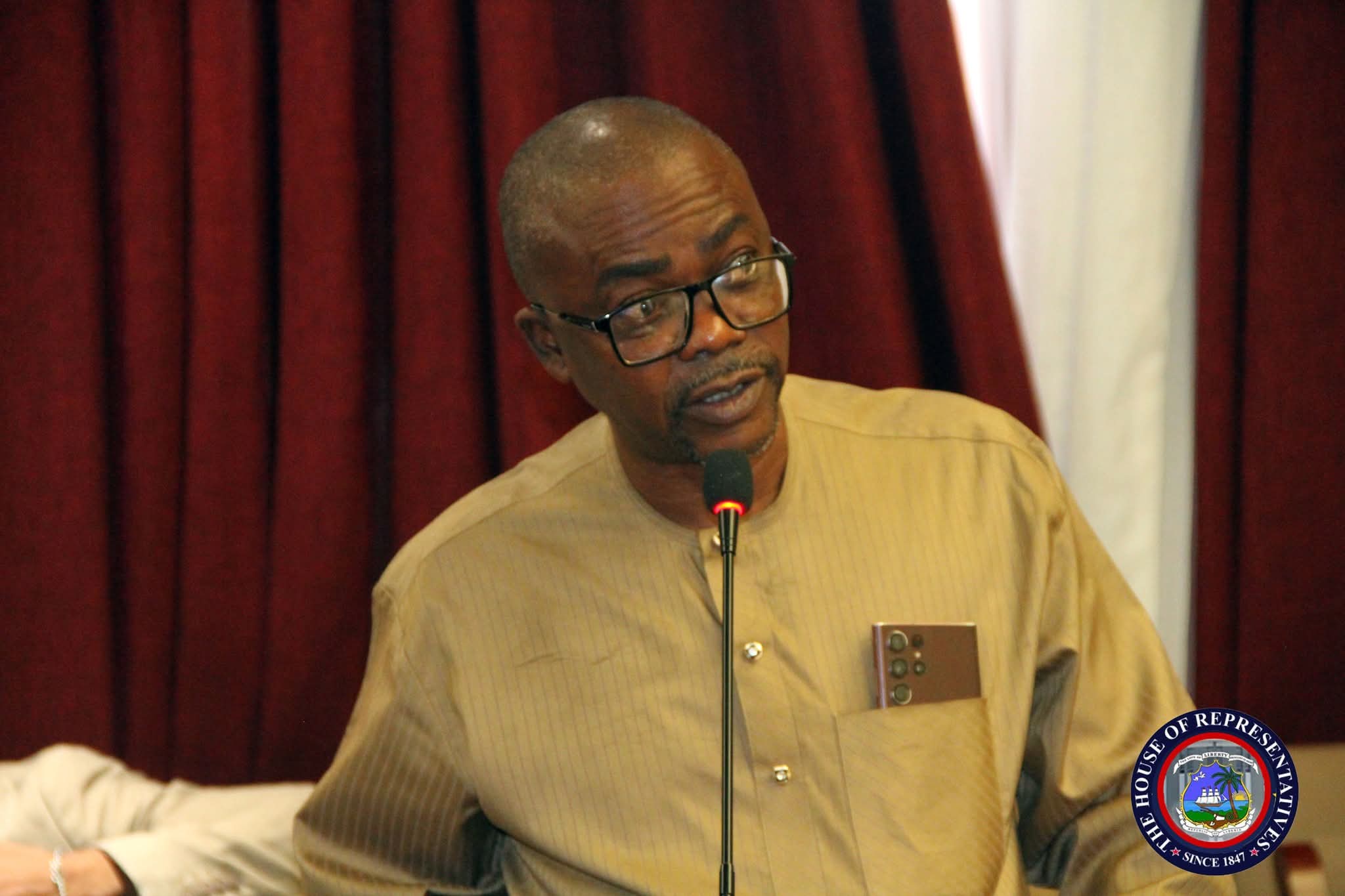
Appearing before lawmakers at their invitation, Kiazolu painted a sobering picture of a concession regime constrained by outdated legal provisions that limit the NBC’s authority particularly in enforcing local content, procurement, and employment obligations.
These weaknesses, he argued, are contributing to Liberia’s persistent unemployment crisis, especially in resource-rich regions where concessionaires dominate economic activity.
“When you read some of these concession or mineral agreements, it is clearly stated that companies are allowed to outsource recruitment,” Kiazolu told legislators.
“At the NBC, we cannot enforce what is not provided for in the law”, he re-emphasized.
Historical Roots of the Concession Challenge
Liberia’s concession-based economic model dates back more than a century, shaped heavily by foreign investment in rubber, mining, forestry, and agriculture.
Following years of civil conflict (1989–2003), successive governments relied on concessions as a rapid pathway to post-war reconstruction, signing large-scale agreements with multinational corporations.
However, analysts note that many of these agreements prioritized capital inflows over local job guarantees, often allowing companies to outsource recruitment and procurement abroad.
As a result, while concessions account for a significant share of Liberia’s export earnings, their employment impact has remained disproportionately low.
According to national labor estimates, youth unemployment and underemployment affect well over one-third of Liberia’s working-age population, despite decades of concession-driven investment.
Outsourcing and the Local Employment Gap
Kiazolu identified outsourcing as one of the most damaging loopholes in existing concession laws.
Many concessionaires legally recruit labor through third-party agencies sometimes outside Liberia making it difficult for regulators to ensure that Liberians are prioritized for available jobs.
This practice, he said, has weakened public confidence in concessions, particularly in rural counties where communities host large-scale mining and agricultural operations but see limited employment benefits.
“You cannot talk about development when communities hosting concessions remain jobless,” one lawmaker privately noted during the session.
Procurement and Local Content: A Missed Opportunity
Beyond employment, the NBC Director General highlighted weak enforcement of local procurement clauses, which are intended to ensure Liberian-owned businesses benefit from concession-related supply chains.
In the absence of stronger legal backing, the NBC struggles to compel concessionaires to source goods and services locally limiting opportunities for small and medium-sized enterprises (SMEs), a sector widely regarded as the backbone of sustainable economic growth.
Economic experts estimate that effective local procurement policies could retain millions of dollars annually within Liberia’s domestic economy, reducing import dependency and stimulating private-sector growth.
Compliance Enforcement Yields Results
Despite legal constraints, Kiazolu reported tangible progress in compliance monitoring.
He disclosed that NBC enforcement actions have generated more than US$10 million in compliance-related revenues from concession operations in Grand Bassa County and Liberia’s southeastern region.
These funds, he noted, demonstrate what stronger laws and enforcement mechanisms could achieve nationwide if loopholes were closed and penalties strengthened.
“We are doing our part,” Kiazolu told lawmakers. “You are our leaders, and we are your principal deputies.”
Legislative Response and Growing Momentum for Reform
Lawmakers acknowledged the urgency of the concerns raised.
Among them, Thomas Alexander Goshua, Representative of Grand Bassa County District #5, called for a comprehensive review of existing concession agreements, stressing that many were negotiated under economic conditions that no longer reflect Liberia’s current realities.
Several legislators emphasized the need to balance investor confidence with national employment priorities, signaling growing bipartisan support for reform.
A Turning Point for Liberia’s Concession Governance
As the session concluded, Kiazolu thanked the Speaker, Deputy Speaker, and members of the House, reaffirming the NBC’s readiness to collaborate with lawmakers to modernize concession frameworks.
Policy observers view the engagement as a potential turning point, one that could redefine how Liberia manages its natural resources, aligns foreign investment with national development goals, and tackles chronic unemployment.
If legislative reforms materialize, analysts say Liberia could move closer to a concession model that not only attracts investors but also creates jobs, strengthens local businesses, and delivers inclusive growth.
For a country rich in resources yet constrained by opportunity, the coming legislative response may prove decisive in shaping Liberia’s economic future.


