



By: Julius Konton
Liberia and the European Union have taken decisive steps to elevate their long-standing partnership, following high-level talks in Brussels aimed at deepening economic cooperation, mobilizing private investment, and advancing sustainable development.
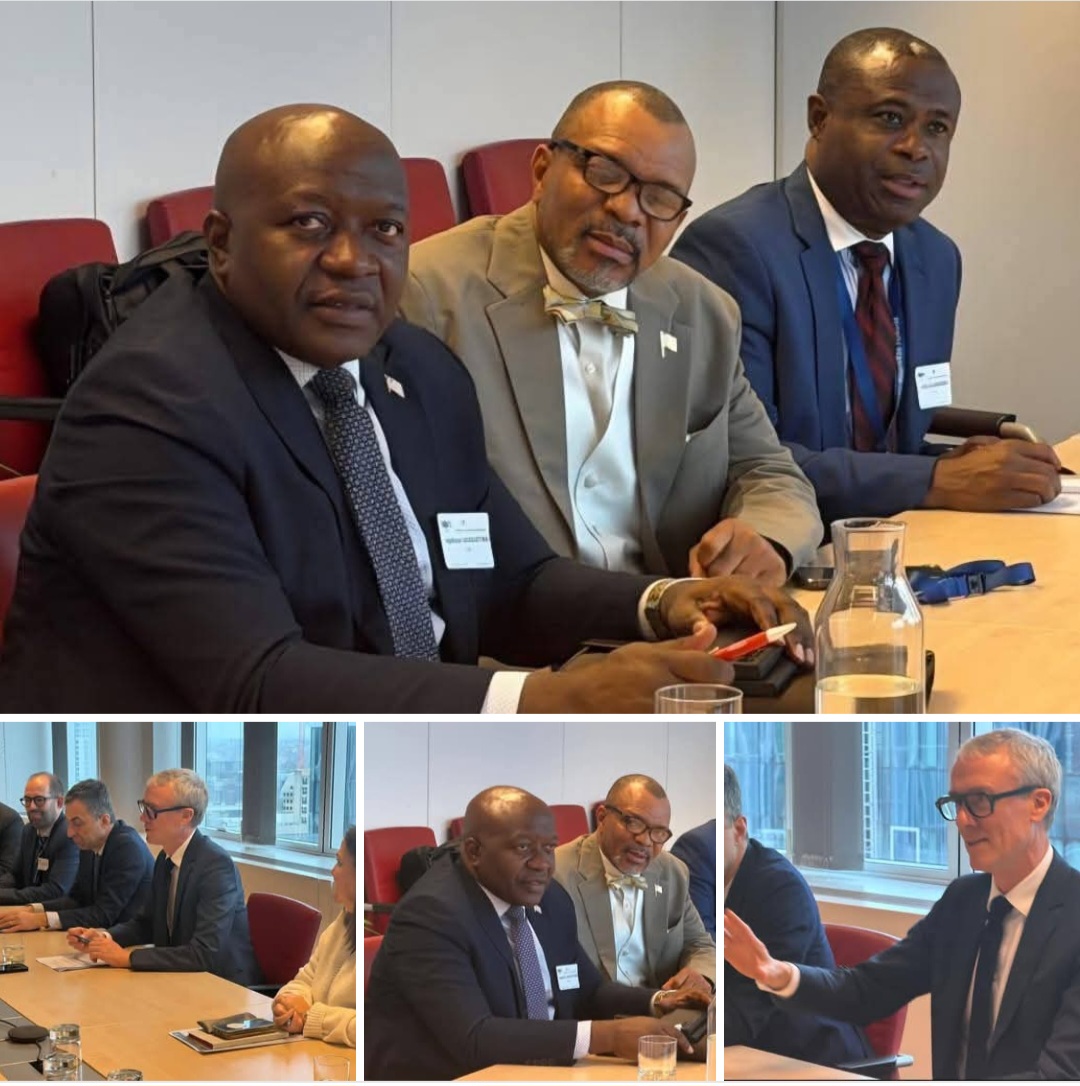
On the margins of the Liberia–EU Business Forum, Liberia’s Minister of Finance and Development Planning, Augustine Kpehe Ngafuan, held bilateral discussions with Koen Doens, Director-General for International Partnerships (DG INTPA) at the European Commission.
Senior officials from both Liberia and the European Union participated in the meeting.
A Partnership Built Over Decades
Liberia and the European Union share a cooperation history spanning more than four decades, covering post-conflict reconstruction, governance reform, humanitarian assistance, and development financing.
Since the end of Liberia’s civil conflict in 2003, the EU has remained one of the country’s largest and most consistent development partners, providing support through budget assistance, infrastructure financing, electoral processes, and institutional capacity building.
Over the past 15 years alone, EU development support to Liberia has reached hundreds of millions of euros across multiple funding cycles, with significant investments in education, agriculture, health systems, road rehabilitation, and democratic governance.
EU Support During Global Economic Uncertainty
Minister Ngafuan conveyed the appreciation of President Joseph Nyuma Boakai and the Liberian people for the EU’s steadfast engagement, particularly during periods of global economic instability that disrupted development financing across many low-income countries.
“At a time when the global environment became highly unpredictable and many development programs were scaled back worldwide, the European Union stood firmly with Liberia,” Ngafuan said.
“The budget support we received came at a critical fiscal moment and helped protect key national priorities such as education, agriculture, healthcare delivery, school feeding programs, and democratic governance.”
He emphasized that EU budgetary support played a stabilizing role in safeguarding essential public services amid inflationary pressures, rising debt vulnerabilities, and post-pandemic economic shocks.
From Aid to Investment-Driven Growth
Director-General Doens reaffirmed the EU’s long-term commitment to Liberia, describing the relationship as one anchored in shared values, institutional trust, and sustainable development rather than short-term transactional engagement.
“The European Union wants to remain a stable, reliable, and values-driven partner for Liberia,” Doens said. “Our objective is to mobilize private investment alongside public funding and help unlock Liberia’s economic potential, particularly through initiatives such as the Global Gateway.”
The Global Gateway, the EU’s flagship investment strategy, aims to mobilize up to €300 billion globally by 2027 to support sustainable infrastructure, energy, digital connectivity, and value-chain development in partner countries.
Private Sector, Jobs, and Youth at the Center
Both sides agreed that the next phase of Liberia–EU cooperation must prioritize private sector engagement as the primary engine of job creation.
With more than 60 percent of Liberia’s population under the age of 35, youth employment remains one of the country’s most pressing socio-economic challenges.
Discussions highlighted the need to accelerate investment in agriculture, fisheries, agro-processing, renewable energy, and small- and medium-scale enterprises to transform Liberia’s youthful population into a productive economic force.
Minister Ngafuan stressed that the Liberia–EU Business Forum was designed to foster direct engagement between European and Liberian businesses, address investor concerns, and correct outdated perceptions about Liberia’s investment climate.
“There is a new Liberia,” he said. “Democracy does not always move in a straight line, but we are working through the challenges, strengthening institutions, and building a more predictable and credible environment for investors.”
Energy and Infrastructure as Catalysts
Energy access and infrastructure development featured prominently in the discussions, with both sides recognizing that reliable electricity remains central to Liberia’s industrialization and value-addition ambitions.
Liberia’s power access rate, still among the lowest in West Africa, continues to constrain manufacturing, service delivery, and private investment.
EU officials indicated openness to supporting scalable energy solutions and infrastructure projects aligned with Liberia’s national development priorities.
The engagement concluded with mutual appreciation and a shared commitment to sustained follow-up on key action points, including flagship investment projects, private sector mobilization, and deeper collaboration under the Global Gateway framework.
Both parties expressed confidence that the Liberia–EU partnership is entering a new phase, one defined not only by development assistance, but by investment-led growth capable of delivering durable economic transformation and tangible benefits for the Liberian people.


