



By: Julius Konton
As Liberia approaches the April 18 elective congress of the Liberia Football Association (LFA), the country’s most popular sport finds itself trapped in a volatile struggle between institutional reform and entrenched political maneuvering, with accusations of inducement, misinformation, and unrealistic promises threatening to derail fragile gains made over the past decade.
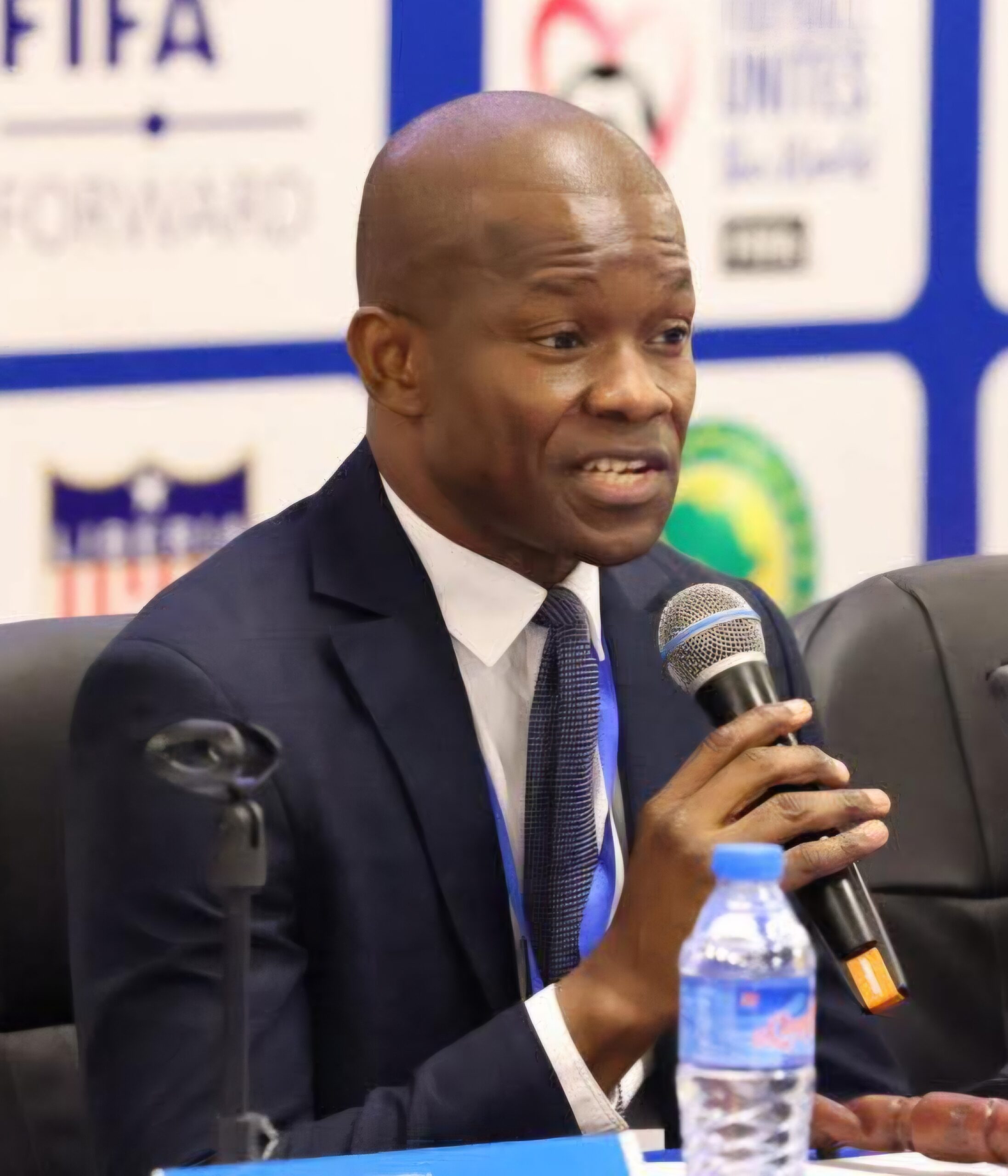
At the center of the storm is LFA President Mustapha Raji, who has delivered one of the most uncompromising and controversial addresses in recent football history drawing a sharp moral line between integrity-driven governance and what he openly described as “criminal administration.”
“If you believe that an LFA run by criminals will develop faster than one built on integrity, then I don’t want to be part of that LFA,” Raji told delegates at the association’s extraordinary congress.
A Blunt Moral Argument in a Politicized Football Arena
Raji’s remarks go beyond campaign rhetoric.
They strike at a deeper crisis confronting African football governance: the normalization of electoral inducement, inflated infrastructure promises, and personality-driven politics.
Drawing a stark analogy, Raji asked stakeholders to consider global football governance norms:
“Have you ever seen the President of Arsenal chasing after the President of Manchester United?”
The reference to elite clubs underscores a broader point: football leadership is about institutional respect, not dependency or patronage politics.
In Liberia’s case, critics argue that the LFA’s electoral cycles have historically been marked by short-term populism, often sacrificing sustainable planning for headline-grabbing promises many of which never materialize.
The Data Behind the Debate: Infrastructure, Money, and Reality
One of Raji’s most contentious claims centers on infrastructure financing.
He dismissed promises circulating in the football space that a US$4.5 million stadium could be fully delivered within nine months, labeling such claims as economically and technically impossible.
Drawing from his background in telecommunications and large-scale project management, Raji explained:
International construction standards require phased disbursements, not 100% upfront payments.
FIFA-funded infrastructure projects operate on milestone-based financing, with retention payments only released after performance verification.
No credible international contractor would reject 75% of US$4.5 million if governance and procurement processes were legitimate.
“Those days where people polluted the airwaves with fantasies are gone,” he said.
FIFA Systems, Transparency, and the Clearing House Effect
A major flashpoint in the address was the controversial LFA Connect system, initially resisted by several stakeholders.
Raji defended the platform as a governance breakthrough, noting that it now enables clubs to:
Digitally register players and officials
Link verified bank accounts
Access international training compensation through FIFA’s Clearing House
Ironically, many of the system’s early critics are now financial beneficiaries, receiving FIFA-backed compensation that was previously untraceable or lost to corruption.
“Your money no longer disappears. That is what transparency looks like,” Raji emphasized.
The Cost of Protest Politics: The $280,000 Sponsorship That Vanished
Perhaps the most damning revelation was the loss of a major commercial partner: Orange Liberia.
According to LFA records:
The sponsorship was valued at US$280,000 annually
Each first-division club received US$7,000, supplemented by US$6,000 in subvention
Total direct benefit per club: US$13,000 per season
The deal collapsed after coordinated protests targeted the sponsor an act Raji described as self-sabotage driven by personal ambition rather than football development.
“The loss didn’t hurt me. It strangled the clubs,” he said.
Infrastructure vs. Geography: Why Maryland Matters
Raji’s insistence on hosting football activities in Maryland County, a region historically marginalized in sports infrastructure has drawn criticism from some quarters.
But the LFA President framed the move as sports diplomacy:
Liberia has four football zones
Three have previously hosted major LFA congresses
Maryland had never been prioritized despite its strategic importance
“Is Maryland not part of Liberia?” Raji asked rhetorically.
He lamented that national competitions are still played on dust-filled pitches, calling it unacceptable in a country seeking international football credibility.
Election Tensions, Inducement Allegations, and FIFA Law
Raji’s most explosive warning concerned alleged attempts to discourage delegates from attending congress, which he labeled a criminal offense under football statutes.
Under FIFA disciplinary rules:
Promising or offering inducements even without payment is a sanctionable offense.
Manipulating attendance at statutory assemblies undermines football democracy
“This football house has room for all of us.
Why belittle yourself through desperation?” he warned.
Legacy, History, and the Weight of Continuity
Invoking the legacies of Cllr. Sumo Izetta Wesley, Edwin Melvin Snowe, and Musa Bility, Raji cautioned against dismantling institutional foundations built over decades.
He also highlighted the symbolic importance of football icons, noting that figures like James Debbah will be present in Maryland during the congress reinforcing football’s unifying power.
A Final Warning Before April 18
As Liberia’s football family approaches a decisive vote, the message from the LFA President is clear:
This election is not about personalities, it is about governance models.
“Football will survive our mistakes,” Raji concluded. “But it will not survive deliberate deception.”
Whether stakeholders choose integrity over inducement on April 18 may determine not just who leads the LFA but whether Liberian football advances or regresses in the next decade.