




By : Julius Konton
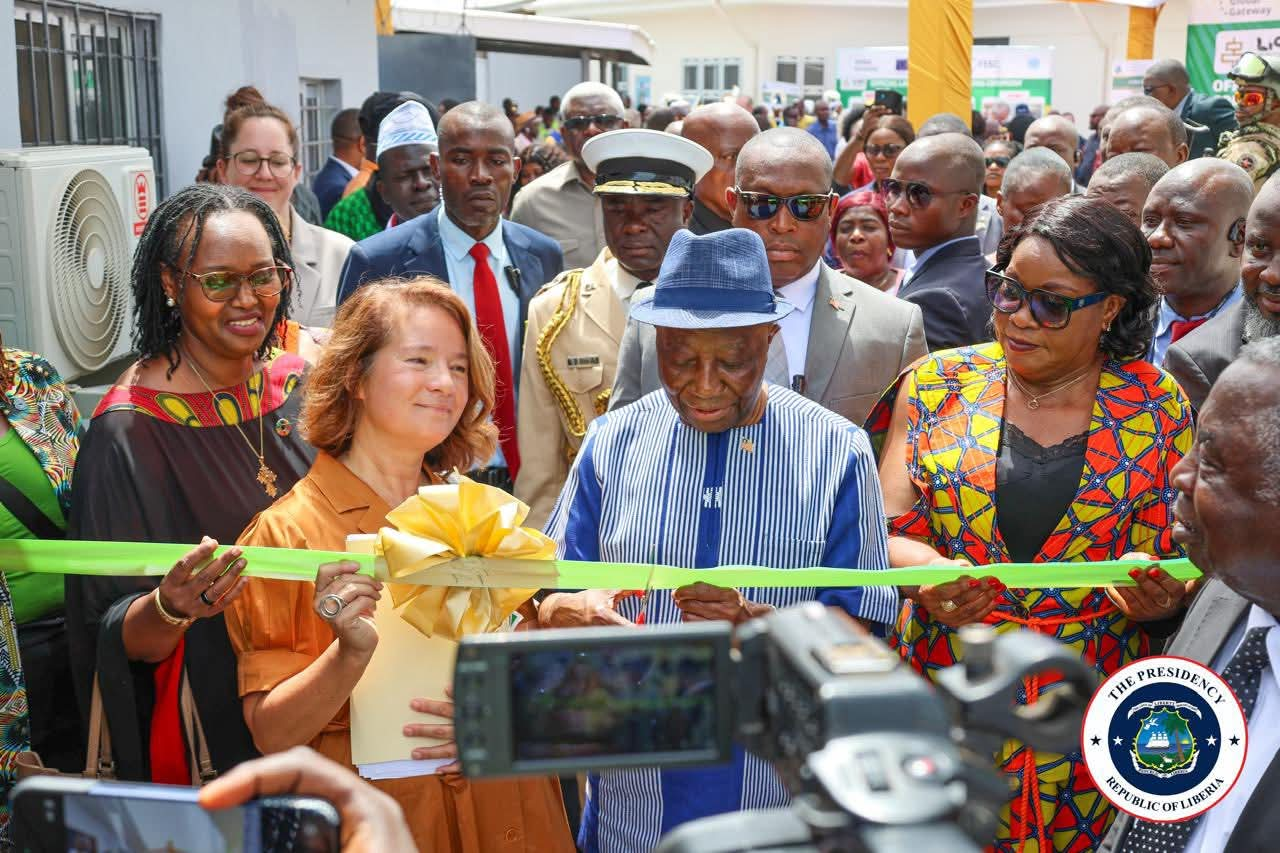
President Joseph Nyuma Boakai has formally commissioned the Quality Laboratory of the Liberia Standards Authority (LISA), marking a major milestone in Liberia’s effort to strengthen consumer protection, improve market fairness, and position local products for regional and international trade.
The commissioning ceremony, held at the Ministry of Public Works compound in Monrovia, signals the operational takeoff of Liberia’s long-awaited national quality infrastructure an institutional gap that economists and development partners have long identified as a barrier to industrial growth and export competitiveness.
A Long-Awaited Reform
Liberia enacted the LISA Act in 2022, creating the Authority as a semi-autonomous statutory body mandated to oversee standardization, conformity assessment, testing, certification, and metrology.
However, the absence of fully functional laboratories delayed effective enforcement, allowing substandard and often counterfeit goods to circulate widely in domestic markets.
According to regional trade data from West African institutions, countries without functional standards systems can lose between 5–10 percent of GDP annually to unfair trade practices, rejected exports, and consumer fraud.
Liberia’s informal markets where food, fuel, construction materials, and pharmaceuticals are often sold without verified measurements have been particularly vulnerable.
President Boakai said the commissioning of the LISA laboratory is intended to reverse that trend.
“The issue of standards is very practical. People in our markets are being cheated every day through hidden inflation and lack of attention to quality and quantity,” the President said.
“Standards are not abstract concepts; they are essential to our economic life and to fairness in trade.”
Protecting Consumers, Restoring Confidence
The new laboratory will serve as Liberia’s national reference point for product testing and certification, enabling authorities to verify weights and measures, test imported and locally manufactured goods, and issue quality marks recognized across borders.
Economists note that weak enforcement of standards disproportionately affects low-income households, who often bear the cost of under-measured goods, adulterated food items, and unsafe consumer products.
Studies by development agencies estimate that substandard products account for up to 30 percent of goods in informal West African markets, with serious implications for public health and household income.
President Boakai stressed that credible standards protect both consumers and honest businesses.
“Strong standards ensure fairness.
They protect consumers, but they also protect legitimate enterprises that invest in quality and compliance,” he said.
Boosting Trade and Regional Integration
Beyond domestic markets, the President emphasized that consistent application of standards is essential for Liberia’s participation in regional and global trade.
Poor quality compliance has historically limited Liberia’s export profile, particularly in agro-processing, fisheries, and light manufacturing.
With the laboratory now operational, Liberian products are expected to face fewer technical barriers within the ECOWAS market of more than 400 million people, as well as in international supply chains that require certified conformity to health, safety, and performance benchmarks.
“Standards are not obstacles to trade,” President Boakai said.
“They are instruments of opportunity that allow our businesses to compete beyond our borders.”
Institutional Collaboration and Development Support
The President commended the Ministry of Commerce and Industry for spearheading reforms in the national standards framework and acknowledged the role of international development partners in upgrading laboratory facilities, training technical staff, and modernizing equipment.
He urged LISA to operate with professionalism, transparency, and independence, while fostering cooperation with market associations, manufacturers, importers, and consumer protection groups.
Part of a Broader Economic Vision
The commissioning aligns with the government’s broader economic reform agenda, which prioritizes institutional accountability, inclusive growth, and private-sector confidence.
Analysts say functional standards bodies are a prerequisite for attracting manufacturing investment and integrating fragile economies into value chains.
The launch of the LISA Quality Laboratory and national quality mark, officials say, represents more than a technical upgrade it reflects a strategic shift toward rules-based commerce and consumer-centered governance.
As Liberia works to rebuild trust in its markets and institutions, the success of the Standards Authority may prove pivotal in determining whether economic growth translates into tangible gains for ordinary citizens.


