





By: Julius Konton
Liberia’s Minister of Finance and Development Planning, Augustine Kpehe Ngafuan, has presented a strong case for the country’s evolving health financing strategy, highlighting rising budget allocations and near-optimal spending efficiency as key pillars of the government’s human capital agenda.
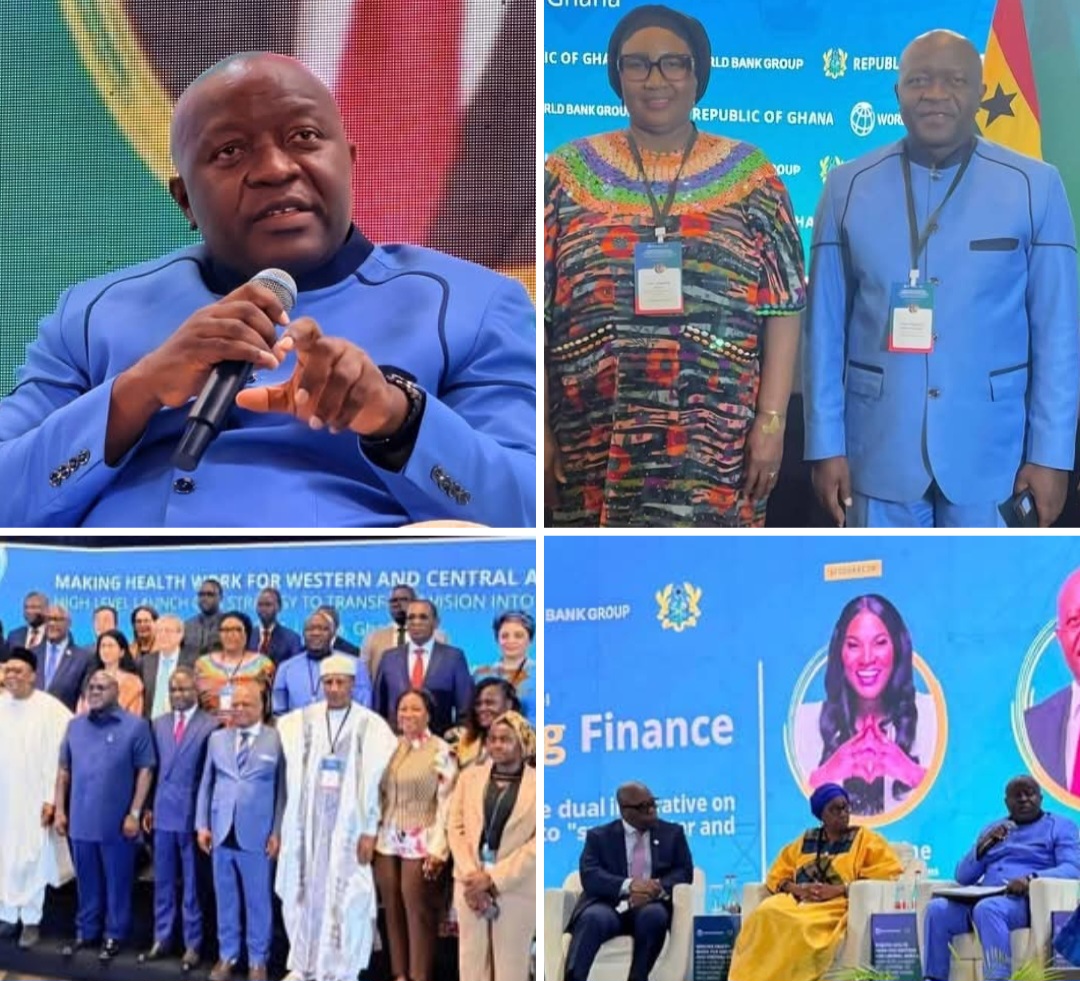
Speaking at the regional launch of the World Bank Group’s Health, Nutrition, and Population Strategy dubbed “Fit to Prosper”, Ngafuan outlined how Liberia is steadily expanding fiscal space for health under the leadership of President Joseph Nyuma Boakai.
Rising Investments Signal Policy Shift
Liberia’s health sector budget has climbed to US$110 million for Fiscal Year 2026, marking a 21 percent increase year-on-year, and reflecting what the minister described as a “deliberate and sustained policy shift” toward investing in human capital.
The upward trend underscores a broader trajectory:
US$80.3 million in 2024
US$91.3 million in 2025
US$110 million in 2026
This steady growth aligns with regional and global calls for African governments to increase domestic financing for healthcare systems, particularly in the aftermath of the COVID-19 pandemic, which exposed structural vulnerabilities across the continent.
Efficiency Gains Strengthen Credibility
Beyond increased allocations, Liberia is also demonstrating significant improvements in budget execution, a key indicator of public financial management effectiveness.
Health sector disbursement rates have risen sharply:
70% in 2023
88% in 2024
97.7% in 2025
These gains, Ngafuan noted, signal enhanced budget credibility, improved planning coordination, and stronger institutional capacity to absorb and utilize funds effectively.
“This is not just about allocating more resources,” he emphasized. “It is about ensuring that every dollar translates into real service delivery outcomes.”
Strategic Reforms Driving Results
The minister attributed the progress to targeted reforms, including expenditure reviews and closer collaboration between the Ministry of Finance and Development Planning and the Ministry of Health.
A key milestone was a “deep dive” technical engagement hosted at the Ministry of Health, which resulted in the development of an implementation compact designed to:
Address spending bottlenecks
Accelerate fund utilization
Improve healthcare delivery outcomes
Such measures are increasingly seen as critical across developing economies, where inefficiencies not just funding gaps often constrain health system performance.
Infrastructure as a Health Enabler
Ngafuan stressed that healthcare outcomes are closely tied to investments in enabling infrastructure, including roads, energy, and sanitation.
He cited the Jackson F. Doe Memorial
Regional Referral Hospital in Tappita as a practical example, noting that improved road connectivity has:
Increased patient access
Boosted service utilization
Enhanced operational efficiency
This integrated approach reflects a growing consensus among development experts that health systems cannot function in isolation from broader infrastructure ecosystems.
Global Platform for Reform Dialogue
The “Fit to Prosper” strategy launch brought together finance and health ministers, development partners, and policy leaders from across West and Central Africa to discuss innovative approaches to:
Domestic resource mobilization
Results-based financing
Universal health coverage
Ngafuan participated in a high-level ministerial panel on “Fixing Finance,” alongside prominent figures including:
Dr. Victor Asare Bampoe, CEO of Ghana’s National Health Insurance Authority
Prof. Awa Marie Coll-Seck, former Senegalese Health Minister and President of Forum Galien Africa
The panel, moderated by international communications expert Anita Erskine, emphasized the dual imperative of increasing both the scale and efficiency of public spending.
A Broader Development Imperative
The World Bank’s new strategy builds on decades of engagement in health, nutrition, and population programs, with a sharpened focus on resilience, equity, and system strengthening.
For Liberia, Ngafuan’s presentation signals a broader ambition: to transition from donor dependence toward sustainable, domestically financed health systems, while improving outcomes in a country still recovering from past health crises, including the Ebola epidemic.
High-Level Delegation
Minister Ngafuan attended the Accra event alongside Liberia’s Minister of Health, Dr. Louise M. Kpoto, reinforcing the government’s coordinated approach to health sector reform.
Ngafuan emphasized that infrastructure investments, including roads and energy, are critical to improving healthcare delivery, citing gains at Jackson F. Doe Memorial Hospital.
The Accra forum brought together regional leaders to advance financing solutions for universal health coverage.


