



By: Julius Konton
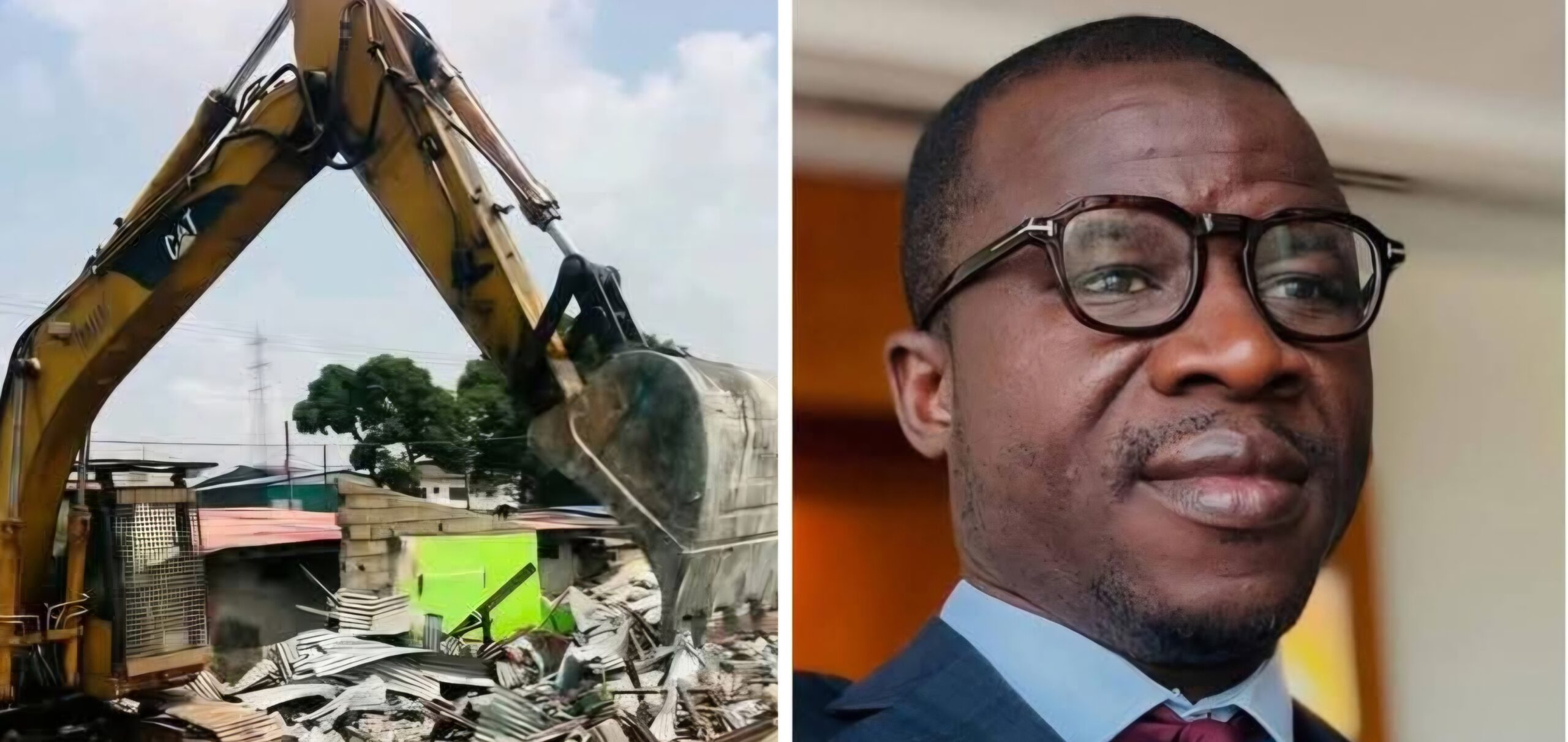
Liberia’s fragile post-war development narrative has been thrust into renewed controversy following the mass demolition of homes and informal settlements across parts of the country, a campaign that has displaced thousands of already vulnerable citizens and ignited a national debate over the meaning of development, governance, and social justice.
At the center of the growing backlash is Sekou Kalasco Damaro, former Special Presidential Aide under ex-President George Manneh Weah, who has sharply criticized the current Unity Party (UP) administration for what he describes as a development strategy devoid of empathy, safeguards, and historical continuity.
“Development Is Not Concrete Alone”
In a strongly worded public statement, Damaro argued that Liberia’s development trajectory must be evaluated not merely by roads, buildings, or urban clearance, but by how the state protects the dignity, livelihoods, and welfare of its citizens especially the poor.
“Development must inspire hope, not displacement,” Damaro asserted.
“A government’s success is measured by how it treats its most vulnerable people when pursuing national progress”, he maintained.
Liberia, where over 50 percent of the population lives below the national poverty line, according to World Bank and Liberia Institute of Statistics and Geo-Information Services (LISGIS) estimates, remains one of the world’s most economically fragile states.
Informal settlements often the only affordable housing option for low-income families are home to tens of thousands of urban residents in Monrovia and surrounding areas.
CDC Era: Development with Resettlement Frameworks
Damaro contrasted the current demolition wave with policies pursued under the Coalition for Democratic Change (CDC) government (2018–2024), arguing that while the Weah administration faced fiscal constraints and implementation challenges, it institutionalized safeguards to mitigate displacement.
According to Damaro, the CDC administration:
Implemented Resettlement Action Plans (RAPs) alongside major infrastructure projects
Allocated approximately USD 8 million through the Liberia Road Fund for compensation and mitigation along affected road corridors
Provided annual budgetary support estimated at USD 1.24 million to the national resettlement commission
Invested in capacity-building mechanisms to manage compensation, relocation, and community engagement
“These were not perfect solutions,” Damaro admitted, “but they reflected a recognition that communities are stakeholders in development not disposable obstacles.”
International development standards, including those of the World Bank and African Development Bank, require resettlement planning, compensation, and livelihood restoration when displacement is unavoidable.
Critics argue that Liberia’s current demolition drive falls short of these benchmarks.
Unity Party Under Fire: Rising Fear, Shrinking Trust
Under the current Unity Party-led government, Damaro contends that recent political and economic decisions combined with sudden demolitions have sharply intensified public anxiety, especially among urban poor households already struggling with inflation, unemployment, and stagnant wages.
Liberia’s inflation rate, which hovered in the high single digits in recent years, has continued to erode purchasing power, while youth unemployment remains estimated at over 70 percent, according to labor market assessments.
In this context, forced displacement without clear compensation frameworks risks pushing families deeper into poverty.
“In an already fragile economy, policies that heighten fear and uncertainty risk reversing hard-won gains and undermining national cohesion,” Damaro warned.
Civil society organizations have echoed similar concerns, cautioning that unplanned demolitions can fuel social unrest, exacerbate homelessness, and weaken public trust in state institutions particularly in a country still healing from decades of conflict and governance breakdown.
A Historical Wound Reopened
Liberia’s history lends particular sensitivity to displacement.
From the civil wars of 1989–2003 to post-war land disputes, forced movement of people has repeatedly triggered instability.
Analysts note that development policies perceived as elitist or exclusionary can quickly reopen historical wounds.
“Land and housing are not just economic issues in Liberia, they are political and emotional fault lines,” said one governance expert.
“Any government that ignores this reality does so at its own peril.”
A Call for Justice-Centered Governance
Damaro concluded his intervention with a direct appeal to national leadership, urging a return to justice-centered, people-first governance.
“Liberia does not need governance that inflames despair or disregards the lived realities of families,” he said.
“It needs leadership that builds on past efforts, protects parenthood and community stability, and upholds national dignity.”
As bulldozers continue to reshape Liberia’s urban landscape, the central question remains unresolved: Can development that displaces the poor truly be called progress?
For many affected families, the answer is painfully clear.


