


By: Julius Konton
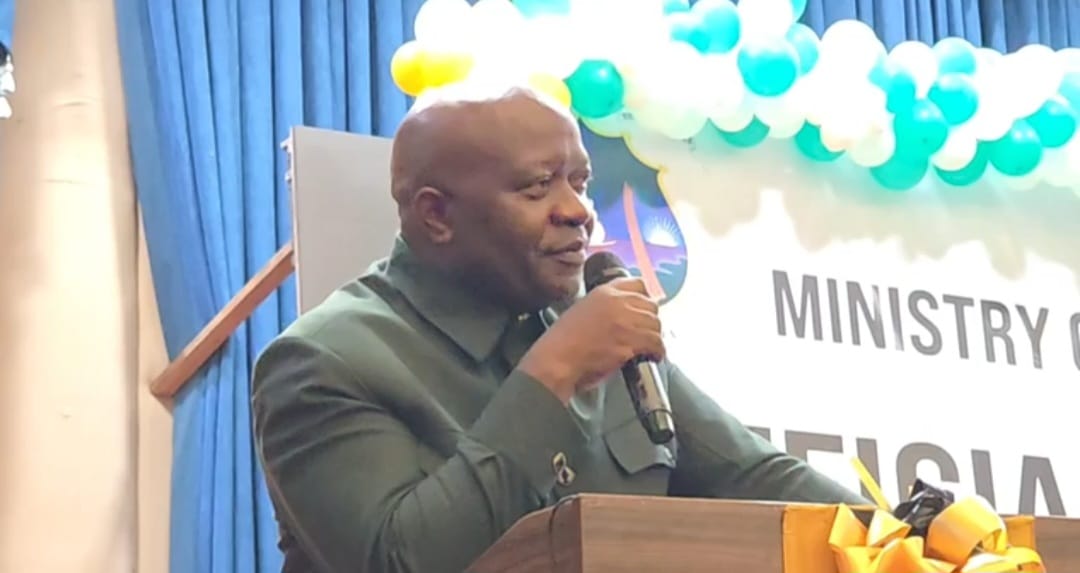
The Government of Liberia has officially commenced preparations for the Fiscal Year 2027 National Budget, with the Ministry of Finance and Development Planning launching the draft budget formulation process at the Ellen Johnson Sirleaf Ministerial Complex in Congo Town.
The high-level ceremony brought together senior government officials, heads of spending entities, development planners, policymakers, and key stakeholders as Liberia begins the critical process of designing its next national spending framework.
Finance and Development Planning Minister Augustine Kpehe Ngafuan described the early start of the process as a significant step toward strengthening fiscal discipline, improving public financial management, and ensuring that government resources are directed toward national priorities.
“It is good to talk about the future, to talk about the 2027 budget process now,” Minister Ngafuan told participants, emphasizing that the budget formulation exercise has already begun in line with Liberia’s legal requirements.
Under Liberia’s Public Financial Management framework, the Executive Branch is required to submit the national budget proposal to the Legislature no later than October 31 each year.
Minister Ngafuan said the government has made substantial progress in meeting this deadline, creating greater predictability for government operations.
“We have changed the culture. We are submitting budgets on time, and the Legislature itself is passing budgets on time,” he stated.
Minister Ngafuan highlighted what he described as a historic achievement under the current administration, the passage of the national budget before the start of the fiscal year.
He said between 2024 and 2025, Liberia reached a milestone not witnessed since the country’s post-war recovery period, when the Legislature approved the national budget before the beginning of the budget year.
According to the Finance Minister, the achievement goes beyond symbolism, as timely budget approval improves government planning, enhances implementation, and provides certainty for revenue mobilization.
“When you have one or two months into the year and you are not clear about the budget, everyone is stalled. Execution is stalled, and revenue collection can also be affected,” he explained.
Liberia’s post-war governments have historically struggled with delayed budget approvals, which often affected development projects, public service delivery, and financial planning.
Minister Ngafuan credited the Liberia Revenue Authority (LRA), spending agencies, and other government institutions for strengthening domestic resource mobilization.
He revealed that Liberia achieved record-breaking domestic revenue collections over the past three years.
According to the Minister:
2024: Government collected nearly US$700 million in domestic revenue, the highest in Liberia’s history at the time.
2025: Domestic revenue surpassed the previous record, reaching more than US$840 million.
2026: Based on continued revenue performance and economic projections, government submitted a national budget exceeding US$1.2 billion to the Legislature.
The 2026 budget marked one of Liberia’s largest annual spending plans since the country’s founding, reflecting increased confidence in domestic revenue generation and economic management.
Minister Ngafuan acknowledged that the size of the 2026 budget attracted criticism from some quarters, with opponents questioning its feasibility.
However, he said the government remained confident in its economic projections.
“Those who knew the history, the vision, and the seriousness of President Boakai and his team did not doubt it, but critics described it differently,” he said.
The Minister also referenced the administration’s reliance on faith and national purpose, stating:
“All the work we do as experts depends on the grace of God.
We will never disown God in what we do. Even the United States has it on its dollar bill: ‘In God We Trust.’ We too trust God, and God has been good to this country.”
As the country approaches the middle of the fiscal year, Minister Ngafuan assured stakeholders that government remains on course to achieve its revenue projections.
“From where we are and what we see, we are well on course to meeting our target,” he said.
He praised President Joseph Nyuma Boakai, the LRA leadership, and government revenue institutions for their contributions while urging continued commitment.
“We cannot rest. The momentum must continue,” he cautioned.
The Finance Minister outlined two major principles guiding the 2027 budget process:
Allocation Efficiency
Operational Efficiency
Under allocation efficiency, Minister Ngafuan said government will ensure that national resources are directed toward priorities contained in Liberia’s development blueprint , the ARREST Agenda for Inclusive Development (AAID).
The ARREST Agenda is the Boakai administration’s six-year national development framework designed to transform Liberia and move the country toward lower-middle-income status by 2029 through investments in infrastructure, education, agriculture, governance, health, and economic growth.
“When we align the budget with the ARREST Agenda, we are achieving allocation efficiency because we are aligning resources with our core priorities,” he said.
He instructed ministries, agencies, and commissions to use the national development plan as their primary guide during budget preparation.
Before proposing new initiatives, he urged agencies to demonstrate progress on existing programs.
“Before you bring new things, you must tell us what you have done with the old things,” he emphasized.
Beyond allocating resources, Minister Ngafuan stressed the importance of ensuring that government funds are spent effectively.
He said operational efficiency will require ministries and agencies to improve procurement practices, reduce waste, and maximize public value.
“Yes, we must give the money, but how well do we spend the money? We have to ensure that we are spending efficiently and effectively and delivering services at the least possible cost,” he said.
The Minister challenged government entities, especially Deputy Ministers for Administration, to ensure that every allocated dollar translates into measurable national impact.
“Every dollar must show that we are making progress,” he declared.
Minister Ngafuan disclosed that the Ministry of Finance is expanding its data collection efforts across Liberia’s counties to ensure that future budgets reflect realities on the ground.
He said information gathered from counties will help government better understand local needs and improve resource allocation.
“As we start this process, we are very certain that we are going to achieve the targets we set,” he said.
The Finance Ministry will conduct budget hearings from July through October, during which ministries and agencies will present their proposed programs and spending priorities.
Minister Ngafuan said agencies will be evaluated and guided to ensure that final budget allocations match national priorities.
He encouraged institutions to plan carefully, warning against poor preparation that could lead to supplementary funding requests after the budget has been approved.
“We do not have a crystal ball to see everything that can happen in 2027, but those things we can predict, let us plan for them,” he advised.
The launch of the 2027 budget process coincided with President Joseph Nyuma Boakai’s two-and-a-half-year mark in office.
Minister Ngafuan said while the administration has achieved significant milestones, much more work remains during the remaining years of the six-year mandate.
He acknowledged the role of critics in strengthening democratic accountability, saying opposition voices help government identify areas requiring improvement.
“Our critics are useful because they point to the things we have not done yet,” he said.
He called on all government institutions to operate as one team.
“We are all on this rescue boat. Every entity is important for our success.
We have to backstop each other and not backstab each other,” he urged.
According to Minister Ngafuan, President Boakai remains encouraged by the progress made despite challenges and believes every government institution has a role to play in delivering on national commitments.
“


