





By: Julius Konton
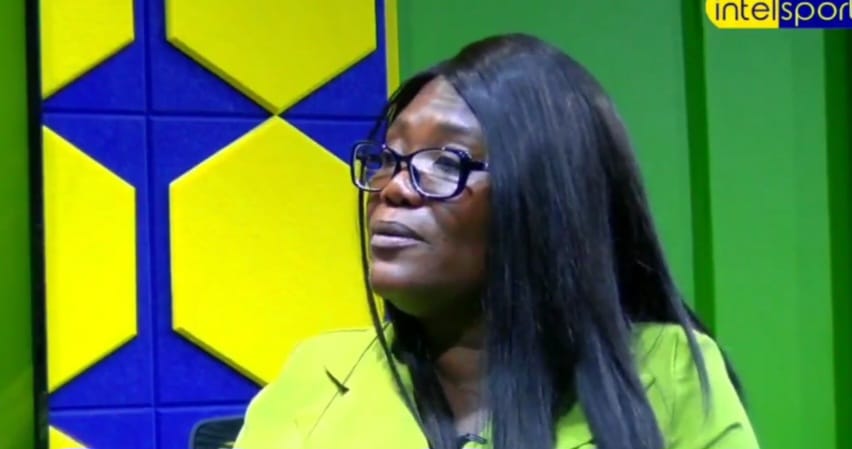
Former Executive Committee member Rochell Woodson has formally declared her candidacy for the Women’s Football Representative seat in the upcoming Liberia Football Association (LFA) elections, outlining an ambitious reform agenda centered on advocacy, inclusion, and structural development.
Speaking during an appearance on LFA Decides, a flagship sports program on Intel Sports, Woodson emphasized that her return to the race is driven by a renewed commitment to transforming the landscape of women’s football in Liberia, an area that has historically struggled with underrepresentation and limited funding.
A Reform Agenda Rooted in Inclusion
Woodson, who previously served on the LFA Executive Committee, said her campaign is anchored on strengthening women’s participation at all levels of football governance.
“I have entered this race to help expand women’s football, particularly in decision-making processes at the executive level,” she stated.
Her platform identifies three key intervention areas:
Expanding women’s representation in football governance
Strengthening grassroots development through structured regional programs
Securing sustainable partnerships and funding for women’s competitions
These priorities align with broader global efforts led by FIFA and CAF, which have in recent years increased investments in women’s football development across Africa.
According to FIFA, global investment in women’s football exceeded $1 billion between 2019 and 2023, yet many developing nations including Liberia continue to face infrastructure and funding gaps.
Bridging the Gap: From Grassroots to Elite
Women’s football in Liberia has seen gradual growth over the past decade, with increased participation at youth levels and the establishment of domestic leagues.
However, experts note that structural challenges remain, including limited access to training facilities, coaching resources, and competitive exposure.
Woodson’s vision seeks to address these gaps directly:
“My vision is a system where every young girl in Liberia has a clear pathway from grassroots to elite football,” she reaffirmed.
Her emphasis on grassroots expansion reflects data from CAF, which shows that countries investing in structured youth programs have seen up to a 40% increase in female player retention and national team performance.
Leadership, Communication, and Trust
Beyond policy proposals, Woodson underscored the importance of leadership style, particularly communication and transparency in football governance.
“Leadership is not only about action, it is also about voice.
In critical moments, stakeholders look to leadership for clarity and reassurance. Silence can sometimes create uncertainty,” she noted.
Her remarks come amid growing calls across African football for more accountable and responsive leadership structures, especially in federations managing limited resources.
A Competitive Race
Woodson faces stiff competition in what is shaping up to be a closely contested election.
Her challengers include Jodi Reid Seton and Kaddieyatu D. Findley both of whom bring experience as current and former Executive Committee members.
Despite the competitive field, Woodson expressed confidence in her candidacy:
“I believe I am best suited for this position, given my experience, partnerships, and commitment to advancing women’s football.”
A Defining Moment for Women’s Football
The upcoming LFA elections are widely viewed as a pivotal moment for the future of women’s football in Liberia.
Stakeholders including clubs, players, and development partners are increasingly advocating for policies that promote gender equity and long-term sustainability in the sport.
Woodson echoed this sentiment in her closing appeal:
“This is a moment to choose progress, inclusion, and stronger representation for women’s football.
I am ready to serve with dedication and accountability.”
As Liberia continues to align with global trends in football development, the outcome of this election could significantly influence the trajectory of women’s football in the country potentially shaping opportunities for the next generation of female athletes.


