



By: Julius Konton
Liberia has recorded a significant milestone in its long-running decentralization journey with the official transition of the Ministry of Internal Affairs into the newly established Ministry of Local Government, a move civil society leaders describe as a turning point in democratic governance and service delivery.
The Executive Director of InfoQuest Liberia, Matthias Yeanay, said the transition represents a decisive step in implementing the Local Government Act of 2018, a reform law designed to devolve political, administrative, and fiscal authority from the central government to local authorities across the country.
“This transition is far more than a change of institutional name or structure,” Yeanay told journalists. “It signals a renewed national commitment to people-centered governance, equitable resource distribution, improved service delivery, and the strengthening of local authorities throughout Liberia.”
A Reform Years in the Making
Liberia’s decentralization agenda dates back to the post-conflict reconstruction era, when governance reforms were identified as critical to stabilizing the country after 14 years of civil war.
Despite steady economic growth in parts of the last decade, decision-making and fiscal power remained largely centralized in Monrovia, limiting development outcomes in rural and peri-urban communities where more than 70 percent of Liberia’s population resides, according to national demographic estimates.
The Local Government Act of 2018 was enacted to reverse this imbalance by granting counties, districts, cities, and chiefdoms greater autonomy in planning, budgeting, and development execution.
However, implementation delays particularly around institutional realignment and revenue-sharing mechanisms slowed progress for several years.
The formal transition to a Ministry of Local Government is now seen as a critical institutional anchor for accelerating those reforms.
InfoQuest and UNDP’s Role in Driving the Reform
Yeanay said the milestone stands as one of the achievements InfoQuest Liberia is deeply proud of, reflecting years of sustained advocacy and policy engagement.
“InfoQuest remains steadfast in its mission to support reforms that empower communities and strengthen accountable governance,” he emphasized.
“We are committed to ensuring an inclusive and informed society where citizens understand and participate meaningfully in governance”, he added.
He stated that through sustained advocacy, policy dialogues, and stakeholder mobolization supported by UNDP Liberia, InfoQuest played a leading role in pushing legislative and regulatory frameworks forward.
Accordinf to him, These efforts focused particularly on decentralization and revenue-sharing, which are widely viewed as essential to reducing inequality and strengthening local development.
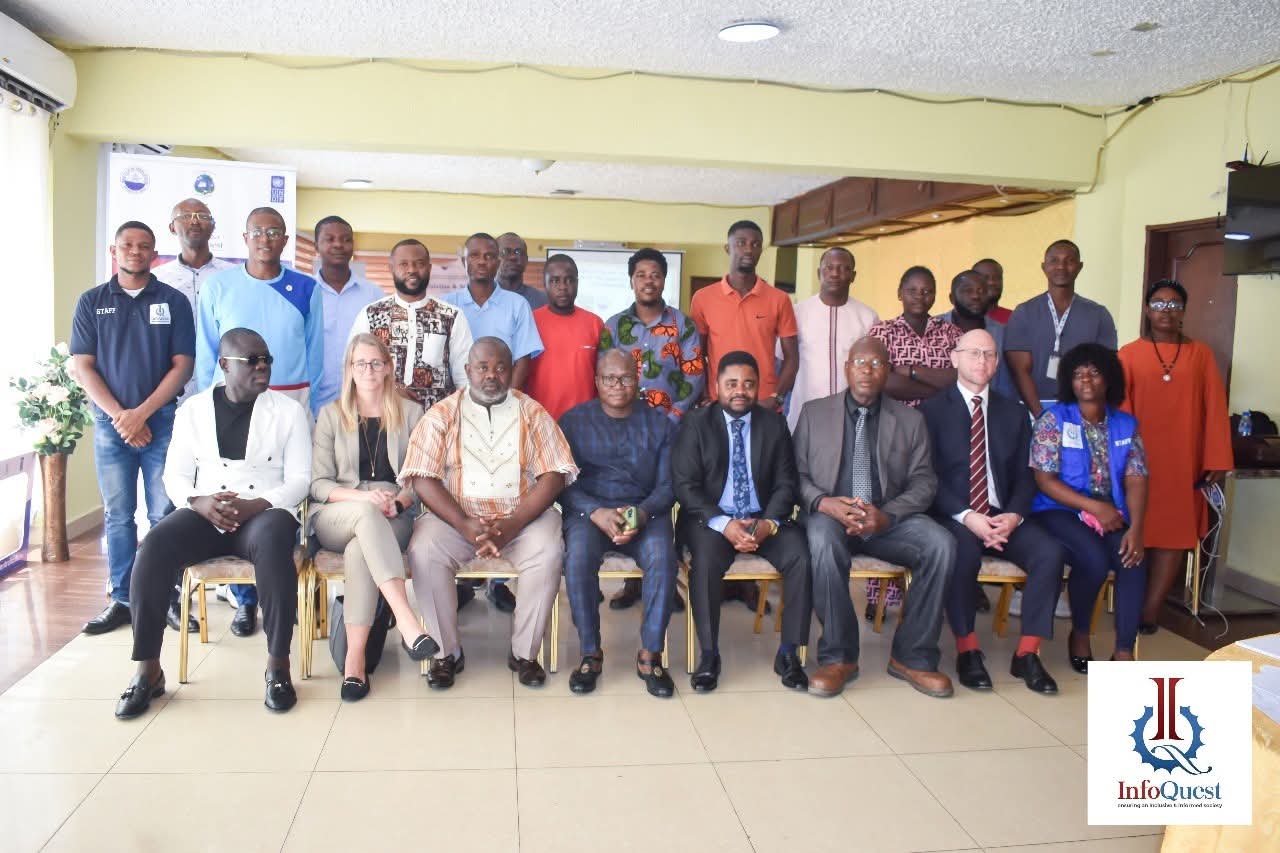
It can be recalled that On Wednesday, May 22, 2024, InfoQuest convened a high-level legislative and stakeholder dialogue following a series of one-on-one engagements with policymakers.
The forum focused on the enactment of the Ministry of Local Government Bill and the validation of Revenue Sharing Bill Regulations, both considered foundational to fiscal decentralization.
The dialogue he explained brought together legislators, development partners, senior policymakers, and civil society actors to deepen understanding of how political and fiscal decentralization can enhance inclusive governance and sustainable development.
Legislative Champions and Collaborative Leadership
InfoQuest also commended key lawmakers whose leadership proved instrumental in advancing the reform agenda.
Among those recognized were Speaker Richard Koon, Representative Samson Wiah of Sinoe County, Representative Foday Fahnbulleh of Bong County, and Senator Dabah Varpilah of Grand Cape Mount County, along with other committed legislators.
According to Yeanay, their leadership, lobbying skills, and ability to build consensus within the Legislature demonstrated the power of collaborative governance.
“Their efforts show how strategic leadership can translate reform ideas into concrete policy outcomes that bring government closer to the people,” he said.
Implications for Governance and Development
Governance experts note that effective decentralization could significantly improve service delivery in key sectors such as health, education, sanitation, and local infrastructure.
Studies across Africa indicate that countries with functional local governance systems often experience higher citizen participation, improved accountability, and better development outcomes, particularly in rural communities.
For Liberia, where counties outside Montserrado continue to face development gaps, the operationalization of the Ministry of Local Government could mark a shift toward more balanced national growth.
Yeanay concluded that the transition reflects another major milestone in Liberia’s democratic development and decentralization process, but cautioned that sustained political will, adequate funding, and continued citizen engagement will be essential to turn policy into impact.
“We extend our sincere appreciation to UNDP Liberia for its unwavering partnership in strengthening democratic governance and local development,” he added.
“The real work now is ensuring that decentralization delivers tangible benefits to communities across the country.”
As Liberia moves forward, the establishment of the Ministry of Local Government is widely viewed as a foundational step toward deepening democracy, strengthening accountability, and ensuring that governance truly reaches the grassroots.


